
Condos for Sale: The Complete Buyer's Guide for 2026
You found it. The corner unit with the view, the renovated kitchen, the price that actually works on a spreadsheet. The building looks well-maintained. The realtor mentions, almost in passing, that HOA fees went up last spring and the board just commissioned a new reserve study. You nod, sign the offer, and three months after closing you receive a letter announcing a $28,000 special assessment for concrete remediation no one mentioned during showings.
This is the 2026 reality for buyers shopping condos for sale without a building-level due diligence sequence. The unit you're touring is largely irrelevant to your financial outcome. The building's balance sheet decides almost everything.
The numbers make the case. In downtown St. Petersburg, FL, according to Mangrove Bay Realty, condo values fell 12% year-over-year while single-family homes declined only 1.5% — the widest gap since 2019. That spread isn't a story about condos as a category. It's a story about which condos. Stable buildings with funded reserves held value. Aging buildings with deferred maintenance, weak reserves, and post-Surfside structural exposure cratered. The macro market is fine; specific buildings are failing.
The same divergence shows up in stronger markets. Boston's median condo price sits around $850,000 per BostonREB, and Florida's average runs $310,000–$420,000 according to Realpha — yet within both markets, building quality determines whether a unit appreciates or becomes unsellable. South Florida buyers researching Boca Raton Real Estate are watching the same dynamic unfold building by building.
The seven sections below are the due diligence sequence used by buyers who don't get burned. Read them in order.
Table of Contents
- Condo vs. Single-Family vs. Townhome: The Ownership Structure That Actually Fits Your Finances
- Reading the Reserve Fund Study: The Document That Decides Your Future Special Assessments
- The True Monthly Cost of Condo Ownership: What's Hidden in the HOA Budget
- CC&Rs and HOA Bylaws: The Rules That Will Govern Your Ownership
- The Condo Inspection Strategy: What a Standard Home Inspector Will Miss
- HOA Health Signals: Six Indicators That Separate Stable Buildings From Future Disasters
- Condo Financing and Resale: Why Lender Approval of the Building Decides Your Exit
Condo vs. Single-Family vs. Townhome: The Ownership Structure That Actually Fits Your Finances
Ownership type determines not just what you own but how predictable your costs will be. Condo owners share infrastructure liability across dozens or hundreds of units; single-family owners absorb every roof, HVAC, and foundation cost alone; townhome owners sit somewhere in between, usually with limited shared exposure to roofs and exterior walls but full responsibility for interior systems.
The decision matrix below maps how those structures translate into actual financial behavior in the 2026 market.
| Criterion | Condo | Townhome | Single-Family |
|---|---|---|---|
| Upfront capital required | Lowest | Moderate | Highest |
| Monthly recurring obligations | HOA ~$375/mo (FL avg) | Lower HOA typical | No HOA required |
| Renovation control | Limited (CC&R approval) | Moderate | Full |
| Price volatility (2026) | High (older FL bldgs −5 to −12%) | Moderate | Lowest (St. Pete −1.5%) |
| Shared-infrastructure liability | Full | Partial | None |
Condos win for buyers who want lock-and-leave lifestyle, a lower entry price, and amenities they couldn't afford to own privately — and who can absorb HOA variability. Realpha characterizes condos in 2026 as having "lower upfront capital requirements" but explicitly warns about exposure to reserves, insurance, and assessments. That tradeoff is the entire game.
Single-family wins for buyers who want financial predictability and renovation control. You pay more upfront and you absorb every system failure yourself, but you control the timing. No board votes to delay the roof replacement until reserves recover. Buyers comparing inventory often weigh Boca Raton Homes for Sale against condo options precisely because detached homes in 2026 are behaving more predictably than shared-building product.
Townhomes win for buyers who want shared exterior maintenance without the high-rise risk profile. The reserve exposure is real but typically smaller — no elevators, no parking structures, no central HVAC plants.
Within the condo category itself, the 2026 spread is wide. Realpha's Florida data shows condos ranging from under $50,000 in age-restricted inland communities to over $1 million for oceanfront luxury. The unit-level decision is almost trivial compared to the building-level decision.
Reading the Reserve Fund Study: The Document That Decides Your Future Special Assessments
A reserve fund study is an engineering-and-financial analysis commissioned by the HOA that projects 20–30 years of major component replacements — roof, elevators, HVAC, parking structures, plumbing risers, pool equipment — and the cash needed to fund them. Boards commission these every 3–5 years, and the study is the single most important document in your purchase file. It is the only document that tells you what the building will cost to maintain after you own it.
The practical benchmark is straightforward. Mangrove Bay Realty treats reserves equal to 10–15% of the annual operating budget as "healthy", while reserves below 5% or declining year-over-year are serious risk indicators that often precede special assessments. Translate that to dollars: if the building's annual operating budget is $1.2M, healthy reserves are $120,000–$180,000. Reserves of $40,000 are a red flag. Reserves of $40,000 and declining are a stop sign.
Then there's "percent funded," which is the more sophisticated metric. The reserve study calculates the fully funded target — the amount needed today to meet all future component replacements on their projected schedule. 100% funded means the building can replace every component when due without an assessment. 70% funded means a 30% shortfall. On a $4M projected need, that's a $1.2M gap, and that gap doesn't disappear. It gets split across units.
In a 50-unit building with a $1.2M reserve gap, that math works out to roughly $24,000 per unit in potential future assessments. The Mangrove Bay benchmark flags special assessments exceeding $25,000 per unit as a stop-sign. You can see how quickly a building's reserve shortfall translates into a number that would make you walk away if it had been disclosed on the listing.
A reserve fund study tells you not what the building looks like today, but what it will cost to keep standing tomorrow. Ignore it at your financial peril.
Inside the study itself, the specific red flags worth searching for: roof replacements deferred past their stated useful life, parking garage concrete remediation flagged in earlier studies but never funded, elevator modernization pushed out from one study cycle to the next. Each deferral is a future bill compounding. A reserve study that shows the same recommendation appearing across three consecutive cycles without action is telling you the board doesn't intend to fund the work — they intend to wait until they have to assess for it.
Where to find the study: the seller's disclosure packet should include it. If it doesn't, request directly from the HOA management company. In Florida, buyers have a statutory right to review condo documents before closing, and any seller or board resistant to providing the document is a signal in itself.
Florida adds a layer of structural diligence that didn't exist before 2021. Per Mangrove Bay's summary of post-Surfside practice, buildings 30+ years old now require milestone structural inspections, with Phase 2 inspections triggered if Phase 1 reveals concrete degradation or rebar corrosion. A Phase 2 finding without a funded repair plan is a deal-breaker. Full stop. The cost of remediation runs into seven figures on mid-size buildings, and the assessment math gets ugly fast.
Consider a representative scenario: an aging Florida coastal building with $80,000 in reserves and a fresh Phase 2 report calling for $2M in concrete remediation. The board has 24 months to begin work under statute. Spread across 70 units, that's roughly $30,000 per owner — due before the work starts. Buyers who didn't read the reserve study and the milestone inspection inherit that bill the day they take title. Buyers who did read it either walked away or negotiated the assessment into the purchase price.
The True Monthly Cost of Condo Ownership: What's Hidden in the HOA Budget
The listed HOA fee is the floor, not the ceiling. The gap between advertised cost and actual cost is widening in 2026 — Florida HOA fees average roughly $375/month and insurance costs are up about 60% since 2019 per Mangrove Bay's analysis. Both pressures are still climbing. Here's what actually shows up on your monthly statement and in your bank account:
- Base HOA fee — Covers common area insurance, management, water/sewer/trash, landscaping, sometimes basic cable. Florida 2026 average runs about $375/month. Coastal high-rises run $700–$1,500+. The advertised number on the listing is almost always the base fee only.
- Special assessments — Triggered when reserves can't cover a major project. Anything over $25,000 per unit is a stop-sign per Mangrove Bay. Frequency varies by building health; underfunded buildings may see one every 2–4 years, sometimes amortized over 12–36 months but sometimes due in a lump sum.
- HOA fee inflation — A 15%+ increase over two years without proportional improvements signals poor budgeting or emerging cost shocks per Mangrove Bay. Florida insurance shocks alone have driven 30–50% HOA increases in some buildings, and there's no reason to expect that pressure to subside in 2026.
- Unit owner's HO-6 insurance — Covers your interior, contents, and loss assessment exposure. Typical premium: $400–$1,500/year depending on location and loss assessment coverage limits. Coastal units run higher, sometimes substantially so.
- Property tax — Often higher per square foot in condo buildings than detached homes because amenity valuations push assessed value up. Check the assessor's records, not the seller's quoted figure.
- Add-on fees — Parking ($50–$300/month in urban buildings), pet fees, storage, amenity surcharges, transfer fees at sale. Read the full fee schedule in the disclosure packet, not just the listing summary.
- Capital contribution at closing — Many HOAs charge a one-time fee at purchase — typically 2–3 months of HOA dues — to seed reserves. This shows up on your closing statement, not in the monthly cost projection your agent ran.
Stack the items honestly. A unit advertised at $375/month HOA can land at roughly $600+ in effective monthly cost once you add HO-6 insurance amortization, parking, and a reserve buffer for assessments. The quality of the management company directly drives fee predictability — well-run firms like those handling Boca Raton Property Management publish transparent reserve projections, communicate fee increases with documentation, and avoid the surprise-assessment pattern that defines weak buildings.
The 2026 correction adds a perverse dynamic worth understanding: buildings cutting fees to attract buyers in a soft market are often deferring maintenance that will hit you as an assessment 18–36 months later. The advertised "low HOA" listing in a building with declining reserves is the most expensive condo on the market — you just don't see the bill yet.

CC&Rs and HOA Bylaws: The Rules That Will Govern Your Ownership
The HOA documents are your binding contract with the building. Most buyers skim them and discover the restrictions after closing — the pet weight limit that rules out the dog you were planning to get, the six-month rental minimum that blocks the Airbnb income you were counting on, the renovation approval gate that turns a $20,000 kitchen update into an eight-month committee process. The four documents to request before your contingency period expires: CC&Rs, bylaws, current rules and regulations, and the last 12 months of financial statements and meeting minutes.
CC&Rs (Covenants, Conditions & Restrictions) — The legally recorded document binding every owner. Defines what you can and cannot do with the unit: pet weight limits, rental restrictions (often 6- or 12-month minimums, sometimes outright short-term rental bans), renovation approval gates, exterior modifications. Changes require a supermajority owner vote, which means restrictive provisions almost never get loosened — they get more restrictive over time as boards add amendments.
Bylaws — Governance rules: how the board is elected, voting thresholds, quorum requirements, how amendments pass. Bylaws that allow the board to amend rules without an owner vote are a dysfunction signal. So are bylaws with quorum thresholds so low that a five-person board can pass major financial decisions in a 200-unit building.
Rules & Regulations — Day-to-day operating rules: quiet hours, guest policies, pool access, parking assignments, trash schedules, move-in fees. These are easier for the board to amend and change more often than CC&Rs. Request the current version, not the original from incorporation — the rules a building operates under in 2026 may be twenty years downstream of the recorded document.
Rental restrictions (critical for resale) — Buildings banning rentals under 6 or 12 months collapse the buyer pool to owner-occupants only. If you ever need to rent the unit or sell to an investor, you're locked out. Realpha's 2026 data shows Florida rental yields of 5–8% in Orlando and Tampa that depend entirely on rentals being permitted. A CC&R amendment passed two years ago can erase that yield assumption from your underwriting.
Pending amendments and litigation — Ask explicitly: any pending CC&R amendments, any lawsuits the HOA is party to, any owner disputes in mediation. Litigation impacts lender approval directly, as the financing section below details. Pending CC&R amendments often signal a board response to a specific dispute — find out what triggered the proposal.
Owner-occupancy ratio — Many lenders require 50%+ owner-occupied for conventional financing. CC&Rs that don't cap investor ownership can drift into investor majority, which kills financing for future buyers and pushes the building toward cash-only sales at lower prices.
CC&Rs are written by lawyers to protect the collective, not you. The rules that feel minor during purchase become the walls of your ownership.
Get these documents to a real estate attorney before the inspection contingency expires. Attorney review costs $400–$800. The cost of missing a rental ban, a pending assessment, or a litigation disclosure runs into tens of thousands — and in some cases makes the unit unsellable until the underlying issue resolves.
The Condo Inspection Strategy: What a Standard Home Inspector Will Miss
A standard home inspection covers your unit's interior systems — plumbing fixtures, electrical panels, the HVAC condenser, appliances — but the building's structural and shared systems are outside the inspector's scope. In a condo, the building's failures become your assessments. You need a parallel investigation running alongside the standard inspection, and you need to hire someone who knows what to look for at the building level.
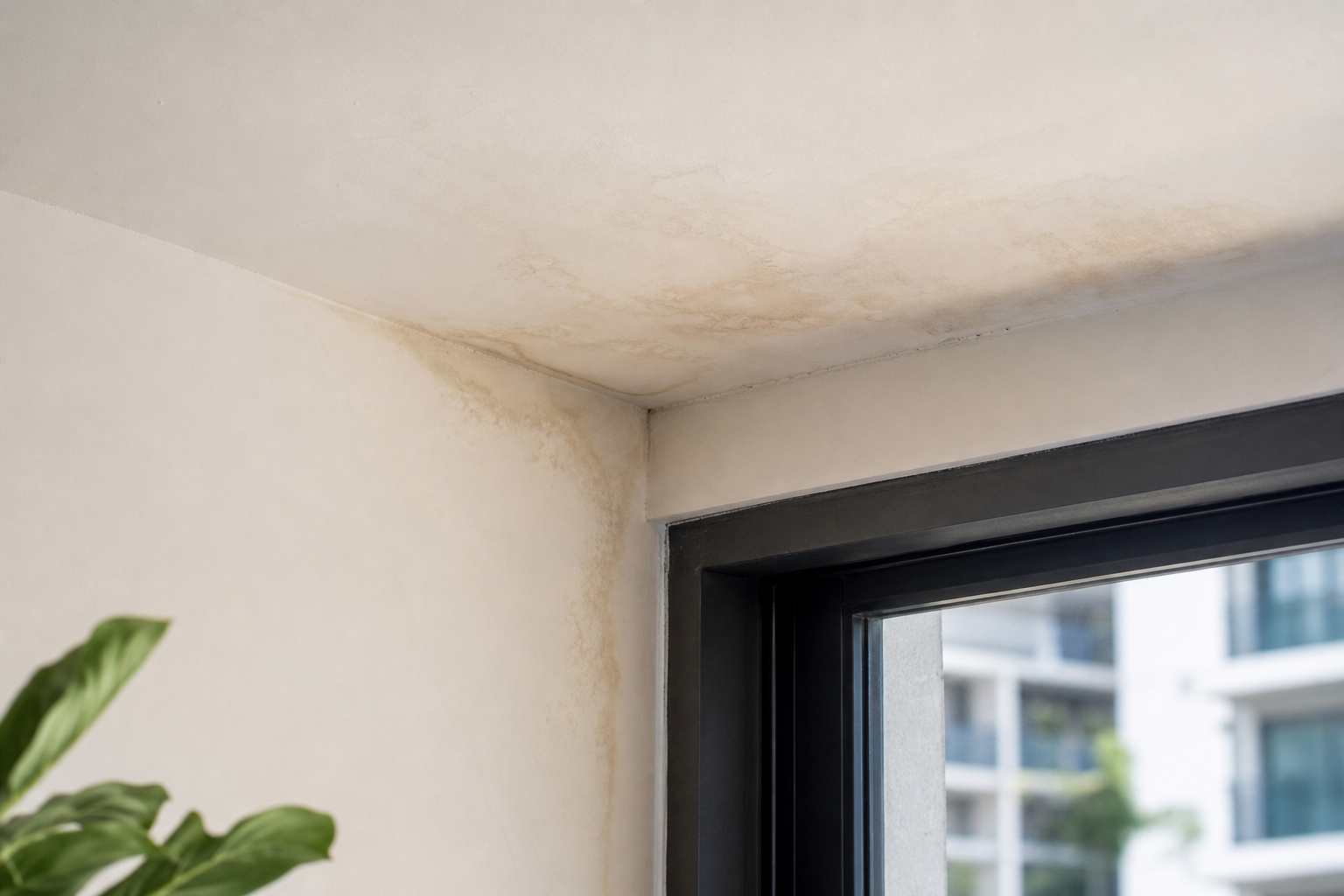
- Hire a condo-experienced inspector — Standard inspectors check inside the unit. A condo-experienced inspector additionally evaluates ceiling and wall water staining (indicating roof or upstairs unit leaks), HVAC riser access, and shared-wall sound transmission. They also know how to read the documents the standard inspector ignores.
- Request 3 years of water damage claims — Both for the subject unit and adjacent or above units. Pattern leaks are almost always building-system problems that will recur. A unit with two prior water claims from the unit above is telling you the riser stack is failing, not that the upstairs neighbor is careless.
- Obtain the milestone inspection report (Florida, 30+ year buildings) — Required by Florida statute per Mangrove Bay Realty. Phase 2 findings of concrete spalling or rebar corrosion without a funded repair plan are deal-breakers. No exceptions.
- Verify roof age and last replacement date — Roof useful life is 20–30 years depending on material and climate. A 22-year-old roof with no replacement in the reserve plan equals an imminent assessment, and the math is rarely subtle.
- Check elevator and parking garage maintenance logs — These are the most expensive shared systems. Deferred maintenance shows up as five- and six-figure assessments. An elevator modernization runs $80,000–$200,000 per cab in a mid-rise.
- Walk the common areas at 9 PM on a weekday — Cosmetic neglect (hallway carpet, lighting, lobby finishes, peeling paint at the pool deck) signals a board postponing visible maintenance. Visible deferral almost always means invisible deferral is worse.
- Inspect for HVAC and plumbing riser access — In older buildings, individual unit repairs may require breaking into shared walls. Ask whether risers have been replaced building-wide or whether you're inheriting 1970s copper that's started failing in adjacent units.
- Verify unit-level renovation permits — Sellers who renovated without HOA approval or city permits leave you legally exposed at resale. Pulling the permit history through the city portal takes 20 minutes and saves disputes at the closing table.
Budget $500–$900 for a thorough condo inspection (versus $350–$500 for a standard home inspection). The premium covers the inspector's time reviewing building documents, walking common areas, and writing recommendations specific to shared-system risk. Coastal markets — including buildings reviewed in our Delray Beach Condos for Sale guide — carry additional salt-air degradation risk that standard inspectors aren't trained to flag, so the premium is non-negotiable in those buildings.
HOA Health Signals: Six Indicators That Separate Stable Buildings From Future Disasters
Every problematic building shows warning signs in its financials and governance months before the special assessment letter arrives. The six signals below are screening criteria — if a building fails on two or more, walk away. You're not getting a discount on a flawed building; you're being recruited to absorb someone else's deferred cost.
Reserve funding below 10% of annual budget — Healthy buildings hold 10–15% in reserves per Mangrove Bay's 2026 benchmark; under 5% is a red alert. Request the reserve balance and the annual operating budget from the management company in writing and do the division yourself. Sellers' agents quote reserve numbers casually; the financial statement is the only document that counts.
Delinquency rate above 5% of units — When more than 1 in 20 units is behind on HOA dues, remaining owners absorb the shortfall and lenders downgrade the building. Ask the management company for the current delinquency figure in writing. A building that won't put the number in writing is telling you the number is bad.
HOA fee increases above 15% over two years — Without matching capital improvements, this signals poor budgeting or unrecognized cost shocks. Pull the last three years of HOA fee schedules from the disclosure packet and graph them. A 4% annual increase is normal cost-of-living drift. A 9% annual increase is a building absorbing insurance shocks. A 15%+ two-year jump means the board is reacting, not planning.
Active or pending litigation — Even minor lawsuits flag governance dysfunction and trigger lender review. Check the county court records search by HOA name; don't rely on the seller's disclosure, which may be technically accurate but incomplete. Litigation involving the developer, contractors, or owners often signals structural or financial problems the board is trying to recover from.
Board and management turnover — Three property managers in two years, or a board majority that turned over mid-term, indicates conflict. Read the last 12 months of meeting minutes. Watch for resignation announcements, contested votes, and special meetings called to remove officers.
Sparse meeting attendance — Owners stop showing up when they've given up on governance. A meeting with 8 of 80 owners present is a building running on autopilot — usually toward deferred maintenance. Engaged buildings have contested elections, attended meetings, and visible owner factions debating budget priorities.
Combine the signals. A building with 7% delinquency, two property managers in 18 months, and reserves at 4% of budget isn't recovering — it's failing in slow motion. The David Siddons Group's 2026 Miami analysis identifies specific Miami towers facing underperformance from exactly this combination: high fees, weak reserves, and looming assessments. Attend an HOA meeting as a prospective buyer before closing; in most jurisdictions you're allowed to observe, and the dynamics in the room tell you more than the financials alone. Regional guides like our Fort Lauderdale Condos for Sale guide apply these same six signals at the building level.
Condo Financing and Resale: Why Lender Approval of the Building Decides Your Exit
When you finance a condo, the lender underwrites the building as much as you. A building that fails lender criteria becomes unfinanceable — which means future buyers must pay cash, which collapses your resale pool and price. This is the asymmetric risk most buyers shopping condos for sale never absorb: you can have perfect credit and strong income and still own an unsellable unit because the building lost FHA or Fannie Mae approval six months after you closed.
The criteria lenders actually apply:
- Minimum down payment for condos is often 10–15% (versus 3–5% for single-family), and more for non-warrantable buildings.
- Reserve requirement: lenders increasingly require buildings hold 10%+ of annual budget in reserves — directly mirroring the Mangrove Bay 2026 benchmark.
- Owner-occupancy ratio: Fannie Mae generally requires at least 50% owner-occupied for primary-residence loans.
- Delinquency cap: buildings with more than 15% of units 60+ days delinquent are typically rejected for conventional financing.
- Commercial space cap: buildings with more than 35% commercial use (revised upward from older 25% rules) face stricter review.
- Pending litigation: structural or financial lawsuits can trigger automatic rejection until resolved.
Each criterion is a tripwire. A building that meets all six today can fail one next quarter — a single large lawsuit, a delinquency spike during an assessment, a commercial tenant taking on more floor space — and the consequences land on every unit owner trying to sell or refinance.
The "approved condo" trap
FHA and VA maintain approved condo lists; Fannie Mae and Freddie Mac use the Condo Project Manager (CPM) review process. A building can lose approval if it fails any criterion, and the consequences cascade quickly. When approval lapses, no new conventional buyers can finance purchases in the building. Sellers either reduce price 15–25% to attract cash buyers or take the unit off the market entirely. The Florida 2026 correction — condos down 12% in downtown St. Pete versus 1.5% for single-family — is partly this dynamic playing out across distressed buildings whose approval status has slipped. Some buildings recover. Some don't.
A condo is only as valuable as the lenders believe the building is stable. One failing building in your complex can tank your resale price.
Resale appraiser scrutiny
Condo appraisers don't just compare unit comparables. They review HOA financials, reserve studies, and litigation disclosures as part of the appraisal package. A weak building appraises lower than its unit comparables would suggest — which kills the buyer's loan-to-value ratio and forces either price renegotiation or a deal collapse. Strong buildings with full reserves and low turnover appreciate steadily. Realpha's 2026 data shows well-located Florida condos with solid reserves still command 5–8% rental yields in Orlando and Tampa, and Boston buildings in prime neighborhoods like Beacon Hill clear at a $1.81M median sale price per BostonREB. The variance isn't location; it's building stability inside good locations.
When the time comes to sell your Boca Raton home, the appraiser will dissect the building's financials before signing off on price. The diligence you did at purchase becomes the documentation that supports your resale appraisal — buildings with three years of clean reserve growth and zero litigation appraise faster and higher than buildings with the same unit-level comparables but messier governance.
Pre-Purchase Checklist
Whether you're working through this list locally or browsing condos for sale near you in another market, the sequence is the same. Complete in order before signing:
- Obtain and read the most recent reserve fund study; confirm reserves at 10–15% of annual budget
- Pull the last 3 years of HOA financials, fee schedules, and meeting minutes
- Confirm delinquency rate is under 5% in writing from management
- Verify the building's current FHA/Fannie Mae/Freddie Mac approval status with your lender
- Request the milestone inspection report (Florida buildings 30+ years old)
- Have a real estate attorney review CC&Rs, bylaws, and rental restrictions
- Search county court records for HOA litigation under the association name
- Attend an HOA meeting as an observer before removing contingencies
- Hire a condo-experienced inspector and request 3 years of water damage claims
- Confirm your lender's condo-specific requirements match this specific building before removing the financing contingency
Ten items. Two to three weeks of work if you start early in the contingency period. Roughly $1,000–$2,000 in inspection and attorney fees. The buyers who complete this sequence don't get the special assessment letter. The buyers who skip it almost always do.