
Condos for Sale Near Me: How to Find the Perfect Condo in Your Area
Condos for Sale Near Me: How to Find the Perfect Condo in Your Area
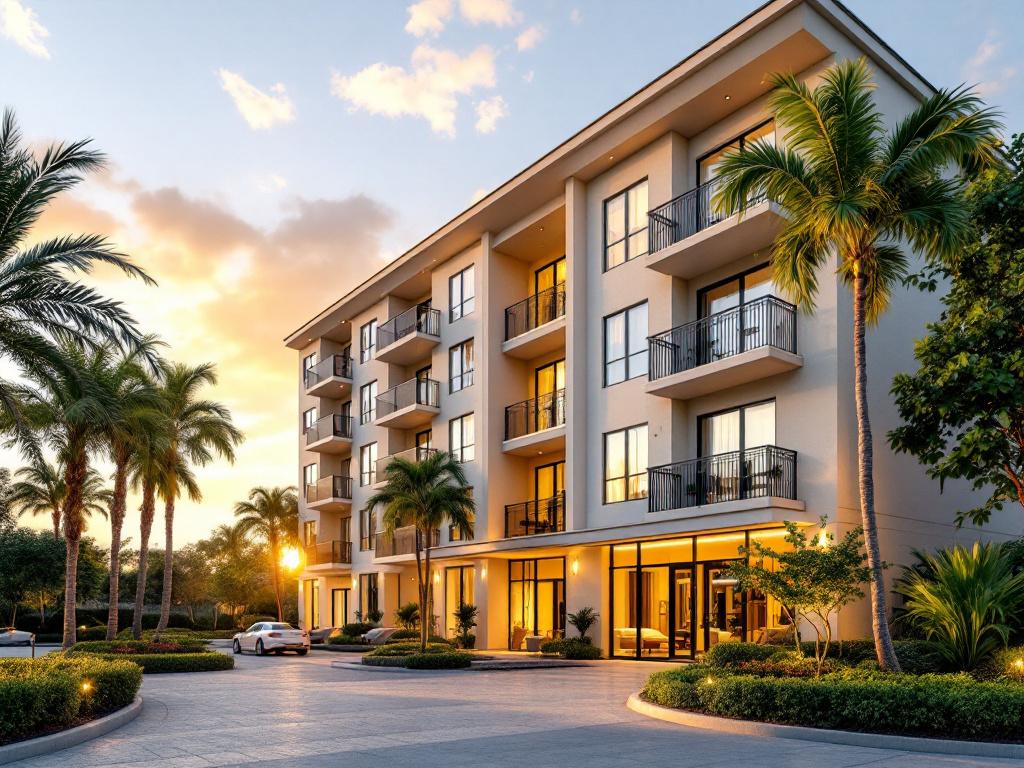
You've shortlisted three condos within budget. One sits in a building where fees jumped twice in the last two years. Another has a commute you didn't stress-test at 5:30 PM on a Tuesday. The third feels right — until you discovered on a second walkthrough that the unit shares a wall with the elevator shaft. You're not searching wrong. You're searching in the wrong order.
When you start typing condos for sale near me into a search bar, you're surfacing inventory — not insight. The fix isn't a better filter or a faster app. It's reordering the work: define your constraints first, then filter, then evaluate the building before the unit, then run a structured final comparison. In markets like Boca Raton, where inventory turns quickly and HOA structures vary widely between coastal high-rises, golf communities, and inland mid-rises, sequence matters more than speed. A buyer who runs the steps below in order rarely overpays. A buyer who skips them usually finds out which step they skipped about six months after closing.
Table of Contents
- Define Your Non-Negotiables Before You Open a Single Listing
- Search Filter Hierarchy: What to Set, What to Ignore, What to Stack
- Evaluate the Building Before You Evaluate the Unit
- Unit-Level Diligence: What an Inspector Won't Tell You
- Build Your Final Comparison Matrix Across Shortlisted Properties
- Your Pre-Offer Walkthrough and Documentation Checklist
Define Your Non-Negotiables Before You Open a Single Listing
Most buyers reverse the process — they browse listings, react emotionally, and then try to back-define what they wanted. That sequence inflates timelines and produces buyer's remorse. The fix is simple: write your constraints down before you look at a single property. The exercise takes 30 minutes. It will save you months.
Run through these eight items in order. Each one is a hard input you give to your search, not a wish you hope a listing will satisfy.
- Maximum one-way commute time. Set a ceiling in minutes, not miles. A 6-mile commute in Boca Raton at 8 AM behaves differently than the same distance at 2 PM. Drive the route at the time you'd actually drive it, on the day you'd actually drive it, before you set the ceiling.
- Minimum square footage AND minimum room count. These are not the same constraint. A 1,400 sq ft one-bedroom is not interchangeable with a 1,400 sq ft two-bedroom. Layout dictates daily livability; square footage only dictates the property tax line.
- Pet policy tolerance. Weight limits, breed restrictions, and number-of-pets caps vary widely by association. Some buildings prohibit dogs entirely. Some allow dogs but ban them from the pool deck or elevators during peak hours. Read the rules, not the listing summary.
- Parking type and count. Assigned covered, assigned uncovered, deeded versus licensed, guest parking availability. In coastal Florida, covered parking has material resale impact — both for sun protection and for hurricane debris exposure.
- Floor preference. Ground floor brings accessibility and patio access but raises security questions. Mid-floors offer balance. Top floors eliminate noise from above and often deliver views, at the cost of roof exposure and elevator dependency.
- Building amenity floor. Pool, gym, concierge, secure entry — list what you will use weekly, not what sounds appealing in a brochure. Amenities you don't use are amenities you pay for in your HOA fee every month for the next decade.
- All-in monthly cost ceiling. Mortgage payment plus HOA fee plus property taxes plus insurance plus a reserve for potential special assessments. Not just sticker price. A $480K unit with a $900 monthly fee can cost more per month than a $580K unit with a $400 fee.
- Timeline to close. Thirty, sixty, ninety days, or flexible. This single variable changes which listings are realistic and which sellers will take your offer seriously.
Once your constraints are written, the next decision is which one wins when they conflict — and they will conflict.
| Priority Trade-off | Optimize for Price | Optimize for Commute | Optimize for Walkability |
|---|---|---|---|
| Likely location | Inland / further from core | Near employment corridor | Downtown / mixed-use district |
| Typical price posture | Lower per sq ft | Mid-tier | Premium per sq ft |
| HOA fee posture | Often lower | Variable | Often higher (amenity-rich) |
| Resale liquidity | Slower | Moderate | Faster |
| Common compromise | Longer drive | Smaller unit | Higher all-in monthly |
Pick the column that solves your hardest constraint. The other two columns become trade-offs, not failures. A buyer who tries to win all three columns ends up with a shortlist of zero properties and a real estate agent who stops returning calls. If you're scanning Boca Raton homes for sale and find yourself filtering by all three optimizations simultaneously, you haven't defined your priority — you've defined a fantasy.
Search Filter Hierarchy: What to Set, What to Ignore, What to Stack
Listing platforms — Zillow, Redfin, Realtor.com, Trulia, Homes.com — show overlapping but non-identical inventory because of MLS feed timing and IDX licensing differences. In a single sample market (Bellevue, WA), platform-by-platform condo inventory counts ranged from roughly 150 to 225 listings depending on collection date and platform, according to Redfin and parallel data on Zillow, Trulia, and Homes.com. The practical takeaway: run searches on at least two platforms. A listing that surfaces on Redfin Tuesday morning may not appear on Zillow until Thursday afternoon. The inventory variance is platform behavior, not market behavior.
Once you're searching on two platforms, the order in which you apply filters matters as much as the filters themselves. Most buyers throw every filter at the search at once and then wonder why nothing returns. Stack them in this order:
- Geographic scope first. Use zip code or neighborhood polygon, not city. "Boca Raton" returns 30-plus neighborhoods with wildly different price-per-square-foot. East of the Intracoastal behaves differently than west of I-95 in every meaningful way. If you're searching general Boca Raton Real Estate, narrow to the polygon that matches your commute and lifestyle constraint from the previous section.
- Property sub-type second. Filter to "condo" specifically, excluding townhouse, co-op, and villa unless you intend to consider them. Each has different ownership structure, financing eligibility, and resale liquidity. A co-op in particular is a different animal — you're buying shares in a corporation, not real property.
- Price range third, with a 10% buffer above your ceiling. Listings often negotiate down. Restricting too tightly hides borderline deals that a price reduction will bring into range. If your ceiling is $600,000, search to $660,000.
- Building age fourth. Pre-1990, 1990 to 2010, post-2010. This bucket proxies for likely systems condition, hurricane code compliance (non-trivial in Florida), and HOA reserve maturity. Buildings built post-2002 in Florida fall under stricter wind-load code requirements, which changes both insurance posture and repair economics.
- Square footage fifth, not first. Footage is a derivative constraint. Layout matters more than raw size, and you can't see layout from a filter — you have to see it from photos and floor plans.
- HOA fee ceiling sixth. Most platforms allow filtering by maximum HOA fee. Use it. A $1,500/month HOA fee on a $500K unit is a different financial product than a $400/month HOA fee on the same unit, even if the sticker prices match.
Two strategic moves most buyers miss:
The saved-search overlap strategy. Set up three or four saved searches with slightly different parameters — one with strict price ceiling, one with strict size floor, one with neighborhood expanded by one zip code, one with the building-age filter removed. This catches edge listings that fall between rigid filter sets. The best condos for sale near a city core are often mis-tagged or sit on the boundary of two neighborhood polygons. Wide-stacked searches catch them; narrow single searches don't.
Days-on-market signal reading. In the same Bellevue sample, median days on market was 47 days with an average of 3 offers per property, per Redfin. Translate that pattern to your local market: a condo sitting noticeably beyond the local median often signals a building-level issue — high fees, pending assessment, governance dispute — more than a unit-level one. Investigate before assuming it's overpriced. A unit priced fairly in a troubled building still won't sell, because the buyers doing real diligence walk away.
A listing that's been on the market 30 days past the local median is usually telling you something about the building, not the unit.
Open houses and virtual tours are discovery tools, not decision tools. Their job is to disqualify fast — to cut your list from 20 candidates to 4. Decision-making happens later, after building diligence and document review. If you find yourself getting emotionally committed during a 20-minute open house, you're using the wrong tool for the job.
Evaluate the Building Before You Evaluate the Unit
The unit is renovatable. The building is not — at least not by you. Most first-time condo buyers invert this and fall in love with a kitchen finish in a building heading toward a special assessment that will erase any equity they build in year one. The senior-buyer move is to triage the building's financial and physical health before you let yourself notice the quartz countertops. Run the building diligence first; let the unit diligence be the reward only if the building clears the bar.

| Diligence Area | Healthy Signal | Red Flag |
|---|---|---|
| Reserve fund | Funded at level reserve study deems adequate | Study flags underfunding; board deferred contributions |
| Special assessments | None in past 5 years, none pending | History of assessments OR pending assessment |
| HOA fee trajectory | Stable or rising with documented inflation | Multiple step-increases without capital project basis |
| Board meeting minutes | Routine items, civil tone | Litigation, owner-vs-board disputes, deferred maintenance |
| Master insurance | Current policy, no recent denied claims | Recent claims, coverage gaps, premium spikes |
| Physical condition | Common areas well-maintained | Visible deferred maintenance |
| Resident mix | Owner-occupants + stable tenants | High investor/short-term-rental ratio |
| Reserve study currency | Updated within 3–5 years | No study, or study older than 10 years |
What to actually request, and from whom:
From the listing agent or seller, request the condo declaration, bylaws, rules and regulations, most recent reserve study, last 24 months of HOA financials, last 12 months of board meeting minutes, current master insurance certificate, and written disclosure of any pending litigation or assessment. If a seller resists providing these or claims they aren't available, that resistance is itself a finding. Sellers in healthy buildings deliver these documents quickly because the documents make the sale.
From the building manager or board president — often accessible during a second showing or through your agent — ask about pending capital projects, the age of major systems (roof, elevator, HVAC, plumbing risers), and any active owner disputes. A building manager who has worked the property for five years will tell you in 20 minutes what 200 pages of minutes will tell you in three hours. Professional Boca Raton Property Management firms often manage multiple properties and can be candid when a building has structural or governance issues.
During a lobby and common-area walk, look at hallway carpet, elevator interior condition, mailroom organization, parking lot surface, pool deck (in Florida specifically), exterior paint, and balcony railings. Post-Surfside, balcony railing condition and concrete spalling on balcony undersides are non-negotiable inspection points in coastal Florida.
Florida-specific stakes: after the 2021 Surfside collapse, Florida law now requires milestone inspections and structural integrity reserve studies for condos three stories and taller, with more aggressive timelines for coastal buildings. Buyers in Boca Raton, Miami-Dade, Broward, and Palm Beach should specifically ask whether the building has completed its milestone inspection and what the findings were. A clean milestone report is reassuring. A milestone report with findings and a documented remediation plan is acceptable. No milestone report — or a report you can't get a copy of — is a stop sign.
A bargain unit in a building heading toward a six-figure special assessment is not a bargain. It is a delayed invoice.
Unit-Level Diligence: What an Inspector Won't Tell You
A licensed inspector will catch electrical, plumbing, HVAC, and visible structural issues. They will not tell you whether the floor plan is livable, whether the upstairs neighbor walks heavily at 6 AM, or whether your assigned parking spot is a four-minute walk from your front door in August humidity. That's your job, before you spend $400 to $600 on the inspection. Run this checklist on every unit that clears your building diligence.

- Floor plan logic test. Walk the unit imagining a normal Tuesday morning. Is there counter space next to the coffee maker? Does the bedroom door open into the bed? Is there a coat closet near the entry, or do you drop wet umbrellas on hardwood? Odd proportions and missing closets are not fixable without permits, and in a condo, permits often require board approval that may not come.
- Window orientation and exposure. North-facing units stay cool and dim. South-facing units carry the cooling load through Florida summers — verify HVAC tonnage against the unit's square footage. East-facing units take morning sun; west-facing take afternoon heat and glare. In Boca Raton specifically, west-facing high-floor units can run noticeably higher in cooling costs versus north-facing equivalents — anecdotally, practitioners cite roughly $80 to $150 per month more in peak summer. Verify with the seller's actual utility bills before assuming.
- Shared wall and ceiling audit. Knock on shared walls; listen for hollowness. Visit at 7 AM and 9 PM on different days. Ask the seller directly: "Have you ever heard your neighbors?" Watch for the pause before they answer. The pause is the answer. Pay attention to the wall the unit shares with the elevator shaft or the trash chute room — both produce noise patterns that are nearly impossible to mitigate after closing.
- Parking-to-door reality. Walk from your assigned space to your unit door carrying two grocery bags. Time it. Note elevator dependency, stair count, and weather exposure. A unit that shows beautifully in February reveals itself in August when the walk from car to door is 90 feet of unshaded surface lot.
- Storage truth-check. Promised storage lockers vary wildly in size and condition. Open the actual locker. Check for moisture, rodent evidence, and access — some lockers sit in sub-basements requiring elevator key access at hours you may not be there. A storage locker listed in the MLS that turns out to be a 2x2-foot cage in a damp corridor is a common late-stage surprise.
- HVAC and water heater age, location, and ownership. Inside-the-unit versus shared mechanical room changes who pays for replacement. Photograph the data plates; cross-reference serial numbers with manufacturer date codes. A 14-year-old condenser is not the same purchase as a 4-year-old condenser, even if both are running. The standard condo inspection will note age but not always replacement cost — get a separate HVAC quote if the unit is over 10 years old.
- Balcony and exterior envelope condition. Especially in coastal Florida: check railing attachment, concrete spalling on balcony undersides, sliding door track condition, and water staining on ceilings. Ceiling stains are a tell for the unit above's plumbing or the building's roof. Spalling on the balcony underside is a tell that the building's reinforcing steel is corroding — a finding that almost always leads to assessment.
Build Your Final Comparison Matrix Across Shortlisted Properties
By the time you have three or four properties you'd realistically offer on, intuition stops being useful. You need a structured comparison because the human brain weights the last unit you saw more heavily than the first. The matrix below forces apples-to-apples evaluation across the criteria you defined at the start. The figures shown are illustrative — replace them with your actual shortlist data.
| Criterion | Property A — Downtown Mid-Rise | Property B — Coastal High-Rise | Property C — Inland Garden-Style |
|---|---|---|---|
| List price | $625,000 | $895,000 | $480,000 |
| HOA monthly fee | $720 | $1,150 | $540 |
| Special assessment pending | None disclosed | $12,000 over 24 months | None disclosed |
| Building age | 2014 | 1998 | 2007 |
| Milestone inspection (FL) | N/A (under 3 stories) | Yes — minor findings | Yes — clean |
| Reserve study currency | 2023 | 2022 | 2021 (due for update) |
| Unit sq ft | 1,180 | 1,640 | 1,420 |
| Price per sq ft | $530 | $546 | $338 |
| Parking | 1 assigned covered | 2 assigned covered | 1 unassigned surface |
| Walk Score | High | Moderate | Low |
| Commute to office | 18 min | 32 min | 26 min |
| All-in monthly (est.) | ~$4,180 | ~$6,240 | ~$3,090 |
How to actually use this matrix:
Score each row against the priority you set up front. If commute was your #1 constraint, Property A wins that row regardless of the others. The matrix doesn't tell you the answer — it tells you which trade-offs you're making. A buyer who picked Property B because the unit was bigger but had set commute as their top priority has overruled their own diligence. That overrule is the moment buyer's remorse becomes mathematically predictable.
Identify dealbreakers, not just preferences. Property B's pending $12,000 special assessment is a hard fact, not a negotiating point — unless the seller credits it at closing. Build that credit into your offer or walk. Pending assessments do not negotiate themselves down because the buyer didn't notice them.
Check price-per-square-foot against comparable building sales in the past six months. If Property C is $338 per square foot and three units in the same building sold at $310 to $325 in the last quarter, you have negotiating room. Intra-market spread can be dramatic: in the Bellevue sample, the broader-market median condo price was $582,000 while the Downtown subset median was $935,000, per Redfin — a 60% premium for a higher-walkability sub-market. The same intra-market spread exists in Boca Raton between coastal east-of-Federal neighborhoods and inland west-of-I-95 neighborhoods. The data that helps a seller sell your Boca Raton home at the right price is the same data that helps you challenge that price as a buyer. Pull the comparables on both sides of every shortlist row.
Re-visit at different times. Mornings reveal commute reality. Evenings reveal noise, parking competition, and neighbor patterns. Weekends reveal amenity crowding — a pool that's calm Tuesday at 2 PM is a different pool Saturday at 1 PM. A unit that survives all three visits without surprise is a unit worth offering on.
Resist trading away your #1 constraint to gain a #4 convenience. This is the single most common shortlist error. The buyer who set commute as the top constraint and ends up choosing the bigger unit 14 minutes farther away has, in practice, abandoned their own framework. The framework existed for a reason. Trust the work you did before the listings hijacked your attention.
The right condo solves your hardest constraint first. Everything else is a trade, not a tie.
Your Pre-Offer Walkthrough and Documentation Checklist
Before you sign an offer, run this gate. Each item below has stopped a buyer from making a costly mistake at some point. None of them take more than an hour individually. Together they take a half-day. That half-day is the cheapest insurance you'll buy on a condo purchase.

Phase 1 — Documents in hand (before offer)
- Condo declaration, bylaws, and rules. Read for rental restrictions, pet limits, renovation approval requirements, and any unusual covenants. Buildings with strict rental restrictions affect resale liquidity and FHA financing eligibility. Buildings that require board approval for cosmetic renovations affect your ability to make the unit yours.
- Last 24 months of HOA financials. Look for fee trajectory, line-item maintenance spend, and reserve contribution consistency. A building that contributes reliably to reserves every month is structurally different from a building that funds reserves only when the board panics.
- Current reserve study. Confirm currency (within five years is the practitioner convention) and that the funded percentage matches the study's recommendation. A study that recommends 70% funding and shows the building at 28% is a forecast of future assessments, regardless of what the board says today.
- Last 12 months of board meeting minutes. Scan for litigation, owner disputes, and deferred maintenance discussions. Minutes that read like routine operations are reassuring. Minutes that read like a courtroom transcript are predictive.
- Florida-specific: milestone inspection report. For buildings three stories and taller, especially coastal buildings 25 to 30 years old, verify the milestone inspection is complete and review findings. No report or an evasive answer is a stop sign.
Phase 2 — Physical walk (day before offer)
- Neighbor knock. Knock on the units immediately adjacent and directly above. Ask: "How long have you lived here? Any building issues I should know about?" Read body language as carefully as words. A neighbor who pauses, glances at the door, and then says "it's fine" is telling you something a disclosure form won't.
- Seller walkthrough questions. Ask about average monthly utilities, any past water intrusion, internet provider options, and seasonal issues — air conditioning performance in August, humidity in shoulder season, hurricane shutter operation. Past water intrusion is the single most underdisclosed issue in coastal condo sales. Ask directly, in writing if possible.
- Building exterior re-check. Walk the full perimeter once more. Look at roof edges from the parking lot, gutter condition, balcony undersides, parking lot drainage during or after a rain, and pool deck. A pool deck with standing water 24 hours after rain is a drainage problem the HOA owns.
Phase 3 — Market positioning (offer day)
- Comparable sales pull. Last six months, same building or directly comparable buildings, same bedroom count. The Bellevue research point — median 47 days on market with average 3 offers per property, per Redfin — tells you whether you're in a buyer's or seller's posture. If your local market is sitting at 60-plus days with one offer per property, you have leverage. If it's at 20 days with five offers, you have a deadline. Apply the same read to your shortlist before you write a number.
- Photo documentation of everything. Every room, every closet, every mechanical, every common-area condition. These photos protect you in inspection negotiation and serve as a baseline if disputes arise later. The cost is 15 minutes of your phone's storage. The upside is provable condition on the day you offered.
If your search extends beyond Boca Raton, the same diligence sequence applies to condo and home markets in Destin, St. Augustine, and Ocala — only the local statutes and HOA conventions change. The order of operations is the same.
Run this checklist on every condo before you write an offer. The buyers who skip it are the ones who post on neighborhood forums six months later asking whether they can sue the prior owner. The buyers who run it are the ones who close cleanly and renovate the kitchen they wanted, in the building that won't surprise them. When you type condos for sale near me tomorrow morning, you'll be running a different search than the one you ran yesterday — narrower, ordered, and pointed at a decision you can defend in writing.