
Delray Beach Condos for Sale: The Ultimate Coastal Living Guide
Delray Beach Condos for Sale: How to Buy Smart in a Shifting Coastal Market
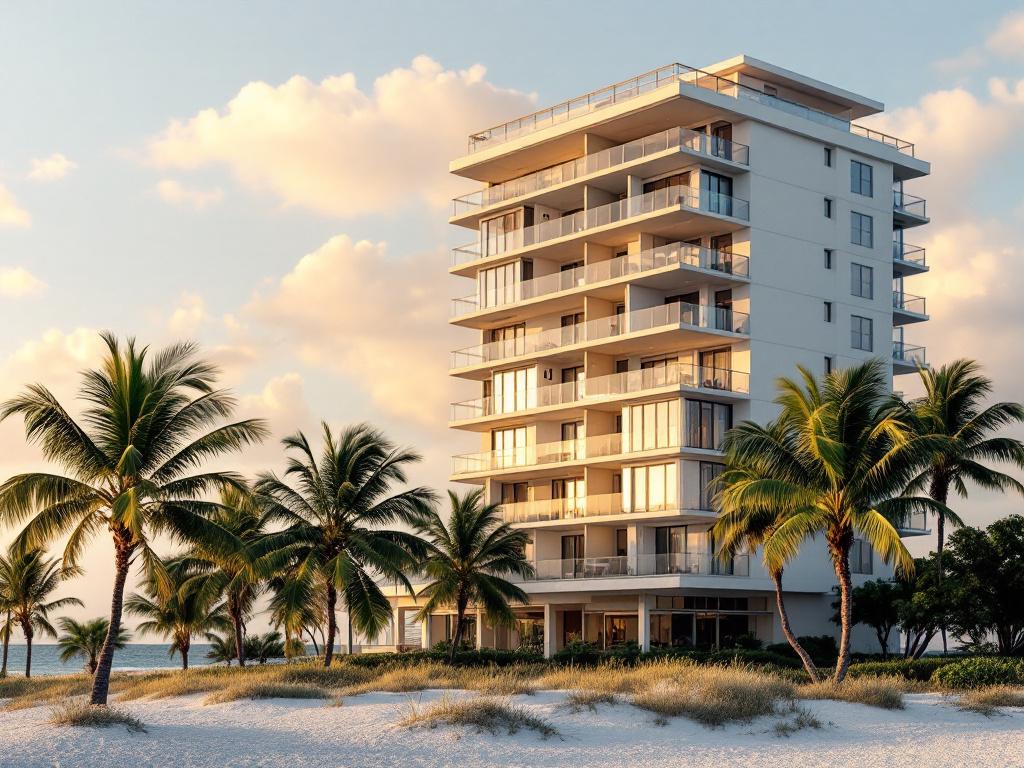
You're scrolling through delray beach condos for sale and the numbers don't add up. According to Redfin, there are roughly 865–877 active condo listings right now with a median list price near $275,000–$277,000 — and units are sitting about 98 days on market, averaging just 1 offer each. Yet the citywide 12-month median sale price across all property types is ~$700,000, per The South Ocean Group's read of Redfin's January 2026 snapshot. That gap — between condo entry pricing and full-market median — is the story. Condos are where the leverage lives.
Three forces are reshaping every condo decision in Delray simultaneously. First, Palm Beach County condo supply sits at ~8–9 months, versus 5.4 months for single-family (same source) — textbook buyer's-market territory in the condo segment alone. Second, Florida's SB 4-D and SB 154 reserve and inspection mandates (Florida Senate SB 4-D) are forcing older buildings into sudden fee hikes and special assessments, particularly along the coast. Third, Fannie Mae now requires at least 10% of the operating budget allocated to reserves (Fannie Mae Selling Guide B4-2.2-01) or buildings get bumped from conventional financing — which kills resale liquidity, not just your offer.
By the end of this guide you'll know which Delray neighborhood tier matches your budget, how to read an HOA reserve study without an attorney, which loan program fits your target building, and the six non-negotiable due-diligence steps before you sign. Buyers comparing Delray to neighboring markets often also evaluate Boca Raton Real Estate for the same coastal lifestyle at different price points — the analytical framework below applies to both.
Table of Contents
- Decode Delray's Neighborhood Tiers
- New Construction, Renovated, or As-Is
- The HOA Cost Reality
- Reading the Delray Market
- The Pre-Offer Due Diligence Checklist
- Financing a Delray Condo
Decode Delray's Neighborhood Tiers — Where Your Budget Actually Lands
Delray Beach is not one condo market. It's four, and they behave differently. The tier you choose determines your price-per-foot, your HOA exposure, your liquidity at resale, and how much of your monthly housing budget gets eaten by amenities you may or may not use.
| Neighborhood Tier | Typical Price Range | Typical HOA/mo | Days on Market | Best-Fit Buyer |
|---|---|---|---|---|
| Oceanfront / A1A | $600K–$2M+ | $800–$1,500 | 90+ | Second-home / lifestyle |
| Intracoastal / East of Federal | $400K–$1.2M | $500–$900 | ~90 | Boating / view buyer |
| Downtown / Atlantic Ave | $300K–$800K | $400–$700 | ~77 | Walkable urbanist |
| West of I-95 / Golf | $150K–$450K | $300–$700 + club dues | 100+ | Value / retirement |
The oceanfront and intracoastal tiers retain value best but carry the highest exposure to Florida's reserve mandates and saltwater corrosion costs. The Florida Department of Business & Professional Regulation requires Structural Integrity Reserve Studies on buildings three stories or taller, and reserves can no longer be waived after December 31, 2024 (Florida DBPR). Translation: the buildings with the best views are also the ones writing the largest catch-up checks.
The Downtown tier is the highest-liquidity segment for lifestyle buyers. Homes.com data shows Downtown Delray units sell after ~77 days versus the 58-day U.S. average — about 33% slower than the typical national resale (Homes.com). Slow, but consistent. Atlantic Avenue's restaurant density and Pineapple Grove walkability create steady owner-occupant demand even when broader market sentiment cools.
West of I-95 golf-community condos offer the best raw $/sqft in the city. The gotcha: many require mandatory golf-club or social memberships with five-figure initiation fees and monthly dues that can effectively double your carrying cost. Read the membership documents before you read the listing photos.
With condo months' supply at 8–9 versus 5.4 for single-family, buyers have negotiation leverage across every tier — but the Downtown tier sees the most owner-occupant offers, which means less negotiation room on the prettiest units and more room on the dated ones. Buyers exploring nearby coastal alternatives often also weigh Jupiter, FL Real Estate for similar oceanfront condo inventory at varying price points.
New Construction, Renovated, or As-Is — The Real Cost of Each Path
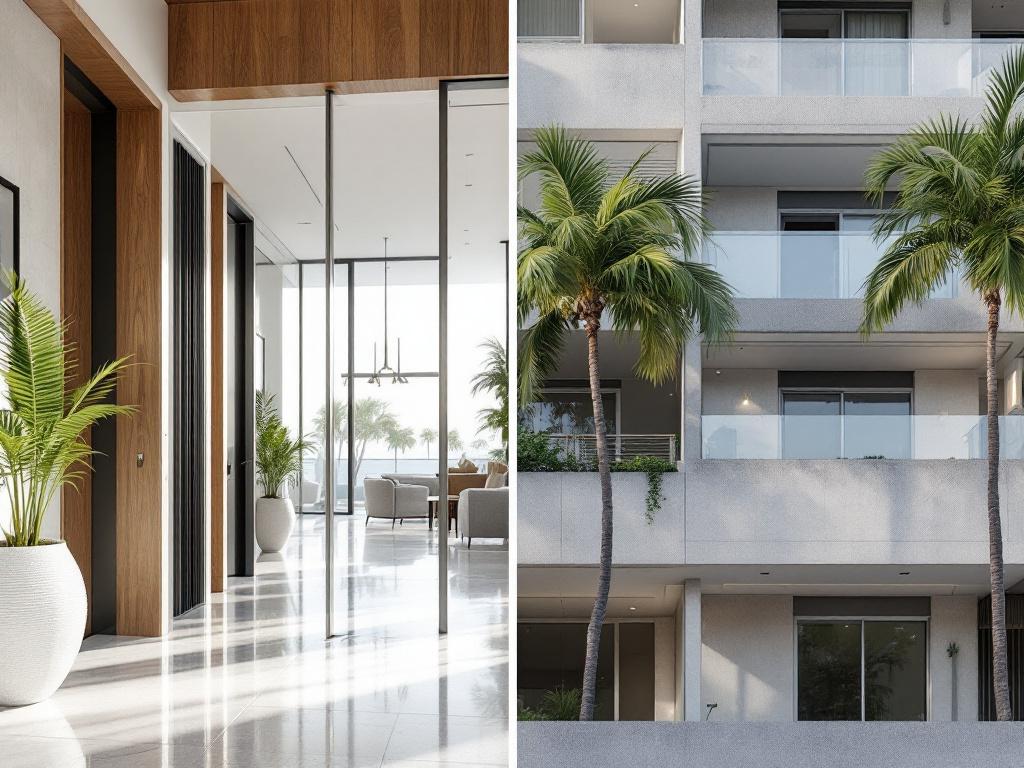
Three acquisition paths, three risk profiles. The "deal" you see on the listing page is only one variable.
| Acquisition Type | Price vs. Comp | Move-In Timeline | Inspection Risk | HOA Trajectory |
|---|---|---|---|---|
| New Construction | +15–30% premium | At builder closing | Low (under warranty) | Low Yr 1–3, rises Yr 4+ |
| Recently Renovated | At market | Immediate | Medium | Stable if reserves funded |
| As-Is / Older | −10 to −25% discount | Immediate, may need work | High | Likely rising |
New construction comes with typical builder warranties — 1-year fit-and-finish, 2-year mechanical systems, 10-year structural. Lender appetite is high once the building reaches roughly 50% sold, satisfying Fannie Mae's project-review thresholds. The trap most buyers miss: HOA fees are often artificially suppressed in years 1–3 because the developer subsidizes operating costs. When the association formally turns over from developer control, fees frequently jump 20–40%. Ask for the projected post-subsidy operating budget before you sign, not after.
Recently renovated mid-market units (built 1990–2015, renovated in the last five years) skip the immediate capex of older stock but require one specific check: has the building completed its Milestone Inspection? Under Florida SB 4-D, buildings three stories or taller need their first inspection at 30 years — or 25 years if within three miles of the coast. A new kitchen does nothing for a 1992 oceanfront tower's concrete column problem.
As-is older buildings carry the steepest discount. Movoto's August 2024 Delray data showed median list at $266/sqft, down 5% year-over-year (Movoto). But Florida real estate attorney Shari Olefson warns that owners of older Florida condos should "expect significant increases in monthly assessments" because "for years, boards and owners chose to waive reserves" (WPTV). Layer that against the Association Reserves finding that roughly 70% of community associations nationally are underfunded, and the discount on a 1985 building often evaporates inside the first special assessment.
A 15% discount on a 1985 oceanfront unit can vanish in a single SB 4-D special assessment — the "deal" is only real after the reserve study confirms it.
The framework to apply: a new construction premium buys you predictable years 1–3 and limited near-term assessment exposure, but the post-subsidy fee jump is real. A renovated mid-market unit is the cleanest fit for a 5–10 year hold if reserves are funded. An as-is older unit is a strong buy only when the SIRS confirms no large pending obligations — otherwise you're buying someone else's deferred maintenance at a small discount. When broadening your search across acquisition types, our guide to Condos for Sale Near Me covers how to set criteria across age bands and building types.
The HOA Cost Reality — What $400/Month vs. $900/Month Actually Buys You
Delray HOAs span an enormous range — roughly $300/month at the modest inland end to $1,500+/month at the oceanfront luxury end. The national average is about $331/month per the U.S. Census American Housing Survey, but coastal Florida buildings routinely run $600–$1,000+ for reasons that have nothing to do with marble lobbies and everything to do with insurance.
After Florida's property insurance market dislocation in 2022, building insurance became the single largest line item in most coastal condo budgets — frequently 30–40% of total operating expenses. Add master flood policy where applicable (most A1A buildings), elevator service, common-area maintenance, pool and amenity upkeep, on-site management, and reserve fund contributions, and the math behind a $900/month fee starts to look less like luxury and more like arithmetic.
Reserves are where the building's future cost hides. Fannie Mae's project standards require at least 10% of operating budget allocated to replacement reserves for Full Review approval. But Community Associations Institute considers 15–40% the healthy range depending on building age and component mix. A building hitting only 10% is at the lender floor, not the engineering target. A building under 10% is a financing problem and a future-assessment problem in the same envelope.
Now the math that actually changes what you can buy. The Consumer Financial Protection Bureau standard caps Qualified Mortgage DTI at 43% of gross income, inclusive of mortgage, HOA, taxes, and insurance. On a $100,000 gross income, that's roughly $3,583/month for total housing. A $300 swing in HOA — say $350 versus $650 — eats $300/month directly from your principal-and-interest capacity. At current rates that's about $50,000–$60,000 less borrowing power. Same income, smaller house, just because the building you fell in love with has a richer amenity package.
Where your HOA dollar actually goes (in a typical coastal Delray building):
- 30–40% → Building insurance (post-2022 coastal Florida)
- 15–40% → Reserve contributions (CAI healthy range); 10% is Fannie Mae's floor
- 70% → Share of U.S. associations that are underfunded (Association Reserves)
- $50K–$60K → Borrowing capacity lost per $300/month of additional HOA
A $300 monthly HOA gap doesn't just cost you $300 a month — it costs you $50,000 to $60,000 in borrowing power before you even close.
Four red flags worth verifying before you offer. One: underfunded reserves below 50% — near-certain future assessment. Two: any special assessment in the last three years — pattern indicates structural underfunding rather than one-off surprise. Three: year-over-year HOA increases above 8% — early warning of catch-up assessments. Four: pending litigation — disqualifies the building from most lender programs and freezes resale.
Donna DiMaggio Berger, a Florida board-certified condo and HOA attorney with Becker & Poliakoff, frames the reserve issue cleanly: "If your association is under-funded, that shortfall doesn't disappear. It becomes a future special assessment for current and future owners" (Community Associations Institute). The cost is constant — the question is just whether you pay it monthly as reserves or all at once as an assessment.
Run the comparison concretely. Two $400,000 units. Unit A: $350/month HOA in a building with 22% reserve allocation. Unit B: $650/month HOA in a building with 9% reserve allocation. Over a 10-year hold, Unit A costs roughly $36,000 less in carrying fees alone — before factoring in lost borrowing capacity at purchase, before factoring in Unit B's higher probability of fee escalation, and before factoring in Unit B's lender-eligibility risk at resale. The "more expensive" unit may actually be the cheaper one to own. Investor-heavy buildings change this math further — see our notes on how concentration affects lender treatment in Boca Raton Property Management.
Reading the Delray Market — Buy Signals vs. Wait Signals Right Now
Markets don't shift evenly. Palm Beach County condos are running ~8–9 months of supply per The South Ocean Group's BeachesMLS read — a buyer's market by any traditional measure. But local momentum data shows pockets of acceleration. Aggregate stats hide segment-specific reality, which is exactly the gap a careful buyer can exploit.
Inventory: ~865–877 active condo listings, median list ~$275K–$277K. Units averaging ~98 days on market with just 1 offer each (Redfin). Buyer interpretation: real leverage exists, especially below $400K, where competition from out-of-state cash buyers thins out.
Months' supply: 8–9 months (condos) vs. 5.4 months (single-family). The condo segment is meaningfully slower than the detached-home market in the same county. That divergence is your negotiating room — sellers in slower segments accept price reductions, closing-cost credits, and rate-buydown contributions that single-family sellers reject outright.
Days on market: Downtown Delray ~77 days vs. 58-day U.S. average (Homes.com). About 33% slower than the national pace. Worth noting: the gap has narrowed from August 2024, when Delray ran a 70-day median list age (Movoto). The market is slow but not getting slower.
Interest rate sensitivity: a 0.5% rate move ≈ $130/month on a $400K loan. Per the CFPB rate explorer, moving from 6.0% to 6.5% raises P&I from roughly $2,398 to $2,528, or about $1,560/year. Waiting for a 50-basis-point rate drop saves about that much annually. Waiting for a price drop that may not come costs much more.
Rent-vs-own crossover. Federal Reserve Bank of Dallas analysis shows Sun Belt rents have outpaced ownership costs in recent years, making buying attractive for 5+ year horizons. Lawrence Yun, NAR's chief economist, emphasizes total ownership cost versus rising rents as the right comparison frame rather than monthly P&I in isolation (NAR).
Long-term price discipline. FAU's Ken Johnson warns that price growth outpacing incomes and rents for extended periods "tends to revert toward fundamentals" (Florida Atlantic University). Translation: discount the explosive-forecast YouTube content. Buy for use and a 5+ year hold, not for flip math.
The buy-now signal is strongest for owner-occupants with 5+ year horizons targeting well-funded buildings priced below $500K, particularly in the Downtown and Intracoastal tiers where lender eligibility is broadest. The wait signal is strongest for buyers eyeing older oceanfront stock where SB 4-D assessments are still washing through and reserve catch-ups remain in front of, not behind, the building. Comparison-shopping nearby markets sharpens your read on Delray pricing — our current inventory of Boca Raton Homes for Sale provides a useful pricing benchmark for buyers triangulating across the corridor.
The Pre-Offer Due Diligence Checklist — Six Steps That Catch the Deal-Killers

This is the section to print. Each step protects against a specific failure mode, and the timing matters as much as the substance.

1. Request the Structural Integrity Reserve Study (SIRS) before you sign. For Florida condos three stories or taller, SIRS is mandatory at least every 10 years, and reserves cannot be waived after December 31, 2024 per Florida DBPR guidance. Read the funded percentage. Under 70% funded is a warning. Under 50% is a near-certain future assessment. Industry best practice from CAI is full reserve study updates every 3–5 years with annual funding-progress review — if the study is older than that, treat the numbers as stale.
2. Pull HOA meeting minutes for the last 24 months. Look for three specific things: special assessment votes (even small ones signal cash-flow stress), pending or recent litigation (disqualifies most lender programs), and language like "deferred maintenance," "structural concerns," or "engineer's report pending." Florida Statutes §718.503(2) gives resale buyers 3 business days after receipt of condo documents to cancel without penalty. Use those three days to read, not to organize movers.
3. Confirm Milestone Inspection status for buildings 25+ years old within 3 miles of coast, or 30+ years inland. Required under Florida SB 4-D. FIU structural engineer Chris Jones, PhD, PE notes that "reinforced concrete structures near the ocean require vigilant inspections and timely repairs," and overlooking minor cracking "can dramatically increase long-term repair costs" (FIU News). The inspection report exists or it doesn't — there is no middle ground, and a building that's overdue should price like one.
4. Get a flood insurance quote, not an assumption. Many Delray addresses sit in FEMA Special Flood Hazard Areas (Zones A or V), where federally regulated lenders must require flood insurance per FEMA mandatory-purchase rules. First Street Foundation research indicates coastal Florida flood risk is rising faster than premiums currently reflect — get a binding quote on the specific unit, not a neighborhood estimate. Premium projections for the next five years matter more than the year-one number.
5. Verify rental restrictions and owner-occupancy ratio. Fannie Mae and FHA generally require ≥50% owner-occupancy for project approval per HUD Handbook 4000.1, and FHA additionally caps commercial space at 35%. National average is roughly 70% owner-occupancy per CAI — buildings below 50% lose conventional and all FHA financing eligibility, which collapses your resale buyer pool to cash and portfolio borrowers only. That's a future-liquidity problem you inherit at closing.
6. Use your 15-day inspection window aggressively. The standard Florida FAR/BAR "AS IS" Residential Contract provides a default 15-day inspection period during which buyers can cancel for any reason (Florida Realtors). Hire an inspector who specifically works on coastal high-rises — they know to look for salt-air corrosion on exposed rebar, concrete spalling on balcony undersides, HVAC coil corrosion, window-seal failure, and stucco cracking patterns that indicate substrate movement. Generic single-family home inspectors miss every one of these.
A reserve study tells you whether the building is hiding $2 million in deferred maintenance. That number becomes your special assessment.
Skip step 1 and you inherit somebody else's deferred maintenance. Skip step 3 and you may close on a building scheduled for partial evacuation during repairs. Skip step 5 and you can't resell to the next conventional buyer. The 15-day window costs you nothing to use and everything to skip.
Financing a Delray Condo — Loan Programs, Reserve Gates, and the Pre-Approval Trap
A pre-approval for a single-family home is not a pre-approval for a condo. Condo financing has an extra layer: the lender approves both you and the building. A building that fails project review knocks you out of conventional financing regardless of your credit score, your down payment, or your reserves. With Fannie Mae's project standards requiring at least 10% of operating budget allocated to reserves, and roughly 70% of associations underfunded nationally per Association Reserves, many Delray buildings — especially older oceanfront stock — fail this test before the borrower's file is even pulled.
| Loan Type | Min Down | Building Approval | Best Fit |
|---|---|---|---|
| Conventional (Fannie/Freddie) | 10% | Full Review when LTV >80% | Well-funded buildings, owner-occupants |
| FHA | 3.5% | FHA-approved list; ≥50% owner-occupied | First-time buyers in approved buildings |
| Jumbo (>$766,550) | 10–20% | Lender-specific, often stricter | Oceanfront / luxury units |
| Portfolio (local bank) | 15–25% | Bank's own review | Buildings that fail Fannie/FHA |
The Fannie Mae Full Review is triggered when LTV exceeds 80% (less than 20% down) and examines budget composition, reserve allocation, master insurance, litigation, owner-occupancy concentration, and single-entity ownership share. Limited Reviews apply at lower LTVs and skip some of the deepest project diligence, but most first-time and move-up buyers in the Delray price range will be in Full Review territory by default.
FHA's project rules are stricter on building composition than on the borrower. The ≥50% owner-occupancy floor and ≤35% commercial-space cap disqualify many mixed-use downtown Delray buildings outright — the same buildings that look attractive on price-per-foot. Before you fall in love with a downtown loft above a restaurant, confirm the building's commercial-space ratio.
The DTI math from earlier applies hardest here. With the 43% CFPB cap on gross income covering mortgage, HOA, taxes, and insurance, a $100,000 earner's roughly $3,583/month housing budget gets eaten by HOA before the mortgage line. High-HOA oceanfront units mean you qualify for less house, not more — and the lender's eligibility threshold for the building hasn't even been tested yet.
The pre-approval action plan in four steps. First, tell your lender at intake that you're shopping for a condo, not a house — get a condo-specific pre-approval that flags project eligibility as a separate review. Second, once you have a target building, ask the lender to run preliminary project eligibility before you write the offer, not after. Most lenders will do this on request; the ones that won't are signaling they don't want condo files. Third, if the building fails conventional, pivot to portfolio lenders immediately. Local Florida community banks routinely write loans on buildings Fannie won't touch, at modestly higher rates and down payments — often 15–25% down at 0.5–1.0% above conventional pricing. Fourth, match your loan type to your target neighborhood tier from the start: oceanfront luxury usually means jumbo or portfolio; downtown often qualifies conventional; West of I-95 often FHA-eligible.
Sellers in adjacent markets navigating similar lender scrutiny can review our guide on how to Sell Your Boca Raton Home. Buyers exploring inland Florida alternatives where condo financing rules differ may also find value in our Ocala Real Estate Guide.
The buyer who wins in Delray's condo market isn't the one with the highest pre-approval number. It's the one whose financing matches a building that will still be financeable in five years when they want to sell. A 25-year-old oceanfront unit at $450K with a fully-funded SIRS and 65% owner-occupancy is a more liquid asset than a 5-year-old downtown unit in a building running $300K in deferred maintenance and 38% rentals. Before you submit an offer, confirm three things in writing: your loan type matches the building, the building passes the lender's project review, and the HOA documents support a clean closing inside your 15-day inspection window. Get all three lined up and the offer you write is the offer that closes.