Destin FL Real Estate: Your Guide to Emerald Coast Beach Living
You insert internal links into blog posts for bocabanyan. That is your ONLY job.
You have TWO sets of links to work with:
SET 1 — PAGE LINKS:
Boca Raton Real Estate: https://www.bocabanyanrealty.com/
Boca Raton Property Management: https://www.bocabanyanrealty.com/boca-raton-property-management
Sell Your Boca Raton Home: https://www.bocabanyanrealty.com/sell-my-house-boca-raton
Boca Raton Homes for Sale: https://www.bocabanyanrealty.com/listings
Hidden Gem: Why Palatka, Florida is Your Next Real Estate Investment Opportunity: https://www.bocabanyanrealty.com/articles/palatka-florida-homes-investment
St. Augustine FL Real Estate: Historic Homes and Modern Investment Opportunities: https://www.bocabanyanrealty.com/articles/homes-for-sale-saint-augustine-florida
Stuart, Florida: The Sailfish Capital's Hidden Real Estate Treasures: https://www.bocabanyanrealty.com/articles/stuart-florida-homes-for-sale
Sand-white beaches and turquoise water sell the postcard. The decision in front of you is harder than the brochure suggests. The real question with **homes for sale in Destin Florida** isn't whether the Emerald Coast is appealing — it's which of three distinct price tiers actually fits your lifestyle and your balance sheet: a roughly $450K beachfront condo, a roughly $650K inland family home, or a $1.2M-plus gulf-view property where the math changes entirely.
The pressure compounds quickly. Out-of-state cash buyers move fast, multiple-offer windows can close in days, and seasonal inventory swings shift negotiating posture by roughly 30–40% between peak and off-season (broker-reported). A property listed in February behaves differently than the same property in September, and most buyers shopping listing sites never see that pattern.
What follows is what listing-site browsing won't give you: how the three Destin submarkets actually trade, what each price tier really delivers, when to negotiate from strength, how new construction stacks against resale, the verifications that protect a coastal purchase, the offer structure that wins without overpaying, and the math that tells you whether you're looking at a residence, an investment, or something in between. This is a working framework for **destin real estate** decisions, not a tour.
## Table of Contents
- [The Three Destin Submarkets That Decide Your Lifestyle Before Your Mortgage Does](#the-three-destin-submarkets-that-decide-your-lifestyle-before-your-mortgage-does)
- [What $400K, $700K, and $1.2M Actually Buy in Destin Right Now](#what-400k-700k-and-12m-actually-buy-in-destin-right-now)
- [When You Buy Decides How You Negotiate — Destin's Seasonal Inventory Cycle](#when-you-buy-decides-how-you-negotiate--destins-seasonal-inventory-cycle)
- [New Construction vs. Resale in Destin — The Hidden Math Buyers Get Wrong](#new-construction-vs-resale-in-destin--the-hidden-math-buyers-get-wrong)
- [The 8 Verifications Every Destin Buyer Must Complete Before Offer](#the-8-verifications-every-destin-buyer-must-complete-before-offer)
- [Winning a Destin Multiple-Offer Without Overpaying](#winning-a-destin-multiple-offer-without-overpaying)
- [Investment, Hybrid-Use, or Primary Residence — The Math That Decides Your Offer Posture](#investment-hybrid-use-or-primary-residence--the-math-that-decides-your-offer-posture)
---
## The Three Destin Submarkets That Decide Your Lifestyle Before Your Mortgage Does {#the-three-destin-submarkets-that-decide-your-lifestyle-before-your-mortgage-does}
Most buyers shopping **homes for sale in Destin Florida** sort by price and bedroom count, then schedule tours across submarkets that have almost nothing in common. That's the first mistake. Destin is three distinct property markets sharing a ZIP code, and the right purchase in one is the wrong purchase in another at the same number.
### Destin Beach, Holiday Isle, and Crystal Beach
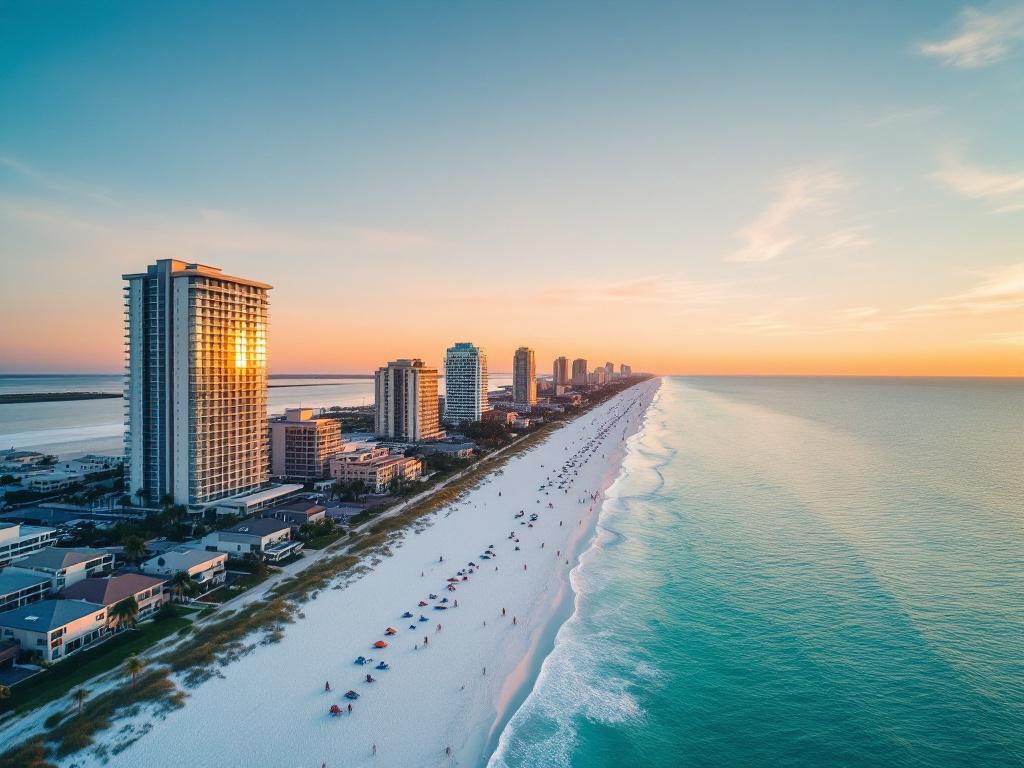
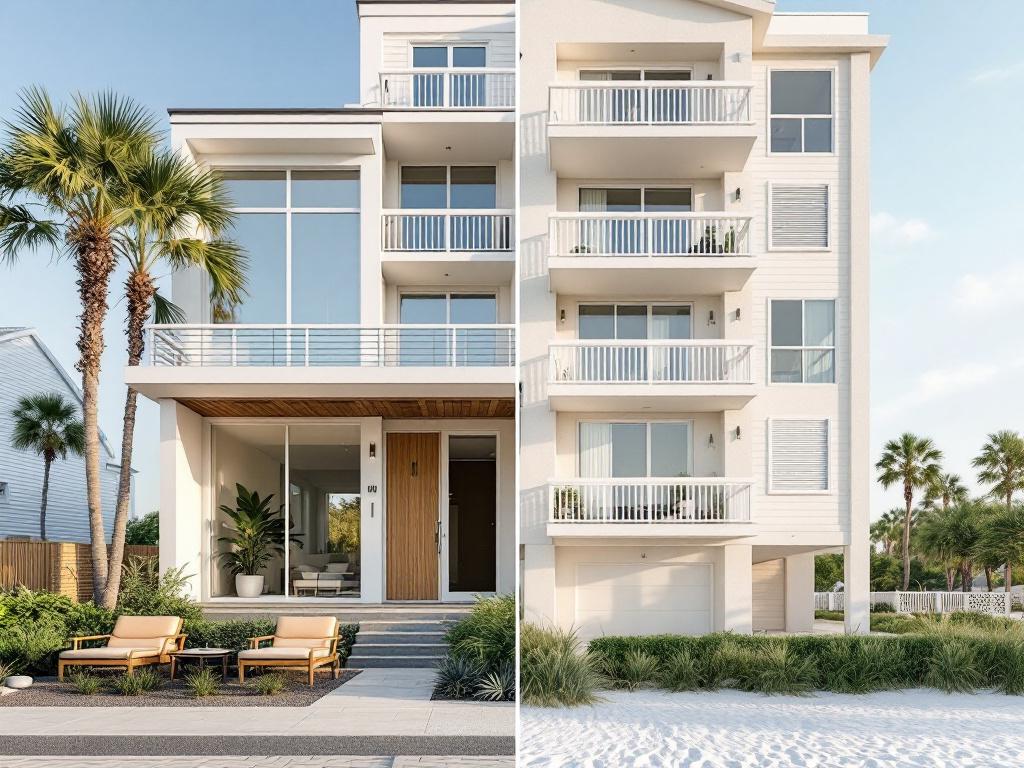
These are the **destin florida neighborhoods** that anchor the postcard. Mid- and high-rise condos dominate, with a thinning inventory of single-family on Holiday Isle and a small band of gulf-front homes along Crystal Beach. The premium driver here is walk-to-sand — measured in steps, not minutes.
The buyer profile is mostly second-home owners, snowbirds, and vacation-rental investors. The tradeoff most buyers underestimate is operating burden. Quarterly HOA meetings actually matter when the building is exposed to salt air and storm surge. Hurricane-shutter compliance windows have deadlines. Special assessments for piling repair, balcony reseals, and roof replacement appear on a coastal schedule that's faster than a typical inland building's. Public beach-access easements may cross property lines on older parcels — a title issue worth confirming before you fall in love with the deck.
Price posture: highest dollar-per-square-foot in the market, with **destin beach homes** in the gulf-front single-family band running well above comparable condo pricing per foot.
### Miramar Beach, Sandestin, and Baytowne
This is the master-planned tier. Sandestin Resort alone is a 2,400-acre development containing multiple distinct sub-neighborhoods — Burnt Pine, Magnolia Cottages, the Village of Baytowne Wharf — each with its own character and rental policy. Newer construction dominates. Gates, golf, marina access, and shuttle service to the beach are standard.
Buyer profile: relocating families, hybrid-use buyers who want personal weeks plus seasonal rental income, and buyers who prioritize amenities over walking to the sand. The tradeoff buyers miss is fee stacking. Sandestin properties carry both a master association assessment and a sub-association fee, and a resort-services fee on top of that. The aggregate carrying cost is meaningfully higher than a single line item suggests. Short-term rental policies vary by sub-neighborhood — some Sandestin associations cap rental nights, require resort-managed bookings, or impose minimum-stay rules that can cut effective rental yield by 15–25% versus a permissive Holiday Isle condo.
Price posture: mid-tier with a wide range, from entry-level townhomes to luxury single-family and penthouse condos.
### Inland Destin, Kelly Plantation, and Regatta Bay
Single-family dominant, bay-side rather than gulf-side, with two notable golf-community options in Kelly Plantation and Regatta Bay. The character here is residential rather than resort — yards, garages, mature trees, and the mundane infrastructure of actual neighborhoods.
Buyer profile: year-round residents, families with school-age children attending Destin Elementary or Destin Middle, and buyers who want a primary residence rather than **destin waterfront property** they'll visit four times a year. The tradeoff is the 10–20 minute drive to gulf beach, which sounds trivial until you realize beachfront access is the single largest driver of Destin appreciation premiums. Inland appreciation tends to lag beachfront in peak cycles but has historically been more stable in downturns — a pattern observed across [Florida coastal markets](https://www.bocabanyanrealty.com/), not a guarantee.
Price posture: lowest entry into Destin proper, and the strongest economics for a primary-residence buyer.
| Submarket | Dominant Property Type | Typical Price Band* | HOA Fee Range* | Best Fit |
| --- | --- | --- | --- | --- |
| Destin Beach / Holiday Isle | Beachfront condo, gulf-front SF | $450K–$2M+ | $500–$1,200/mo | Vacation rental, second home |
| Miramar Beach / Sandestin | Townhome, resort condo, SF | $500K–$1.5M | $400–$900/mo + resort fees | Hybrid use, families |
| Inland Destin / Kelly Plantation | Single-family, golf community | $500K–$1.2M | $150–$500/mo | Primary residence |
*Broker-reported market practice for 2024–2025. Verify against current MLS comparables and Okaloosa County Property Appraiser records ([okaloosapa.com](https://www.okaloosapa.com)) before offer.
The choice between these submarkets is not a price decision — it's a lifestyle and use-case decision. A $700K Sandestin townhome and a $700K Holiday Isle condo solve different problems. The townhome buyer wants a pool, a shuttle, and a low-friction weekend. The condo buyer wants the deck, the view, and a unit that books at $400 a night in July. Buyers who shop by price across submarkets — looking at every $700K listing regardless of where it sits — end up with the wrong property at the right number, then spend three years wondering why the experience didn't match the spreadsheet.
> Beachfront in Destin isn't more expensive — it's a different purchase. You're buying a lifestyle with quarterly HOA meetings, hurricane-shutter compliance windows, and a salt-air maintenance schedule that decides your weekends.
---
## What $400K, $700K, and $1.2M Actually Buy in Destin Right Now {#what-400k-700k-and-12m-actually-buy-in-destin-right-now}
Listing-price browsing tells you almost nothing in this market because **destin home prices** correspond to property *classes*, not just square footage. A $500K listing is a fundamentally different asset depending on which side of the price band it sits.
**$350K–$500K (entry tier).** Older beachfront condos, frequently 1980s–1990s construction with original windows and pre-renovation interiors. Inland townhomes. Smaller single-family on the mainland. The recurring issues: deferred HVAC replacement, original windows that fail current hurricane wind-load standards, HOA reserves that are underfunded against a coastal capex schedule. Assume special-assessment risk and budget accordingly.
**$500K–$800K (mid-tier).** Renovated mid-rise beachfront condos, newer Sandestin and Miramar Beach townhomes and small single-family, well-kept inland 3-4BR homes. This is the largest inventory band in Destin and the one most relocating-family buyers compete in. Properties here are generally turnkey and don't require immediate capex.
**$800K–$1.2M (upper-mid).** Premium beachfront condos with direct gulf-front exposure rather than side or partial views, newer Sandestin single-family, Kelly Plantation and Regatta Bay golf-course homes. Rental income meaningfully changes the carrying-cost math at this tier — gulf-front commands a nightly-rate premium that side-view doesn't.
**$1.2M+ (luxury).** Direct gulf-front single-family, luxury new construction, penthouse condos. Buyers at this tier are usually trophy-motivated. Appreciation is more market-cycle dependent and tracks national luxury-coastal patterns rather than local Destin demand.
| Price Tier | Property Class | Typical Condition | HOA Posture | Primary Buyer |
| --- | --- | --- | --- | --- |
| $350K–$500K | Older condo, inland townhome | Mixed; reno often needed | Underfunded reserves common | Entry buyer, first STR |
| $500K–$800K | Renovated condo, newer SF/townhome | Good to excellent | Stable, predictable fees | Relocating family, hybrid-use |
| $800K–$1.2M | Premium beachfront, golf-community SF | Excellent | Higher fees, better-funded | Investor, move-up buyer |
| $1.2M+ | Luxury, direct gulf-front | Excellent / new | Highest, often resort-tier | Trophy buyer |
Ranges reflect broker-reported market practice. Verify against current MLS data and HOA financial disclosures. [Florida Statute 720.303](http://www.leg.state.fl.us/Statutes/index.cfm?App_mode=Display_Statute&URL=0700-0799/0720/Sections/0720.303.html) governs HOA financial reporting — buyers are entitled to budgets and reserves studies before closing, and you should request them in writing.
Three points the matrix doesn't show. First, the mid-tier between $500K and $800K is the most competitive band in Destin because relocating families and hybrid-use buyers overlap there. Expect multiple-offer scenarios in this band more than in any other. Second, below $500K the property is usually telling you why it's priced that way through deferred maintenance — for older condos in this band, build a first-year capex reserve in the range of roughly 8–12% of purchase price (broker and inspector practice; have your inspector quantify against the specific unit). Third, above $1.2M the appreciation thesis weakens. Luxury Destin tracks national luxury-coastal trends more than local Destin demand, which means national rate moves and equity-market pullbacks hit this tier harder than they hit the mid-band. If you're buying at this level for appreciation rather than enjoyment, your thesis needs to be explicit and stress-tested. Most buyers at this tier are paying a consumption premium, and the **homes for sale in Destin Florida** at this price point should be evaluated as such.
---
## When You Buy Decides How You Negotiate — Destin's Seasonal Inventory Cycle {#when-you-buy-decides-how-you-negotiate--destins-seasonal-inventory-cycle}
Destin's market is tourism-driven, which means inventory and seller motivation move on a calendar most buyers ignore. The same property listed in February and September will be priced and negotiated differently — sometimes by 5–10%. Like other Florida coastal markets such as [St. Augustine](https://www.bocabanyanrealty.com/articles/homes-for-sale-saint-augustine-florida), **destin real estate** pricing follows tourism rhythm, not the broader national real-estate calendar.
- **Peak Season (December–April).** Highest list prices, tightest inventory, slowest price reductions. Sellers see winter snowbird and spring-break demand and refuse to negotiate. Multiple offers more common on quality listings. The worst time to be a price-sensitive buyer.
- **Spring Surge (March–May).** Inventory rises as sellers list to catch peak-season buyer attention, but pricing remains firm into April. May is the inflection point — first price reductions of the year typically appear here.
- **Summer Slump (June–August).** Counter-intuitive but real. Vacationers are renting, not buying. Out-of-state buyer attention drops as families travel. Days on market lengthen. Sellers grow tense about carrying costs through the fall. The best window for opening price negotiation on listings older than 60 days.
- **Hurricane-Season Soft Patch (mid-August–October).** Hurricane risk plus back-to-school timing thins the buyer pool further. Sellers who didn't move inventory by Labor Day often cut price 3–7% to clear before winter (broker-reported — verify against current MLS price-history data on the specific listing). Strongest buyer leverage of the year.
- **Pre-Holiday Reset (November–early December).** Inventory thins as listings expire or are pulled. Motivated sellers remain — these are the ones who need to close before year-end for tax reasons. Niche but real opportunity for sharp buyers shopping **homes for sale in Destin Florida** with a flexible close.
> The most expensive moment to buy in Destin isn't January's peak. It's the two weeks before Labor Day, when every family that promised themselves a beach house this summer realizes they're running out of summer.
Three tactical lines:
- If you must close before peak season: list-shop in August, offer in September.
- If you have flexibility: late September through October is the strongest buyer's window.
- If you're shopping in spring: compete on terms — close timeline, contingency strength, financing — not on price.
---
## New Construction vs. Resale in Destin — The Hidden Math Buyers Get Wrong {#new-construction-vs-resale-in-destin--the-hidden-math-buyers-get-wrong}
The listing-price gap between comparable new construction and resale rarely tells the real story. New construction in **destin real estate** — Sandestin's newer phases, Miramar Beach infill projects, luxury beachfront teardowns — is heavily incentivized in slow seasons through flooring upgrades, HOA-fee credits for the first year, and closing-cost contributions. Resale, conversely, is negotiable on price but inherits whatever the prior owner deferred. Five axes decide which side of that comparison serves you better.
**Incentives and concessions.** New-construction builders in slow markets routinely offer roughly $20K–$40K in upgrades or rate buy-downs (broker-reported). Resale sellers concede via price reduction or repair credits after inspection. The net economic effect can be similar — but the *form* of the concession matters for financing and appraisal. A price reduction lowers your loan basis and your insurance basis. An upgrade credit doesn't. If you're financing 80%, a $30K price cut saves you about $24K of mortgage principal; a $30K upgrade allowance saves you nothing on the loan.
**HOA structure and rental policy.** This is where buyers get burned. New developments often write tighter **destin short-term rental** restrictions into the original CC&Rs — minimum 30-day rentals, owner-only management, rental caps. Older established condos may have grandfathered, more permissive rental rights. If your thesis includes vacation rental income, the older resale may have more rental flexibility than the newer, "investment-friendly" looking build. Verify rental policy in the recorded CC&Rs — pulled from the county clerk's records — not the agent's summary handout. The summary is marketing; the CC&Rs are law.
**Construction quality and warranty.** New construction carries builder warranty, typically 1-year workmanship, 2-year systems, and 10-year structural per Florida builder norms (verify against the specific builder's warranty document). Resale has no warranty; you inherit the property as-is. For coastal property the relevant question isn't "is it new?" but "was it built to current Florida Building Code coastal standards?" Florida updated coastal high-velocity hurricane zone standards in 2020, and pre-2020 construction may not meet current wind-load requirements. Reference: [Florida Building Code](https://www.floridabuilding.org). This matters for insurance, for resale, and for how the structure performs in the storm that arrives during your ownership rather than someone else's.
**Condition and capex timeline.** A 2024-built Sandestin townhome will not need a roof, HVAC, or windows for 12–18 years. A 1995 Holiday Isle condo may need all three within five years — and the HOA reserve study will tell you whether the association is funded for it or whether you're walking into a special assessment. Request and read the reserve study, not just the budget. [Florida Statute 718.112](http://www.leg.state.fl.us/Statutes/index.cfm?App_mode=Display_Statute&URL=0700-0799/0718/Sections/0718.112.html) governs condominium reserves disclosure, and the buyer is entitled to it. The reserve study is one of the highest-value documents in a Destin condo purchase and most buyers never open it.
**Closing timeline and price-discovery risk.** New construction often closes 60–120 days out, sometimes longer for pre-construction. Resale closes in 30–45 days. In a rising-rate environment, the longer new-construction window exposes the buyer to rate movement that can change affordability between contract and closing. In a falling-rate environment, that window is a gift. Buyers comparing Destin's coastal premium to inland Florida value plays often look at markets like [Palatka, Florida](https://www.bocabanyanrealty.com/articles/palatka-florida-homes-investment), where the new-vs-resale calculation runs differently because land cost dominates less of the price and rate-window risk plays out against a different base.
The synthesis: the question is not "new or resale?" but "which set of risks am I better equipped to manage?" Buyers with a contractor relationship and time should consider resale at a 10–15% discount to comparable new — the discount pays for the capex you'll inherit, and you control the timing. Buyers who want predictable carrying costs and no first-year surprises should pay the new-construction premium and read the CC&Rs carefully for rental policy. Wrong answer for either profile costs five figures within the first three years of ownership. Among the **homes for sale in Destin Florida** you'll tour, the new-vs-resale split is rarely about preference; it's about which inheritance you're equipped to take.
---
## The 8 Verifications Every Destin Buyer Must Complete Before Offer {#the-8-verifications-every-destin-buyer-must-complete-before-offer}
This is not a generic Florida buyer checklist. Each item below is Destin-specific — meaning it addresses a risk that the generic process catches late or misses entirely.
1. **HOA reserve study and 5-year special-assessment history.** Florida statute requires reserves disclosure for condos. Read the actual study, not the summary. For beachfront condos specifically, look for funded line items on roof, exterior reseal, pilings, and balcony repair — these are the high-cost coastal capex items. If reserves are below 70% funded, assume a special assessment is coming and price your offer accordingly.
2. **Flood zone and current NFIP or private flood quote.** Get your *own* flood quote from your insurer or via the [FEMA flood insurance](https://www.fema.gov/flood-insurance) rate tool before offer. Sellers' carrier estimates are routinely outdated. Properties in FEMA Zone AE or VE require flood insurance for any federally-backed mortgage; the private flood market may quote differently than NFIP. Premiums vary widely with elevation certificate, year built, and post-FIRM status. The number you get from your own carrier is the only number that matters.
3. **Wind/hurricane insurance quote and wind-mitigation inspection.** Separate from flood. Florida wind insurance is a distinct policy or rider, and on coastal property it's often the largest single insurance line item. A current wind-mitigation inspection (Florida OIR Form 1802; reference [floir.com](https://www.floir.com)) can reduce premiums materially. Request the seller's inspection or commission your own; the cost is small relative to the multi-year premium impact.
4. **Recorded CC&Rs and short-term rental policy in writing.** Pull the recorded CC&Rs from the [Okaloosa County Clerk of Courts](https://www.clerkofcourts.cc), not the HOA's summary. Confirm rental minimum (7-day vs. 30-day vs. owner-only), any caps on rental nights per year, and whether amendments are pending. Ask for HOA board meeting minutes from the last 12 months — pending amendments to **destin short-term rental** policy show up there before they hit the recorded documents.
5. **Title commitment with full chain review.** Destin has historical leasehold and beach-easement complications, particularly for older Holiday Isle and Crystal Beach parcels. Ensure the title commitment shows public beach access easements explicitly and that they don't bisect usable lot area. A buried easement on the recorded plat is the difference between owning a 50-foot beach frontage and owning a 50-foot frontage the public can walk across.
6. **Structural and pilings inspection on any direct **destin waterfront property**.** A general home inspector is insufficient for direct gulf-front. Commission a separate structural engineer's review of pilings, balcony attachments, and below-grade salt-corrosion exposure. Cost typically runs roughly $800–$1,500 (broker and inspector practice) and can identify $20K-plus deferred items the general inspector won't flag. On beachfront, this is the single highest-leverage line item in due diligence.
7. **Property tax history and homestead status.** Florida property taxes recalibrate at sale — the prior owner's homesteaded tax bill is not what you'll pay. Pull the property record from the [Okaloosa County Property Appraiser](https://www.okaloosapa.com) and recalculate at the current millage rate on your actual purchase price. Investment-property owners cannot homestead, which means the carrying cost gap between primary-residence and investment ownership of the same property can be meaningful in the first full tax year.
8. **Final walk-through under operating conditions.** Run every HVAC zone, every plumbing fixture, every appliance during the walk-through. Seasonal properties accumulate undetected failures during low-occupancy months. A cracked condenser line or failed water heater that didn't show in the original inspection often surfaces here, and the walk-through is your last cost-free moment to catch it.
Any item on this list that the seller resists or stalls on is, itself, a data point about the property.
---
## Winning a Destin Multiple-Offer Without Overpaying {#winning-a-destin-multiple-offer-without-overpaying}
In Destin's competitive bands — the mid-tier $500K–$800K and premium beachfront in peak season — the highest *price* offer doesn't always win. Sellers, especially out-of-state and second-home sellers, increasingly prioritize *certainty* over the last $10K. That gives a structured offer real leverage, and it's how disciplined buyers beat better-capitalized competition for **homes for sale in Destin Florida**. Six offer levers decide the outcome.
**Earnest money deposit.** Market practice in Destin is 1–3% for standard transactions and 3–5% for competitive offers (broker-reported). Going to 5% signals seriousness without being economically risky if your due-diligence contingencies hold. EMD remains refundable during contingency periods — read the FAR/BAR contract language carefully. The standard Florida contract is published by the [Florida Realtors](https://www.floridarealtors.org) and the Florida Bar.
**Inspection contingency window.** Standard is 10–15 days under the Florida FAR/BAR contract. Shortening to 7 days in a competitive offer signals confidence; shortening to 5 days is aggressive but defensible if your inspector can schedule fast and you have a structural engineer on standby for beachfront. Do *not* waive inspection on coastal property — the structural and salt-corrosion risk is too high, and the savings on a waived inspection are trivial against the exposure.
**Appraisal contingency.** This is the lever most-cited in advice columns and the one that gets Destin buyers in trouble. Destin's STR-influenced comps are volatile, and appraisals can come in 5–10% below contract in fast-moving months. Waiving appraisal means you cover the gap in cash. A *partial* appraisal-gap clause — for example, "buyer to cover up to $25K of appraisal shortfall" — is the more sophisticated play. It shows commitment without unlimited exposure, and it's the structure professional investors use when they want to win without writing a blank check.
**Escalation clause.** Use this when you have evidence of multiple offers but want to avoid blind over-bidding. The structure: "Buyer offers $X and will exceed any bona fide competing offer by $5,000 up to a ceiling of $Y." Require the seller to produce the competing offer for verification. This protects against fictional competing-bid pressure, which is more common in fast markets than buyers want to believe.
**Closing timeline match.** Ask the listing agent the seller's preferred close date *before* writing the offer. A seller who needs 45 days for tax-year reasons will take a slightly lower price with a matched timeline over a higher offer that closes in 21 days. Timeline match is a free concession that costs the buyer nothing. Sellers across Florida coastal markets — whether [selling a Boca Raton home](https://www.bocabanyanrealty.com/sell-my-house-boca-raton) or a Destin condo — increasingly prioritize closing certainty over marginal price, and the buyer who reads that signal wins more often than the buyer who reads only the list price.
**Financing strength.** A pre-underwritten loan, not just a pre-approval, is materially stronger in Destin's seller-aware market. Underwritten approval means the file is cleared subject only to property; pre-approval is just a creditworthiness opinion. Ask your lender specifically for pre-underwriting. Not all lenders offer it, but most credit unions and major banks will, and the difference at offer time is significant.
> In Destin's multiple-offer markets, the buyer who wins isn't the one with the highest price. It's the one who matched the seller's closing timeline, kept appraisal protection, and showed up with underwritten financing instead of a pre-approval letter.
The winning offer in **destin real estate** combines a competitive but not reckless price, a closing timeline matched to the seller's actual needs, appraisal protection via a partial gap rather than full waiver, inspection retained on coastal property, and underwritten financing. Buyers who write this offer routinely beat cash buyers offering 3–5% more, because cash buyers without contingencies offer speed but not certainty — and certainty is what closes deals when sellers have been through one failed transaction this cycle. The sellers most exposed to that pattern have been on the market for 60-plus days, watched a contract fall through over financing or inspection, and now value a clean close more than a number.
---
## Investment, Hybrid-Use, or Primary Residence — The Math That Decides Your Offer Posture {#investment-hybrid-use-or-primary-residence--the-math-that-decides-your-offer-posture}
The same Destin property carries different economics for three buyer types, and the buyer's posture changes their offer strategy. An investor underbids. A primary-residence buyer accepts market. A hybrid-use buyer falls in the middle. Knowing which of the three you actually are — not which you'd like to be — is the single most important step in any Destin purchase.
**Primary residence.** Carrying costs include principal and interest, property tax (Okaloosa County effective rates run roughly 0.7–0.8% of assessed value — verify at the [Okaloosa County Property Appraiser](https://www.okaloosapa.com)), homeowners + wind + flood insurance (combined often $4K–$10K annually for coastal property, broker- and insurer-reported), HOA fees, and a maintenance reserve of about 1% of property value annually as a working rule of thumb. There is no offsetting income. Break-even on transaction costs alone — closing costs, agent commissions on resale, transfer taxes — typically requires three to five years of ownership at historical Destin appreciation rates. If your time horizon is shorter than that, you're not buying a residence; you're buying a short-term lifestyle subscription with significant exit friction.
**Pure investment, vacation rental.** Same carrying costs, plus management fee (typically 20–35% of gross rental for full-service Destin STR managers — broker-reported; self-managed buyers save fees but absorb the time cost), turnover and cleaning, marketing, and occupancy tax (Okaloosa County tourist development tax plus Florida state sales tax on rentals — see the [Okaloosa County Tax Collector](https://www.okaloosatax.com)). Gross rental on a $600K beachfront condo is broker-reported in the $35K–$60K range with high seasonal concentration. Net cash-on-cash returns typically run 2–5% before appreciation. The thesis is appreciation-led, not cash-flow-led. Underwrite that explicitly. Buyers running multi-market Florida investment portfolios often pair Destin coastal exposure with [Boca Raton property management](https://www.bocabanyanrealty.com/boca-raton-property-management) on the Atlantic side specifically to balance the seasonal rental concentration, because gulf-side and Atlantic-side calendars don't peak in the same months.
**Hybrid (personal use plus seasonal rental).** The most popular Destin model. Owner blocks personal weeks, typically 2–6 per year, and rents the balance through STR platforms or a local manager. Rental income covers roughly 30–50% of carrying costs (broker-reported). Tax treatment is more complex: if personal use exceeds 14 days or 10% of rental days (whichever is greater), the property is classified as a personal residence with rental use under [IRS Publication 527](https://www.irs.gov/publications/p527) and deductions are limited. Buyers planning hybrid use should consult a CPA before offer, not after. The 14-day rule is one of the most-violated provisions in **destin investment property** ownership, and the consequences land at tax time, not at closing.
| Model | First-Year Cash Position | Income Offset | Tax Treatment | Offer Posture |
| --- | --- | --- | --- | --- |
| Primary residence | Negative (full carry) | None | Mortgage interest + property tax deductible (SALT cap); homestead available | Accept market; compete on terms |
| Pure investment | Negative to small positive | 60–100% of carry, seasonal | Rental income taxable; depreciation, expenses on Sched. E | Underbid market; walk if appreciation thesis weak |
| Hybrid use | Negative; smaller gap | 30–50% of carry | Pro-rata per IRS Pub 527; 14-day/10% rule | Negotiate price; prioritize rental-permissive HOA |
The offer-posture row is the operative output. A pure investor walking into a $750K beachfront condo should be running net rental yield against current Treasury rates — if the spread is under 200 basis points, the appreciation thesis has to do all the work, which is risky in single-market exposure. Investors comparing Destin's gulf exposure to Atlantic-side alternatives like [Stuart, Florida](https://www.bocabanyanrealty.com/articles/stuart-florida-homes-for-sale) often find that the seasonal patterns and STR economics differ enough that the two markets diversify rather than duplicate, which matters more than nominal yield in a portfolio.
A primary-residence buyer doesn't run that math because the property's value is consumption — lived experience — not yield. Buyers also exploring [Boca Raton listings](https://www.bocabanyanrealty.com/listings) for primary-residence economics will see lower wind and flood insurance posture and different property-tax treatment than coastal Destin, which changes the carrying-cost picture meaningfully even at similar list prices.
The hybrid-use buyer occupies the most negotiable position. Rental income matters, but lifestyle premium justifies paying closer to market. Most buyers shopping **homes for sale in Destin Florida** think they're hybrid; many are actually pure-investment buyers in denial about how often they'll actually use the property, or primary-residence buyers convincing themselves that future rental income will materialize to justify a stretch purchase. Be honest with the math before writing the offer. The property doesn't care which category you put yourself in. The IRS, your insurance carrier, and your HOA all do.