
Buying a Duplex for Sale: Investment Strategy & First-Time Buyer Tips
Why Most First-Time Buyers Mishandle a Duplex for Sale (And What It Costs Them)
A duplex for sale is two financial instruments stapled together: a primary residence and a small business. Get the math right and the rented unit covers roughly half your mortgage payment in many markets, according to ReadyNest, with American Family Insurance confirming the rented side can take "a big chunk" out of the monthly payment. Get the math wrong and you've tied your capital to a depreciating asset with negative cash flow and landlord obligations you didn't price in.
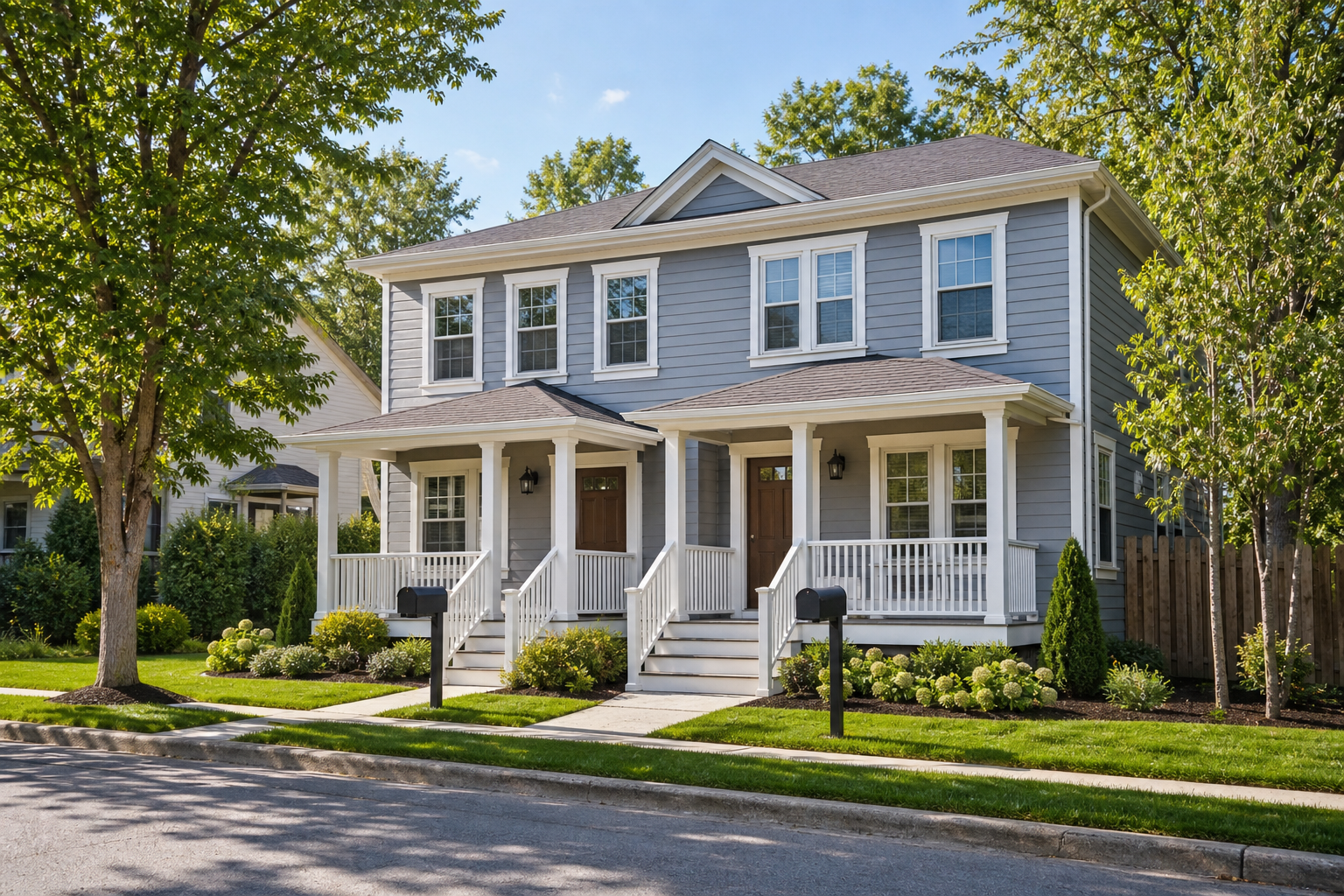
Most of the available guidance leans optimistic for a structural reason: it's published by lenders, insurers, and investor-education brands with a stake in closing the transaction. FortuneBuilders, LoopNet, Compmort, and American Family all publish pro-duplex content. None of them get paid if you walk away. Your job, then, is to stress-test the deal against the conservative case: vacancies, problem tenants, doubled repair bills.
What follows is a six-part framework — financial fit, income verification, duplex-specific inspection priorities, financing mechanics, three independent valuation methods, and walk-away red flags. In markets like South Florida, where Boca Raton Real Estate inventory includes a mix of single-family and small multifamily properties, the difference between a duplex for sale that builds wealth and one that erodes it usually comes down to two or three numbers caught — or missed — during contract review.
Table of Contents
- Is a Duplex the Right Investment for Your Cash Position and Risk Tolerance?
- How to Verify a Duplex's Rental Income Before You Sign an Offer
- Duplex-Specific Inspection Priorities That Single-Family Inspections Miss
- Duplex Financing vs. Single-Family Financing — What Actually Changes
- Three Valuation Methods That Stop You From Overpaying on a Duplex
- Duplex Red Flags That Justify Walking Away From a Deal
- Duplex Buyer Questions That Don't Fit Anywhere Else
Is a Duplex the Right Investment for Your Cash Position and Risk Tolerance?
Before you tour anything, decide which of two operating models you're actually buying into. They look similar from the street and behave very differently on a spreadsheet.
The owner-occupied duplex (often called a house hack) means you live in one unit and rent the other. This is the path that qualifies for residential financing — FHA at 3.5% down or conventional at 5% down, per FortuneBuilders, NerdWallet, and HAR.com. The rental income from the second unit may cover half the mortgage in many markets, per ReadyNest. The pure investment duplex means both units rented, you living elsewhere, and the loan reclassified as an investment property — typically 15–25% down based on standard 2024 U.S. underwriting practice.
Before buying a duplex under either model, ReadyNest's four readiness gates apply: can you afford the upfront cash; can you afford the mortgage with no tenant at all; can you build reserves for two units' repairs; and are you emotionally and physically prepared to be a landlord? FortuneBuilders adds the recurring threat list — vacancies, bad tenants, maintenance issues, late payments. These are not edge cases. They are operating reality.
| Factor | Owner-Occupied Duplex | Non-Owner-Occupied Duplex | Single-Family Home |
|---|---|---|---|
| Minimum down payment | 3.5% FHA / 5% conventional | 15–25% (investment loan) | 3.5% FHA / 5% conventional |
| Rental income offset | One unit's rent (often ~50% of payment) | Both units' rent | None |
| Loan classification | Residential | Investment property | Residential |
| Reserves recommended | 6+ months PITI (both units) | 6–12 months PITI | 3–6 months PITI |
| Landlord obligations | One tenant | Two tenants | None |
| Exit flexibility | Sell, refinance, or hold as full rental | Sell or hold | Sell or convert to rental |
Three buyer profiles emerge from the matrix. The Owner-Occupant Builder has stable W-2 income, six or more months of reserves, and a willingness to manage tenants. This buyer benefits most from the house-hack model and the HAR.com 9–12 month timeline: live in one unit for the first year to satisfy occupancy requirements, then move out, rent both units, and use the rental income to qualify for the next primary residence. Done three times in a decade, this is a small portfolio built on residential financing terms.
The Capital-Light Investor tries to skip owner-occupancy and immediately runs into the 15–25% down requirement plus an interest-rate premium. On a $400,000 duplex, the cash gap between owner-occupied and investment classification is roughly $60,000–$85,000. Most first-time buyers don't have that capital and shouldn't pretend they do.
The Wrong-Fit Buyer wants a turnkey primary residence with zero landlord obligations. For this buyer, a duplex is structurally the wrong asset. Search standard Boca Raton Homes for Sale instead — single-family inventory carries none of the tenant-management overhead and none of the income offset. That's the trade, and it's an honest one.
A duplex only generates income if the rental unit covers its own mortgage, taxes, and repairs. If it doesn't, you're subsidizing a tenant.
How to Verify a Duplex's Rental Income Before You Sign an Offer
Sellers and listing agents quote two numbers, and only one of them is real. Potential rent is what the seller believes the unit could earn after improvements, repositioning, or "the next tenant." Actual rent is what the current tenant pays today, documented on the signed lease and confirmed by bank deposits. Your offer and your underwriting must be built on actual rent. If the gap between actual and potential is large, that gap is the seller's marketing pitch, not your buying assumption.
The verification process below is the system to run before any earnest money clears escrow. Each step closes a specific loophole that sellers exploit when a duplex for sale is priced on aspirational income.
- Demand 12 months of actual rent receipts or bank deposits. Not the lease, not the seller's spreadsheet — the deposit history pulled from bank statements showing the rent landing on schedule. If the seller refuses or can produce only partial records, treat the listed rent as unverified and price your offer against market rent at the conservative end of the range.
- Pull three rent comparables within a half-mile radius. Use Zillow rental listings, Apartments.com, and a local rent survey — request one from a Boca Raton Property Management firm, which typically tracks actual lease-up rents by submarket. Discard any comp that's been on the market more than 30 days. Those are aspirational prices, not market-clearing prices, and they distort your comp set upward.
- Apply the lender's 75% qualifying-income haircut to your own underwriting. Standard U.S. underwriting practice consistent with Fannie Mae and FHA norms uses roughly 75% of market rent as qualifying income to absorb vacancy and non-payment risk — a practice ReadyNest describes as lenders considering only "potential" rent conservatively. Use the same haircut in your personal cash-flow model. If the deal only works at 100% of stated rent, it doesn't actually work.
- Run the 50% rule on operating expenses. Assume half of gross rent covers taxes, insurance, repairs, vacancy, and management — excluding mortgage principal and interest. This screening rule is consistent with the operating-cost realities flagged by FortuneBuilders. If the resulting net operating income doesn't service the debt with margin to spare, the deal is structurally thin.
- Stress-test six months of vacancy. ReadyNest's question is the right one: can you still afford the mortgage if no tenant pays for six months? If the answer is no, the deal is fragile and a single bad tenant turnover can force a distressed sale. This is the single most important affordability check in residential income investing.
- Request an estoppel certificate from each existing tenant. This is a signed statement from the tenant confirming rent amount, deposit held, lease end date, and any side agreements — free parking, included utilities, pet credits, deferred rent. Estoppels surface verbal arrangements that erode income and that sellers conveniently forget to disclose. A signed estoppel is your defense against post-closing surprises.
- Check 36 months of local vacancy and rent-trend data for the zip code. Rising vacancy or falling median rent means today's income is a peak, not a baseline. Underwrite the deal at the trailing three-year average rent, not the current rent. If the property still cash-flows under those assumptions, you have margin. If it doesn't, you're buying at the top.
Run this seven-step system before the inspection contingency expires. The cost is roughly six to ten hours of your time and approximately $100–$200 in estoppel preparation fees if your attorney drafts them. The benefit is that you stop buying a duplex on stories and start buying on documented income.
Duplex-Specific Inspection Priorities That Single-Family Inspections Miss
A standard home inspection covers roof, foundation, HVAC, plumbing, electrical, and major appliances. That coverage is necessary but not sufficient for a duplex. The principle that reshapes the inspection scope comes from Bob Pinnegar, president and CEO of the National Apartment Association, quoted by NerdWallet: when estimating repair costs, "multiply the need by the number of units." If one unit's water heater is failing, the other unit's water heater is sitting on the same depreciation curve installed in the same year by the same contractor. Budget accordingly.
The five inspection priorities below are the duplex-specific layer your standard inspector may not address unless asked.
Shared wall integrity and fire separation. The wall between units is structural, acoustic, and code-regulated. Ask the inspector to verify three things: fire-rated drywall is intact (typically Type X 5/8" drywall in modern construction, often absent in older duplexes), no penetrations have compromised the fire barrier (look for added electrical, plumbing, or HVAC runs cut through the demising wall), and soundproofing is adequate enough that tenant noise won't drive vacancy in your unit or the rental. Exact fire-rating code requirements vary by jurisdiction — consult local building code rather than relying on national rules of thumb. American Family flags shared walls as a recurring practical issue, and the resolution always requires opening up drywall to verify what's behind it.
Dual HVAC, plumbing, and electrical systems. Many duplexes have separate systems per unit; some share. Confirm: is there one electrical panel or two? One water heater or two? One HVAC condenser or two? Pinnegar's multiplication rule applies — if one unit needs a new water heater this year, budget for the second within 24 months. A single shared panel feeding both units creates billing complexity (no submeter means tenants can't be billed separately for electric) and is often a financing or insurance flag. General contractor cost data as of 2023–2024 places electrical panel upgrades at roughly $5,000–$10,000 and water heater replacement at roughly $1,500–$3,500 per unit. These are not provided by the research set; they are widely reported U.S. cost ranges that you should validate locally.
Roof age and remaining life — for the entire footprint. A duplex roof covers two income streams. If the roof has five years left, you're financing a roughly $8,000–$12,000 expense (general U.S. small-duplex roofing range, not from the cited research) that will hit before you've built meaningful equity. Don't accept "pass/fail" from the inspector. Ask for an estimated remaining useful life in years, supported by photographs of granule loss, flashing condition, and any prior repairs. If the answer is under seven years, the cost belongs in your offer math as a credit or price reduction.
Tenant estoppel verification cross-referenced with the inspection walkthrough. While the inspector is on-site, walk both units yourself. Compare the lease's stated rent and amenities against what you observe. If the lease says "tenant pays own utilities" but you see no separate meter on the side of the building, the lease is misrepresenting the arrangement and rent is effectively lower than stated. If the lease shows a $1,500 deposit but the tenant's estoppel says $750, someone is wrong and you need to resolve it before closing. This is the cheapest fraud check available — done while you're already there for the inspection.
Code violations and open permits at the municipal level. Pull the property's code-enforcement history from the local building department before closing. Open permits transfer with the property and you inherit them — including the obligation to bring the work into compliance, often at your cost. NerdWallet emphasizes understanding local health and safety codes for rental properties, and American Family stresses landlord-tenant law compliance. Unpermitted second units are the most common and most expensive surprise: a municipality can order an unpermitted unit closed, eliminating that income stream entirely. The records search costs $0–$50 and takes an afternoon.
The inspection report becomes the basis for one of three actions: a price reduction request, a repair credit, or a walk-away. Without duplex-specific scrutiny, buyers inherit deferred-maintenance bills that consume 12–24 months of rental income before any return shows up in the bank account. The inspection is not a formality — it is the last point at which the deal can still be repriced with the seller paying for the surprises.
Duplex Financing vs. Single-Family Financing — What Actually Changes
Financing a duplex is mechanically similar to financing a single-family home if you occupy one unit, and materially different if you don't. Three mechanics determine which scenario applies and what the lender will require.
Loan classification depends on occupancy, not property type. FortuneBuilders notes that two-family properties are "underwritten with many of the same guidelines as single-family properties" when the buyer occupies a unit. NerdWallet frames duplex house-hacking as qualifying under residential rather than investor loan programs. This is the single most important financing fact for a first-time buyer — the same physical property can be financed at 3.5% down with owner-occupancy or require 15–25% down without it. The asset doesn't change. The buyer's relationship to the asset does.
Rental income counts toward qualifying income, with a haircut. ReadyNest and American Family both confirm that lenders may use projected rental income from the second unit to qualify the borrower for a larger loan. Standard practice applies roughly a 75% haircut to projected market rent to absorb vacancy risk. The net effect: a borrower earning $80,000 in W-2 income may qualify for a mortgage as if they earned about $90,000–$95,000 once second-unit rent is factored in. This is mechanically how a duplex stretches buying power without taking on additional personal debt service.
Down-payment math diverges sharply for non-owner-occupied purchases. Owner-occupied duplex: 3.5% FHA or 5% conventional. Investment classification with no owner occupancy: 15–25% standard requirement. On a $400,000 duplex, that's the difference between roughly $14,000 down and about $60,000–$100,000 down. The capital required to enter the same transaction roughly quintuples based purely on whether you sign an owner-occupancy affidavit and live there for at least 12 months.
| Loan Mechanic | Owner-Occupied Duplex | Non-Owner-Occupied Duplex | Single-Family (Primary) |
|---|---|---|---|
| Loan classification | Residential | Investment | Residential |
| Minimum down payment | 3.5% FHA / 5% conventional | 15–25% (industry standard) | 3.5% FHA / 5% conventional |
| Rental income counted | Yes, ~75% of market rent | Yes, ~75% of market rent | Not applicable |
| Reserves required | 2–6 months PITI | 6–12 months PITI | 0–2 months PITI |
| Rate vs. primary | Same as primary | ~0.5–0.875% premium | Baseline |
| FHA eligibility | Yes (1–4 units) | No | Yes |
Three nuances are worth pulling out of the table. First, the FHA self-sufficiency test — which requires projected rental income to cover the mortgage payment — typically applies to 3- and 4-unit properties rather than duplexes, but the research set does not include direct HUD documentation. Confirm with your loan officer before relying on this. Second, a buyer can transition from owner-occupied to non-owner-occupied without refinancing by following the HAR.com 9–12 month timeline: occupy for the required period, then move out and rent both units while the original residential loan stays in place. Third, the higher loan amount enabled by rental income works in your favor only when the unit is rented. A vacant unit converts what looked like buying power into payment risk.
Buyers who can't clear the 15–25% non-owner-occupied threshold often pivot to alternative income strategies. Short-term rentals at Palm Beach Condos for Sale, for example, sit under different financing rules but offer comparable cash flow profiles in luxury submarkets — worth modeling before committing to a duplex purchase if owner-occupancy isn't on the table.
Three Valuation Methods That Stop You From Overpaying on a Duplex
Appraisers typically use a single method (sales comparison) for residential duplexes. You should use three to triangulate. Each method answers a different question, and when all three converge within roughly a 10% range, you've bracketed fair value tightly enough to write a confident offer.
Comparable Rent Method (Gross Rent Multiplier). Question answered: what is this duplex worth based on the income it produces? Process: divide local duplex sale prices by their annual gross rents to derive the submarket's Gross Rent Multiplier (GRM). Typical small-multifamily GRMs in the U.S. run between 8x and 14x depending on market — this is a general industry benchmark, not from the cited research, and varies materially by submarket. Worked example: if comparable duplexes in your submarket trade at 11x annual rent and the target duplex generates $36,000 in annual gross rent, fair value is approximately $396,000. This method is most reliable in markets with active duplex trading and consistent rent levels. It breaks down in thin markets where comp count is low.
Cap Rate Analysis. Question answered: does the property's net operating income justify the price at market yield expectations? Process: calculate NOI by subtracting operating expenses from gross rent, excluding debt service. Apply the 50% rule from FortuneBuilders as a screening estimate of expenses. Divide NOI by the submarket's prevailing cap rate. Small multifamily cap rates in stable U.S. markets commonly fall between 5% and 7% as of 2024 — this is an industry benchmark and not directly quantified in the cited research; validate with a local broker who tracks closed duplex sales. Worked example: a duplex with $36,000 gross rent and roughly $18,000 NOI (after the 50% rule) at a 6% cap rate values at about $300,000. If the seller is asking $400,000, you're buying at a 4.5% cap — overpaying by submarket standards unless rents are about to step up materially.
Cost Approach (Replacement Cost Reality Check). Question answered: what would it cost to build this duplex from scratch today? Process: estimate replacement cost per square foot (general U.S. range $150–$300 per square foot for standard construction as of 2024, not from the research set — varies by region and finish level) plus land value. A 2,400-square-foot duplex at $200/sq ft is roughly $480,000 in vertical cost plus land. If the seller is asking significantly more than replacement cost, the premium must be justified by location, established rent levels, or condition. If the seller is asking significantly less, the property may have deferred maintenance that closes the gap fast.
How to combine the three methods: if all three land within roughly a 10% range of each other, your offer should sit at the lower bound. If they diverge sharply — GRM says $400,000, cap rate says $300,000, replacement cost says $480,000 — one of your assumptions is wrong and needs re-checking before you write an offer. Most often the broken assumption is the rent comp set (using aspirational listings instead of closed leases) or the cap rate (using a national average instead of a submarket-specific one). Submarket variation matters here — cap rates in Jupiter differ materially from those in coastal Boca. Review current Jupiter, Florida Homes for Sale: Neighborhoods, Prices & Lifestyle inventory for active comparable data before finalizing your assumptions.
Cap rate tells you whether you're buying income at market price or at a discount. Most first-time buyers skip this and overpay by thirty to eighty thousand dollars.
Duplex Red Flags That Justify Walking Away From a Deal
Not all red flags are deal-killers. Tenant problems are usually fixable — non-renewals, evictions where lawful, rent resets at lease end. Structural and market problems usually aren't. Your job before the inspection contingency expires is to know which category each red flag falls into, what it costs to fix if fixable, and when the answer is simply to walk.
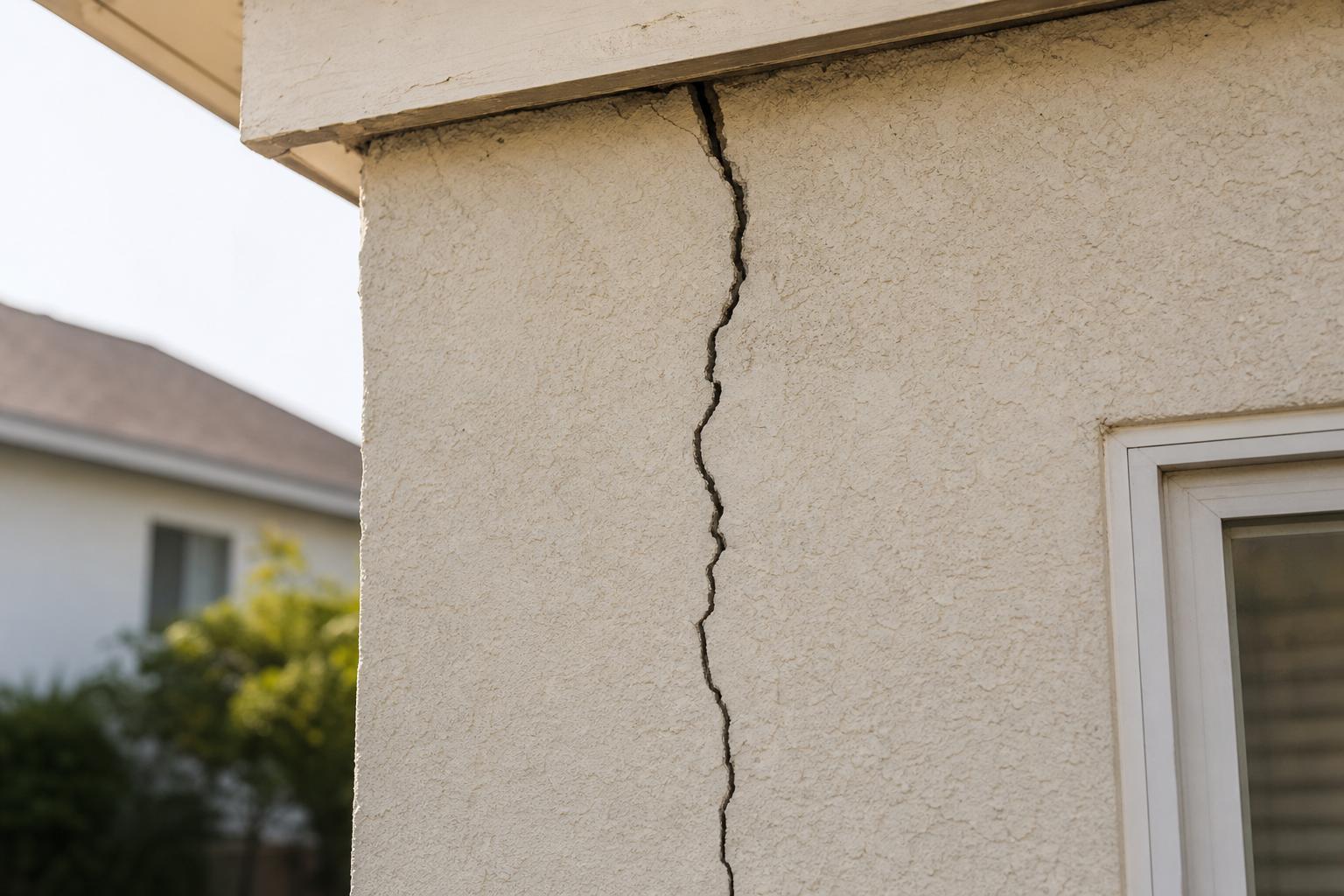
Foundation movement or settlement cracks wider than 1/4 inch. Foundation work commonly runs $5,000 to $25,000+ depending on severity (general U.S. contractor benchmark, not from the cited research). A duplex with active settlement risks both units simultaneously, and tenant complaints about sticking doors and cracking walls follow within months. Unless the seller credits the full remediation cost and a structural engineer signs off on the scope and warranty, walk.
Single electrical panel serving both units with no separate metering. This creates billing disputes (tenants paying for each other's air conditioning), insurance complications, and costs roughly $5,000–$10,000 to split into two services. FortuneBuilders cites maintenance burden as a top duplex risk, and shared utilities are the most common form of that burden. Fixable, but it should produce a price concession equal to the split cost plus an allowance for permitting delays.
Roof with less than five years remaining life. Roughly $8,000–$12,000 typical replacement cost on a small duplex (general U.S. benchmark, not from cited research). The Pinnegar principle from NerdWallet applies — if the roof needs replacement, related items (gutters, flashing, soffits, sometimes attic insulation) likely do too. Negotiate a credit at the high end of the range or walk. Roofs don't get cheaper to replace, and you'll pay either way.
Tenant with eviction history, late payment pattern, or month-to-month lease ending within 60 days of closing. ReadyNest stresses that rental income is not guaranteed, and a problem tenant in place at closing is your problem from day one. This is fixable through non-renewal (legal in most jurisdictions, with required notice periods) but factor 2–3 months of vacancy during the transition. If the deal only works at 100% occupancy, the red flag is unfixable in practice — there's no margin to absorb the changeover.
Rising submarket vacancy or declining median rent over the past 24 months. Today's rent roll is the peak, not the baseline. Stress-test the deal at rent levels 10–15% lower than current. If it doesn't survive that haircut, you're betting that rent trends reverse before you need to refinance or sell. That's a market call, not an underwriting decision. When buying a duplex into a softening submarket, the right move is usually to wait six months, watch the trend stabilize, or walk to a stronger submarket.
Non-conforming use, open permits, or unpermitted additions. Open permits transfer with the property. Unpermitted second units — common in older duplexes that were originally single-family homes split informally — may be ordered closed by code enforcement, eliminating your rental income overnight. NerdWallet emphasizes local code compliance. This is unfixable without significant cost and time. Walk unless the seller resolves the permits and inspections before closing, with the corrected certificates of occupancy in your hands at the closing table. Buyers who already own property and are considering a 1031 exchange into a duplex should first model what they'd net by choosing to Sell Your Boca Raton Home under current conditions before committing capital to a property with permit risk.
Deal structure with contingencies tied to contingencies. Seller financing with personal guarantees, contingencies on the seller's purchase of a replacement property, financing contingencies stacked on inspection contingencies, or rent guarantees from the seller post-closing — these create cascading failure risk. If any one link breaks, the whole structure unwinds. Walk, or restructure to clean cash terms with a single inspection-and-financing contingency window.
The goal of walking away is not winning a negotiation. It's avoiding capital destruction. Most buyers who regret a duplex purchase ignored at least two red flags from this list during contract review and convinced themselves the upside justified the risk. A duplex for sale at the right price with manageable red flags is an opportunity worth pursuing aggressively. The same property at the same price with unfixable red flags is a liability that will tie up your capital for years. The discipline to tell the difference is the entire value of running this framework.
Duplex Buyer Questions That Don't Fit Anywhere Else
Can I use an FHA loan to buy a duplex if I live in one unit?
Yes. FHA permits 1–4 unit properties as long as the buyer occupies one unit as a primary residence for at least 12 months, with down payments as low as 3.5% per FortuneBuilders, NerdWallet, and HAR.com. FHA imposes a self-sufficiency test for 3- and 4-unit properties — rental income must cover the mortgage payment — that typically isn't applied to duplexes, but the research set doesn't include direct HUD documentation. Confirm with your loan officer that your specific case isn't subject to it before relying on the exemption.
How do I handle a duplex inspection if I'm buying remotely?
Hire a local inspector who specializes in small multifamily, not single-family. Require a video walkthrough of both units, photographs of all major systems with model numbers and ages, a written report addressing each item covered in the inspection priorities above, and a separate sewer scope and roof inspection beyond the standard package. Budget roughly $600–$1,200 total for a duplex inspection package (general U.S. range, not from cited research). Have a trusted local agent or property manager attend in person — video alone misses smells, sounds, and the feel of soft floors.
What's a fair offer price if the current tenant is paying below-market rent?
Underwrite the deal at the current rent, not market rent. The tenant has lease rights that survive the sale, and you cannot raise rent until renewal — even then, local rent regulations may apply in some jurisdictions. If the lease has 8 months remaining at $1,200/month and market rent is $1,800, the $600/month gap over 8 months is $4,800 of lost income you've already committed to. Discount your offer by the present value of that rent gap over the remaining lease term, and reference the estoppel certificate to confirm actual terms aren't even worse than the lease suggests.
Should I require the seller to deliver the duplex vacant at closing?
It depends on tenant quality. A long-term paying tenant at market rent is an asset — keep them and avoid the cost of finding a replacement. A problem tenant, a below-market lease with years remaining, or a month-to-month occupant you'd rather replace justifies a vacancy-at-closing clause. American Family flags landlord-tenant law complexity, and some jurisdictions restrict the seller's ability to terminate tenancy purely for sale purposes. Confirm with a local real estate attorney before requiring delivery vacant — and buyers comparing duplex underwriting to condo investment math should review the contrasting expense structures at Fort Lauderdale Condos for Sale: Best Buildings and Buyer Tips for 2026 before committing to a property class with active tenant obligations.