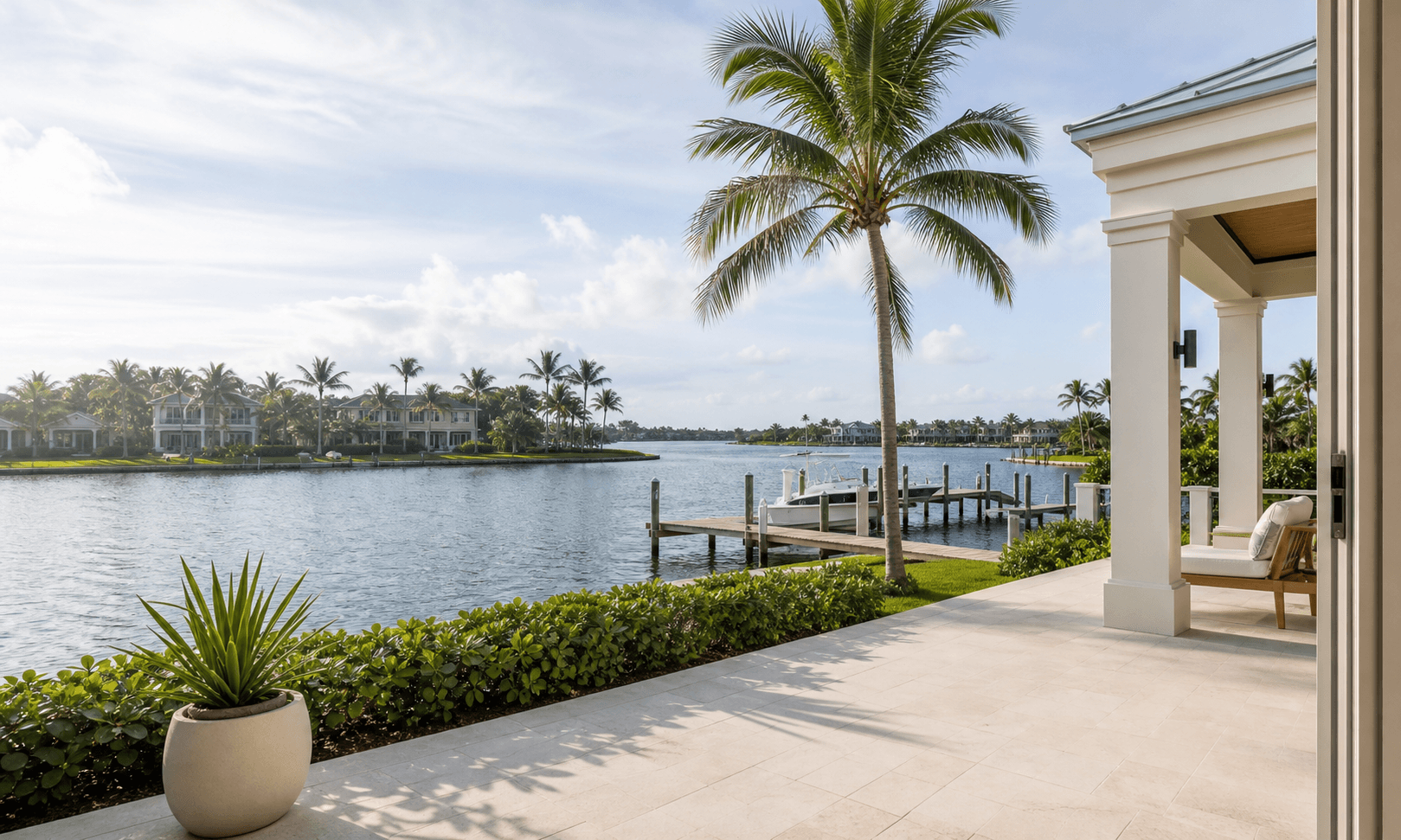
Jupiter, Florida Homes for Sale: A 2026 Buyer's Guide to Coastal Living
You've scrolled the waterfront photos. You've watched the prices on jupiter florida homes for sale swing from $500K inland to $3M-plus on the Intracoastal, and now you're trying to decide whether this specific coastal town is where your money and your life should land. The 2026 numbers give you a clearer answer than the listing carousel does: the median sale price sits near $670,000, down roughly 5% year-over-year, with homes taking about 60 days to sell, according to Redfin data via House Value Lab. That means you hold more leverage than buyers did during the 2021–2022 frenzy — but the desirable pockets still move fast. What follows decodes the price tiers, the neighborhoods, the real carrying costs (insurance and taxes that can rival your mortgage), and the buying timeline you should run before you tour a single home.
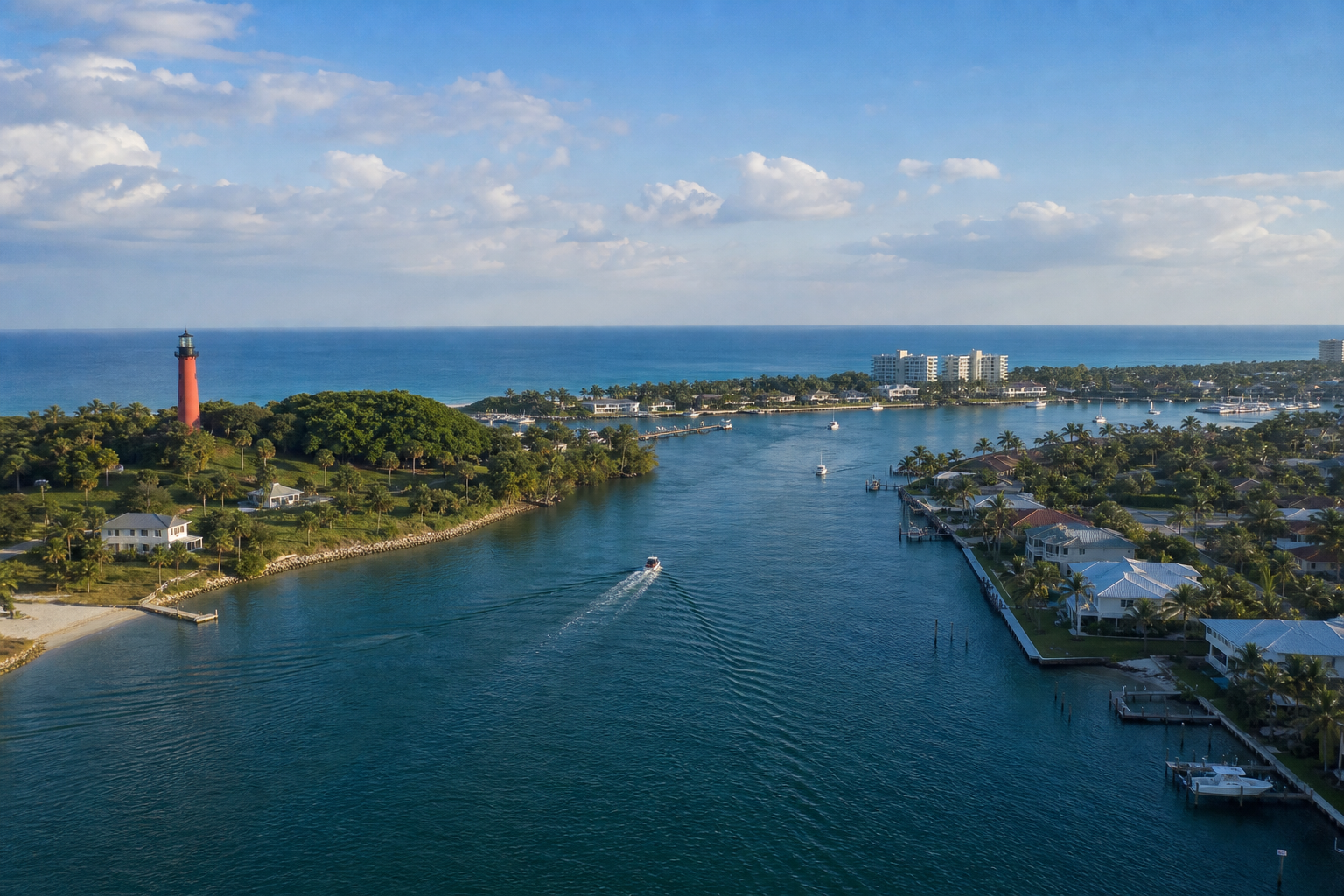
Table of Contents
- What Your Budget Actually Buys in Jupiter Right Now
- Choosing Your Jupiter Neighborhood: Coastal, Country Club, or Family-First
- Waterfront vs. Inland: The Trade-Offs No Listing Photo Shows
- The True Cost of Owning in Jupiter (Beyond the Sticker Price)
- How to Move Fast Without Overpaying: A 2026 Buyer's Timeline
- Red Flags and Green Lights When Evaluating a Jupiter Listing
- Quick Answers for Serious Jupiter Buyers
- Your Jupiter Buyer's Action Briefing
What Your Budget Actually Buys in Jupiter Right Now
Start with the live spread that defines your negotiating position. The median sale price for homes for sale in Jupiter, Florida runs about $670,000, while the median listing price sits near $895,000, per the Realtor.com local report via Meyer Lucas. That roughly $225,000 gap between what sellers ask and what homes actually close at is your leverage point — sellers are still pricing on hope while sale data shows softening. With roughly 870–880 active listings, inventory is elevated but not flooded. You have choices without being buried in them.
| Price Tier | Typical Home Type | Neighborhood Examples | Water Proximity | Lot / Size Reality |
|---|---|---|---|---|
| $500K–$750K | Townhomes, older condos, modest inland SFH | Abacoa subdivisions, inland Jupiter | None / inland | Zero-lot-line to small lots |
| $750K–$1.2M | Newer SFH, entry acreage, canal-access homes | Abacoa, entry Jupiter Farms | Canal possible | 0.25 acre to 1 acre |
| $1.2M–$3M | Estate homes, dockage homes, larger acreage | Intracoastal corridor, Jupiter Farms estates | Intracoastal / canal w/ dock | 1–5 acres or waterfront |
| $3M+ | Luxury gated, oceanfront, deep-water | Admirals Cove edges, oceanfront | Ocean / deep-water dock | Premium waterfront |
The $500K–$750K band is mostly inland single-family product, townhomes, and older condos — Abacoa subdivision homes, non-waterfront. This band sits below or around the median sale price, which is precisely why it holds the most negotiating room. Listings here that linger past 60 days are where you press hardest on price.
The $750K–$1.2M band is the value sweet spot in Jupiter FL real estate. You get newer Abacoa builds, larger inland lots, some canal-access homes, and entry-level Jupiter Farms acreage. Jupiter Farms is worth a specific note: its median sale price runs about $849,000 (up 9–10% year-over-year), but median list prices cluster near $1.3 million, according to Echo Fine Properties. Sellers ask big numbers for acreage; closings land well under those asks. That gap is your room.
The $1.2M–$3M band buys Intracoastal proximity, true canal frontage with dockage, and estate-style Jupiter Farms parcels running one to several acres. The $3M+ band is the gated and waterfront-luxury tier — Admirals Cove edges, oceanfront, deep-water dockage — where carrying costs climb as steeply as the purchase prices.
Across every tier, the core trade-off is the same: at any given price, you choose between space and access. Inland square footage and a real lot, or water frontage and dockage. You rarely get both without moving up a full tier. Buyers comparing Palm Beach County coastal inventory often weigh Jupiter against Boca Raton Homes for Sale at the same price point, and the calculus there is identical — the dock you pay for is the square footage you give up.
In Jupiter, the gap between an inland new-build and a waterfront condo at the same price is the gap between space and access — you rarely get both.
Choosing Your Jupiter Neighborhood: Coastal, Country Club, or Family-First
Your tier sets the budget. Your neighborhood sets the life. These five zones cover the meaningful choices in Jupiter FL real estate.
Jupiter Inlet & Beach Corridor. This is for coastal-first buyers who want ocean and Intracoastal proximity, beach walkability, and dock potential. Expect the highest price-per-square-foot in the city; waterfront here pushes well into the $1.2M–$3M-plus tiers. You trade lot size and interior square footage for access — a smaller, older home on the water costs what a far larger inland home costs. Best fit for buyers who will actually use the water rather than just look at it.
Abacoa. A family-first, master-planned community with a walkable town center and an active HOA structure. It's the strongest fit for the $500K–$1.2M buyer who wants newer construction and amenities without waterfront premiums. Master-level HOA fees run roughly $200–$400 per month, with some sub-neighborhoods like Somerset reporting combined assessments around $600-plus, per HOA Bulletin Board and House Value Lab. It's inland — no water frontage. For buyers not yet ready to commit to a full purchase here, exploring Rent-to-Own Homes Near You can be a sensible interim step into the community before buying outright.
Jupiter Farms. Acreage and equestrian territory. Lots run from about one to several acres with trail access. Median sale price is near $849,000 while list prices often sit around $1.3 million — sellers ask high for land, sales close lower. Expect semi-rural, car-dependent living with well and septic systems common. This is for space-and-privacy seekers who will happily trade walkability for room to breathe. For buyers drawn to acreage and land generally, How to Buy Land for Sale in Colorado: Zoning, Utilities & Due Diligence walks through the well, septic, and zoning checks that apply to rural parcels anywhere.
Admirals Cove & Gated Waterfront Edges. The luxury, country-club, deep-water dockage tier at $3M-plus. Boating lifestyle, golf, and gated security come bundled with the highest carrying costs and the most demanding HOA structures in the city. The dockage is the durable value driver, but it narrows both your monthly budget and your future buyer pool.
Tequesta-Adjacent / Jupiter Island Edges. For buyers who want the Jupiter-area lifestyle at a softer price. Tequesta's median home value runs about $645,000 with a median list near $799,000, according to Redfin's Tequesta market data — a credible lower-cost alternative for amenity-and-proximity buyers who aren't attached to the Jupiter name itself.
Waterfront vs. Inland: The Trade-Offs No Listing Photo Shows
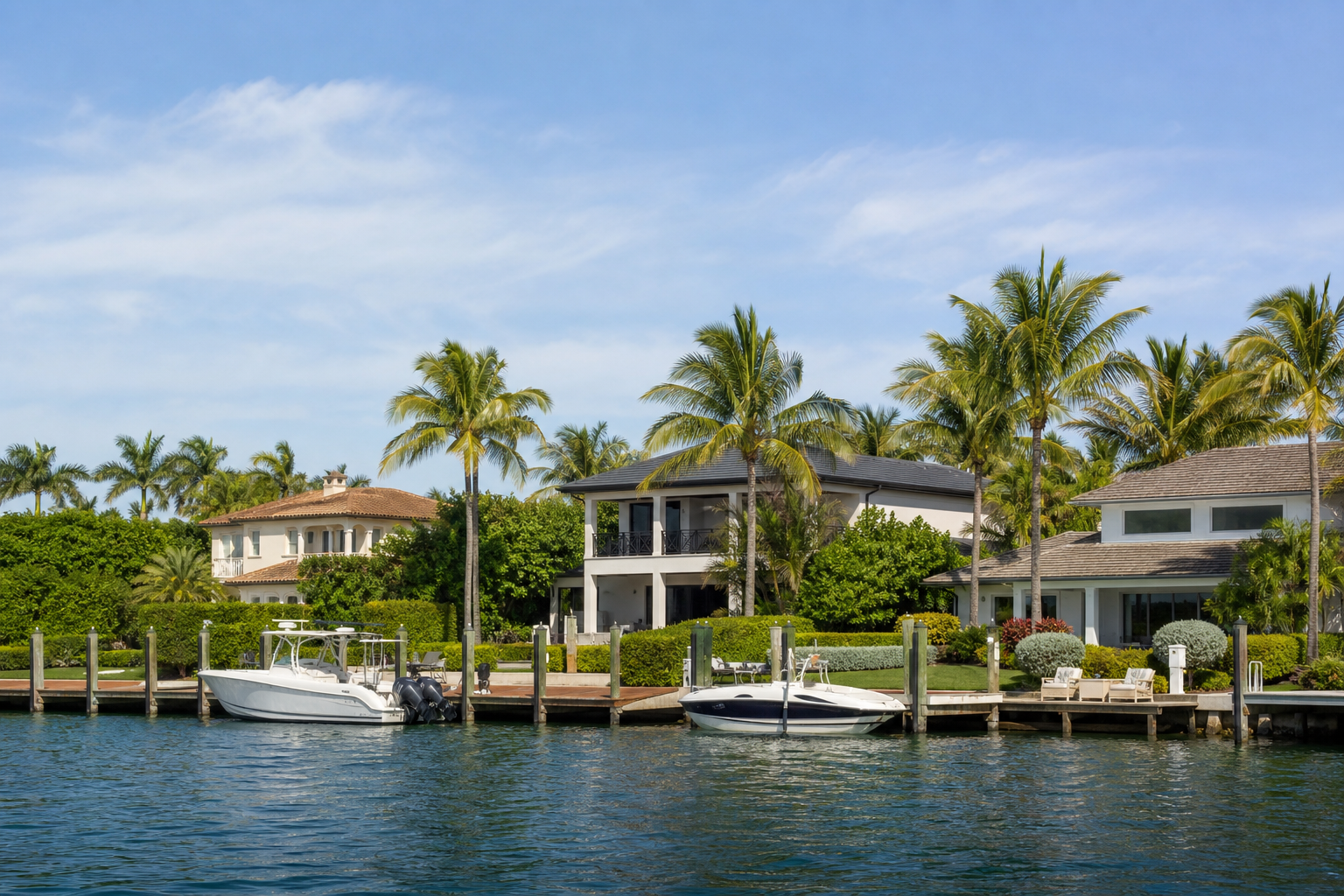
The headline contrast frames everything else. Jupiter's overall median sale price is about $670,000, while Jupiter waterfront homes for sale show a median list price around $775,000 with 170-plus waterfront properties on the market, per Redfin and Realtor.com waterfront-search results (vendor sources). Before you read that as a clean premium, understand this: "waterfront" is not one thing. The label spans oceanfront, Intracoastal, canal, townhomes, and condos. It inflates expectations far more than it should.
| Criterion | Waterfront (Ocean / Intracoastal / Canal) | Inland (Abacoa / Jupiter Farms) |
|---|---|---|
| Typical price position | Premium; median list ~$775K, range to $3M+ | Around/below city median (~$670K) |
| Flood insurance | Often required; NFIP caps at $250K building | Lower risk, may still be required by Citizens |
| Wind exposure | Higher | Moderate (still coastal FL) |
| Boating / dock access | Direct (key value driver) | None to limited canal |
| Maintenance load | Higher (seawall, dock, salt exposure) | Lower |
| Appreciation outlook | Risk of compression on exposed sites | More stable per risk analysts |
On the price premium, waterfront commands real money for like-kind property, but the breadth of waterfront inventory means many homes carrying the label are inland canal or condo product rather than deep-water frontage. The median list near $775,000 averages across all of it. Read individual listings carefully — a "waterfront" condo on a narrow canal is not the same asset as a deep-water single-family home with a dock, even at a similar price.
The insurance load is where the trade-off bites hardest. Waterfront and exposed homes carry heavier flood and wind costs, which the next section details fully. One structural fact matters here: the NFIP caps building coverage at $250,000, per Greene Insurance (vendor source). High-value waterfront homes need private or excess flood layered on top of that base, and that layer is a recurring expense, not a one-time fee.
On hurricane and risk exposure, independent risk scholars warn that the most exposed waterfront may see compressed appreciation relative to elevated inland over the coming decade, drawing on NerdWallet's flood-insurance analysis and Citizens-related flood-requirement assessments. The dock that drives today's premium can cap tomorrow's gain.
Finally, the resale buyer pool. Dockage narrows your future buyer to boaters; inland appeals to a broader audience. When you pay for water access, you're paying for a feature that a meaningful share of future buyers won't value — which is exactly why it should be a lifestyle decision, not a speculative one.
A dock isn't an amenity in Jupiter — it's a recurring line item that reshapes your insurance, your taxes, and your buyer pool.
The True Cost of Owning in Jupiter (Beyond the Sticker Price)
The purchase price is the negotiation. The carrying cost is the decision. In coastal Jupiter, the monthly stack of taxes, insurance, flood, and HOA can rival the mortgage itself — and the homes that look identical on a listing page can carry wildly different monthly totals.
Property taxes. Palm Beach County's Board of County Commissioners set a 2024 countywide rate of 4.5000 mills — $4.50 per $1,000 of taxable value — but effective combined rates in coastal Palm Beach County typically land in the 1.5%–2.2% range once municipal and school millage are added, per the Palm Beach County budget data via Realtor.com. One mill equals $1 in tax per $1,000 of taxable value. The Property Appraiser sets the value; the Tax Collector administers the bills. Worked example: on a $750,000 taxable value at a ~1.8% effective rate, you're looking at roughly $13,500 per year.
Homestead exemption. Owner-occupants can take the Florida Homestead Exemption — up to $50,000 off assessed value — plus annual assessment caps, per Palm Beach County Tax Collector guidance. This materially lowers long-term tax drag on a primary residence compared with a second home. The distinction is not trivial: a primary buyer and a snowbird or investor purchasing the same house face meaningfully different tax math over time, and you should run your numbers for the status that actually applies to you.
Early-payment discount. Palm Beach County mails tax bills in the fall, and the discount schedule rewards paying early: 4% in November, 3% in December, 2% in January, 1% in February, and none after, per the Palm Beach County Tax Collector payment schedule. On a $13,500 bill, the November discount is roughly $540 — a real cash-flow lever, not a rounding error.
Insurance — the headline cost. Florida homeowners insurance averages roughly $2,300 per year for a standard $300,000 dwelling policy (2024), but Florida's admitted-market average runs closer to $3,600, and some analyses place typical Florida premiums at $8,000–$11,000 — the highest in the country, drawing on Policygenius, the Florida OIR, Insurify, and NAR data. Make the comparison explicit in your own budget: insurance can rival or exceed property taxes in a coastal Jupiter home, especially on older roofs or waterfront. Mark Friedlander of the Insurance Information Institute urges buyers to get firm quotes early and scrutinize roof age and wind-mitigation features. Patricia Born of Florida State University warns that recent reforms will take years to lower premiums, so you should stress-test your budget against further increases rather than assuming relief is around the corner.
Flood — now a near-default coastal cost. Standard NFIP coverage caps building protection at $250,000 plus up to $100,000 for contents, so higher-value homes need private or excess layers. Beginning January 1, 2026, Citizens Property Insurance requires flood coverage for many homes with Coverage A dwelling values of $400,000 or more that carry wind coverage — regardless of FEMA flood zone — per Citizens and NerdWallet flood-insurance explainers. That threshold sweeps in a wide slice of Jupiter properties, including plenty of inland homes, making flood a de facto requirement rather than a waterfront-only concern.
HOA and CDD fees. Abacoa's master HOA runs roughly $200–$400 per month, with sub-neighborhoods like Somerset around $600-plus where amenities are more robust. Gated waterfront communities run higher still. These are fixed monthly costs that compound with everything else.
Here is where it ties together. A $750K inland Abacoa home and a $750K waterfront condo can carry dramatically different monthly totals once insurance, flood, and HOA stack on top of the mortgage. That delta — not the sticker price — is what should drive your decision. For buyers eyeing a second home or an investment property, those carrying costs run year-round whether you're in residence or not, which is exactly why many out-of-state owners pair the purchase with Boca Raton Property Management to keep the asset maintained and the costs predictable.
How to Move Fast Without Overpaying: A 2026 Buyer's Timeline
Buying a home in Jupiter, Florida in 2026 means working a softened-but-competitive market. With roughly 60-day average market times and prices down about 5% year-over-year, you have breathing room — but well-priced listings still move, so readiness wins. Run these eight steps in order.

- Get mortgage pre-approval. Lock your financing before touring. In a softened market, a pre-approval letter signals seriousness and lets you act on the right listing without the pressure to overpay that drove pandemic-era bidding.
- Pull insurance quotes in parallel. Per Policygenius and NerdWallet guidance, coordinate homeowners and flood quotes alongside pre-approval — not at closing. On waterfront or older-roof homes, these quotes can swing your affordability math by thousands of dollars, and you want that information before you fall for a specific house.
- Define your must-haves and your tier. Lock your price band and your water-versus-inland decision before you browse. This keeps you from chasing listings whose carrying costs you can't actually tolerate, regardless of how the photos look.
- Pick two target neighborhoods and set alerts. Narrow to exactly two zones, set listing alerts, and structure your tours efficiently. Disciplined search beats wide-net browsing; the resource on How to Find the Best Homes for Sale Near Me in Today's Market lays out a touring strategy that keeps you focused on comparable product.
- Engage a local Jupiter agent. A specialist knows which "waterfront" listings are genuine deep-water versus inland canal, and which inland comps are overpriced because they sit near a busy corridor. That distinction is worth real money.
- Build an offer strategy. With ~60-day market times and a wide list-to-sale gap, lean on valuation discipline and contingencies rather than assuming you must waive everything. Tequesta's higher list-versus-sale gap, per Redfin, shows there's real room to negotiate in some submarkets.
- Lock inspection and a firm insurance quote before closing. Confirm roof age, seawall and dock condition, and bind your insurance before you close — not after. Surprises here are expensive and avoidable.
- Close. Budget your closing costs and time your first tax payment to capture the November 4% early-payment discount where it applies.
Red Flags and Green Lights When Evaluating a Jupiter Listing
Once you're touring, evaluating Jupiter homes for sale comes down to a short list of features that either protect or erode your budget. Train your eye on these.
Green Lights
Roof updated post-2018 wind codes. A newer roof with wind-mitigation features directly lowers insurance — the single largest variable cost in a Jupiter budget. Mark Friedlander of the Insurance Information Institute flags roof age and wind mitigation as exactly the features buyers should scrutinize. A documented recent roof can shave a four-figure sum off your annual premium.
Elevation above the flood zone. Elevated inland homes carry lower flood premiums and may sidestep the Citizens 2026 flood-mandate exposure that hits higher-coverage homes. Ask for the elevation certificate and confirm where the home sits relative to base flood elevation.
Transferable warranties and documented systems. In Jupiter Farms especially, verify wells, septic, and outbuildings, per Echo Fine Properties' community detail. Documented, transferable warranties on major systems reduce the odds of a surprise capital expense in your first year.
Genuine deep-water or walk-to-beach access. Real dockage or beach walkability is the durable value driver in this market — but confirm it's true deep-water, not a listing labeled "waterfront" that fronts a shallow inland canal. The difference shows up at resale.
Red Flags
HOA assessment history. In Abacoa and gated communities, review the special-assessment history. Rising assessments on top of $200–$600-plus monthly base fees erode affordability quietly, and a community that has assessed repeatedly often will again.
Aging seawall or dock. On waterfront, seawall and dock replacement are major capital items that no listing photo reveals. Inspect age and condition specifically; a failing seawall can run into six figures and is not a negotiating afterthought.
Prior flood claims. A claims history signals recurring exposure and can push future premiums higher. Ask for the property's claims record before you're emotionally committed.
Overpriced inland comps near busy corridors. With the median list around $895,000 running well above the median sale near $670,000, per Meyer Lucas, some inland listings near high-traffic corridors are priced on hope. Pull the comps and let them, not the asking price, anchor your offer.
In a coastal market, the cheapest house on the block is often the one carrying the most expensive future.
Quick Answers for Serious Jupiter Buyers
Is now a good time to buy in Jupiter, or should I wait?
Median sale prices are down about 5% year-over-year with roughly 60-day market times — more leverage than the 2021–2022 peak offered. Economist Ken Johnson of Florida Atlantic University frames Jupiter as a market where you should pay for lifestyle rather than bet on outsized appreciation. If the carrying costs fit your budget, waiting offers little advantage.
Do I need flood insurance everywhere in Jupiter, or only near water?
Not only waterfront. Beginning January 1, 2026, Citizens requires flood coverage for many homes with dwelling coverage of $400,000 or more that carry wind coverage — regardless of FEMA zone. Plenty of inland Jupiter homes clear that threshold, so budget for flood broadly rather than assuming it's a coastal-only line item.
Are bidding wars still common in 2026?
Less so than at the pandemic peak. With median list (~$895,000) running above median sale (~$670,000) and roughly 60-day market times, valuation discipline and contingencies are viable again — especially in softer submarkets like Tequesta. Don't assume you have to waive everything to win.
How does buying in Jupiter compare to Tequesta or Palm Beach Gardens?
Tequesta offers a lower-cost alternative — median value around $645,000 and list near $799,000 versus Jupiter's ~$895,000 list — with comparable coastal amenities. If you're buying lifestyle and proximity rather than the Jupiter name, neighboring submarkets deserve a serious look before you commit.
Your Jupiter Buyer's Action Briefing
Run this briefing before you contact an agent. Each item is an instruction, not a recap — execute them in order and you'll tour with a plan instead of a wish list.
- Lock your tier. Choose your price band from the four tiers — $500K–$750K through $3M-plus — based on what you've decided about space versus access. The band sets every downstream number.
- Name two neighborhoods. Pick exactly two target zones — for example, Abacoa for family and walkability, the Jupiter Inlet corridor for water access — so your search stays disciplined and your comparisons stay honest.
- Make the waterfront-versus-inland call. Decide on carrying-cost tolerance, not the listing photo. Remember that dockage reshapes your insurance, your maintenance, and your future buyer pool.
- Pre-approve and pre-quote. Get mortgage pre-approval and firm homeowners plus flood quotes in parallel. On coastal Jupiter homes, insurance can rival your tax bill, so you want both numbers before you fall for a house.
- Verify the inspection points. Confirm roof age against post-2018 wind codes, check elevation, inspect seawall and dock condition, and review HOA assessment history before you commit.
- Time your tax payment. Plan to pay in November to capture the 4% early-payment discount — a clean saving you control entirely.
- Engage a local agent. A Jupiter specialist separates true deep-water from inland-canal "waterfront" and flags the overpriced corridor comps that waste your time.
When the briefing is done, the next concrete step is inventory. Browse current jupiter florida homes for sale and connect with the team behind Boca Raton Real Estate for a tier-and-neighborhood consultation that turns this plan into showings. If you're a move-up buyer who needs to sell before you buy in Jupiter, start that side of the equation early — see Sell Your Boca Raton Home — so your purchase timeline and your sale timeline line up instead of fighting each other.