
Ocala Real Estate Guide: Horse Country Living and Investment Opportunities
You've seen the photos — pristine paddocks, sprawling estates, a commute that ends at the barn door. But typing ocala florida homes for sale into a search bar won't tell you which neighborhoods deliver horse-country lifestyle, which deliver investment yield, or how a $300,000 listing in Ocala compares to a $300,000 condo in Boca Raton or Stuart. The data itself signals the problem. As of early 2026, Redfin reports a $275,000 median sale price in Ocala, down 5.2% year-over-year, while MyBrokerOne reports an average listing price of $407,759 — a spread that signals a market split between standard residential stock and equestrian-grade property. Same ZIP cluster, two different asset classes. If you're weighing Ocala against Boca Raton real estate, the math is fundamentally different — and conflating the two segments is how buyers overpay or underbid in Marion County. What follows is a buyer-track decision framework, not a tourism brochure.
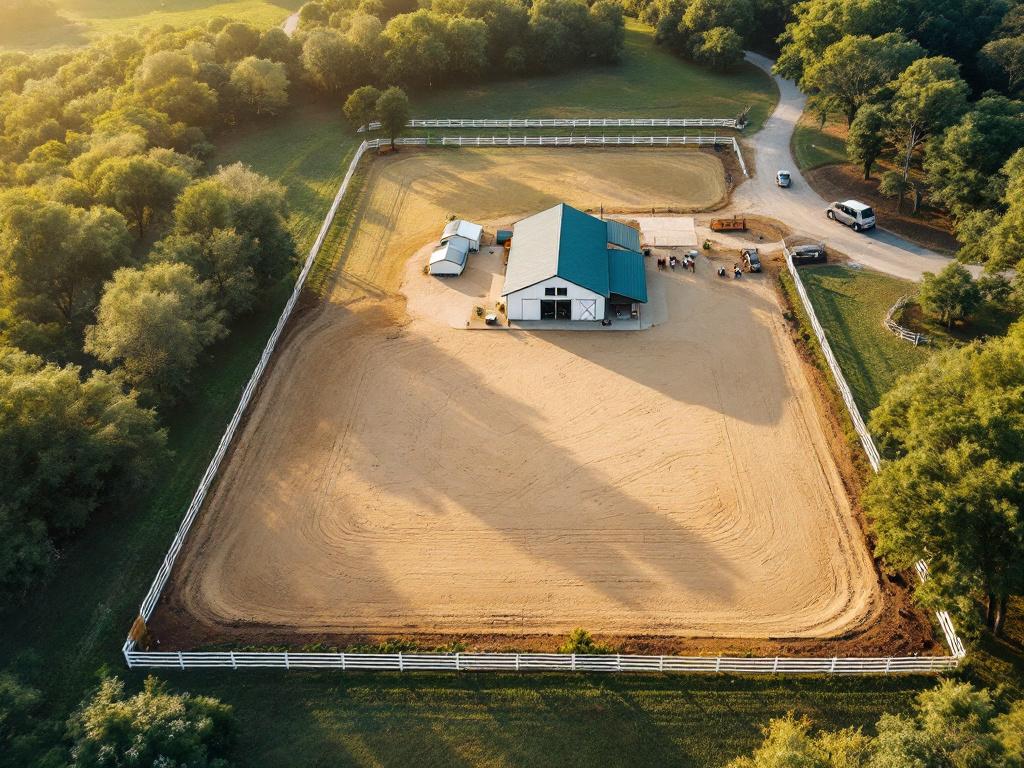
Table of Contents
- Why the Ocala Real Estate Market Behaves Unlike Coastal Florida
- Ocala Neighborhoods Mapped to Buyer Type
- The Equestrian Property Due-Diligence Checklist
- New Construction Versus Established Horse Properties
- Financing, Agricultural Exemptions, and Tax Strategy
- The Ocala Buyer Action Track
Why the Ocala Real Estate Market Behaves Unlike Coastal Florida
Ocala is not a vacation market. It's not a beach market. It's an agricultural-equestrian economy in Marion County where land use — not waterfront premium — drives valuation. That single structural fact makes most Ocala-versus-coastal comparisons misleading. When you're sizing up an Ocala listing, the relevant peer set is not Miami, Tampa, or Boca Raton. It's Lexington, Kentucky and Aiken, South Carolina — the other major North American horse-buyer destinations that compete for the same equestrian capital.
Five forces are shaping the current market, each one tied to a specific data point you can verify yourself.
Price trajectory is moving opposite to coastal Florida. According to Redfin's tracking, the median sale price hit $275,000 in February 2026, down 5.2% year-over-year. Zillow's average home value tracks at $267,263, also down 3.9% YoY. Both vendor platforms are measuring the standard residential segment — single-family homes on conventional lots — not equestrian acreage. Read those numbers as the floor of the market, not the ceiling.
Inventory is rising fast. MyBrokerOne reports 4,229 active listings, up 43.79% since 2025. That number is the buyer's leverage point. More options on the shelf means longer negotiation windows and more sellers willing to entertain concessions on closing costs, repairs, and price reductions after the initial offer round. A year ago, the same buyer was working from a much shorter list and accepting tighter terms.
Days on market are stretching. Redfin clocks Ocala at 96 days in February 2026, up from 88 the prior year. Zillow's pending timeline runs roughly 68 days. Either way, you should expect three months of seller-side patience before a property closes. That timeline is itself a negotiation asset — sellers carrying a property past day 90 generally get more flexible on price, especially when carrying costs include vacant pasture maintenance.
Ocala is not competing with Miami or Tampa for buyers. It is competing with Lexington and Aiken — and that single fact rewrites how you should value any listing you tour.
Two markets coexist inside one ZIP cluster. This is the most important framing in the article, so read it twice. The $275K Redfin median and the $407,759 MyBrokerOne average listing are not the same buyers competing for the same houses. The standard residential market — three-bedroom homes in established Ocala subdivisions — moves on conventional drivers: school zones, commute time, finished square footage. The equestrian-acreage market moves on entirely different fundamentals: pasture quality, barn infrastructure, arena footing, water rights, and zoning permissions. A buyer who anchors on the median residential price will badly misjudge what an equestrian property should cost. A buyer who anchors on the equestrian average will overpay for a non-horse home in the urban core.
The historical baseline is recent enough to matter. HUD's 2019 Comprehensive Housing Market Analysis recorded an average existing home price of $149,200 with 1,625 new homes sold in the prior 12 months. That's roughly an 84% nominal price increase in about seven years. Anyone telling you "Ocala is cheap" is comparing today's prices to coastal Florida, not to Ocala's own recent baseline. The market has appreciated meaningfully — what makes it attractive is the asset class you can buy with the dollars, not the absolute price level.
The buyer profiles drawn to this market fall into three groups: equestrian professionals relocating from higher-cost horse states (California, Kentucky, the Northeast), Florida residents priced out of coastal counties looking for acreage they couldn't afford in Palm Beach or Martin, and remote workers seeking land. Each group reads the same listing differently. The equestrian professional looks at arena footing depth. The relocating retiree looks at single-story floor plans. The remote worker looks at fiber internet availability. Same property, three appraisals.
Ocala Neighborhoods Mapped to Buyer Type
The matrix below maps four submarkets against equestrian infrastructure, typical asking ranges, lot size, and best-fit buyer profile. The price ranges reflect typical observed asking ranges in current MLS activity, not appraised values — phrase them as starting points for your own search, not as guaranteed benchmarks.
| Submarket | Equestrian Infrastructure | Typical Asking Range | Lot Size | Best Fit |
|---|---|---|---|---|
| Golden Ocala / Jumper Creek | USEF-grade arenas, show facilities | $800K–$3M+ | 5–20+ acres | Competitive equestrian; capital lifestyle buyer |
| Lowell / Rural North Marion | Land-heavy, owner-built or upgradable | $400K–$1.2M | 10–40+ acres | Investor, hobby farmer, privacy buyer |
| Belleview / South Marion | Small acreage, mixed use | $300K–$800K | 2–10 acres | Part-time horse owner, retiree |
| Ocala Urban Core (34470, 34471) | Limited or none | $250K–$550K | <1 acre | Non-horse buyer, downsizer, first-time |
Golden Ocala is a private, gated equestrian community adjacent to the World Equestrian Center. Buyers here are paying for facility quality and proximity to competition venues, not just for land. The buyer profile resembles a Wellington (Palm Beach County) horse property buyer more than it does anyone else in Marion County. If you're cross-shopping Wellington listings against Ocala, you're already in this submarket's target audience — and you should also browse Boca Raton homes for sale to anchor your coastal cost reference.
Lowell and rural North Marion are the value play for buyers willing to build or upgrade. Land prices per acre are materially lower; existing facilities range from minimal to professional-grade depending on the prior owner. This is where the matrix splits — investors here are betting on appreciation and DIY equity, not turnkey lifestyle. A buyer who enjoys project work and has a 5-to-10-year horizon often gets the best dollar-per-acre value in this band.
Belleview and South Marion offer the horse-light compromise. Two to four horses fit comfortably on most parcels, the commute to The Villages and Orlando-adjacent employers is shorter, and the cost basis is lower than Golden Ocala. The trade-off is that you give up the equestrian community network — the trainers next door, the informal hauling pools, the on-property facility tours that make Golden Ocala a working ecosystem.
The Ocala urban core is conventional residential. Single-family homes on small lots, walkable to downtown Ocala, no horse infrastructure. This is where the $275K Redfin median lives. Do not conflate this market with the equestrian market. A buyer searching listings in 34470 and Golden Ocala in the same MLS query is looking at two non-overlapping product types.
A 600-thousand-dollar property in Golden Ocala and a 600-thousand-dollar property in Lowell are not the same investment. They are not even competing for the same buyer.
The buyer-pool reality follows from that pull-quote. A $600,000 property in Golden Ocala competes against turnkey training facilities — your alternative is another finished farm with comparable amenities. A $600,000 property in Lowell competes against raw land with a modest house and DIY upgrade potential — your alternative is buying 20 unimproved acres and building from scratch. Same dollar amount, different asset class, different exit strategy entirely. Buyers cross-shopping inland Florida secondary markets often pair this analysis with the Sebring buying guide to benchmark per-acre value across central Florida.
The Equestrian Property Due-Diligence Checklist
A standard Florida home inspector evaluates the house. On a horse property, the house is often less than 30% of the asset value. The fencing, footing, water supply, septic capacity, and zoning permissions drive the actual purchase risk. Six items every serious buyer should verify before going under contract.
1. Pasture Drainage and Soil Composition
North Central Florida sees heavy summer rainfall from June through September. Walk every paddock after a rain event if you can time it. Check for standing water in low areas, hoof-print compaction, and erosion at gate entries where horses concentrate traffic. Request soil testing records or commission new ones — coastal Bermuda and Bahia grass establishment requires specific pH ranges, and a pasture that won't hold turf will turn into a sand lot or a mud pit depending on the season. Re-establishing a poorly drained pasture is a multi-year, five-figure project that won't appear on any standard inspection report.
2. Fencing Type, Age, and Replacement Cost
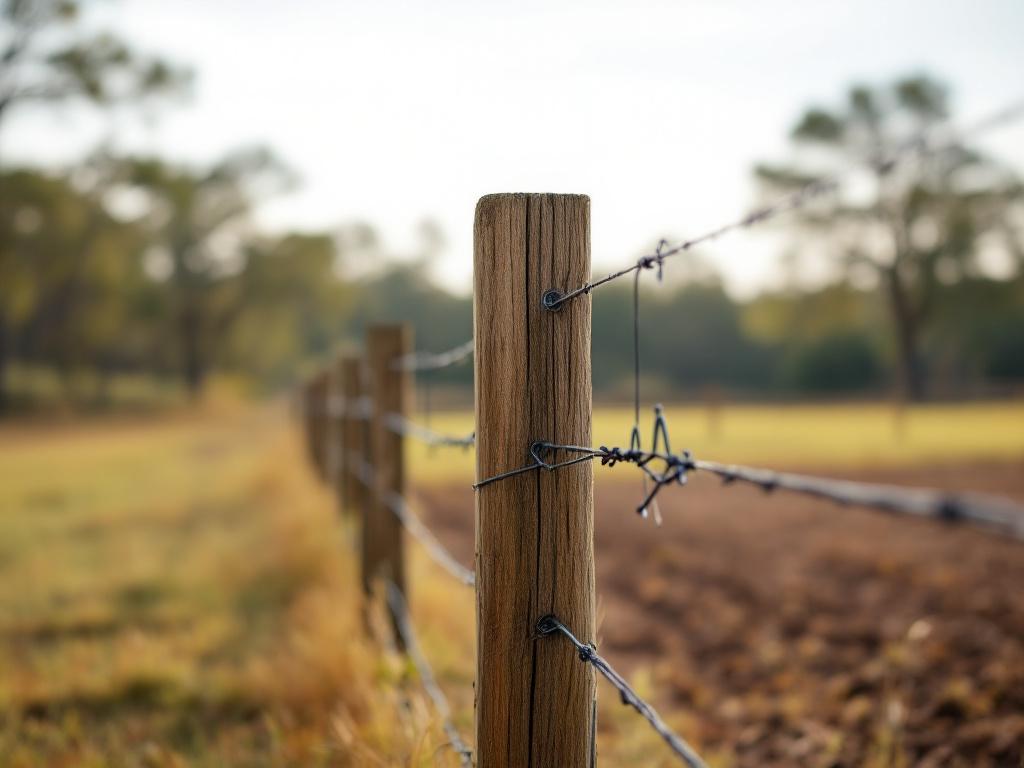
Four-board oak is aesthetic but rots in 8 to 12 years in Florida humidity. PVC and vinyl run a 25-year lifespan with higher upfront cost. Coated wire — V-mesh, no-climb — is the safest option for horses at mid-tier cost. Walk every linear foot. A 10-acre property typically carries 3,000 to 5,000 linear feet of perimeter and cross-fencing. Replacement at $8 to $15 per linear foot is a roughly $24,000 to $75,000 capital event the seller has no obligation to disclose. Photograph rotted posts and budget accordingly before your offer.
3. Well Capacity and Water Quality
Most rural Marion County properties run on private well plus septic. Request the well log: depth, gallons-per-minute output, and the most recent potability test. A horse drinks 8 to 12 gallons per day; a 6-stall barn plus household needs reliable 8+ GPM minimum, and a property running boarders or training operations needs more. Ask for a current water quality test covering iron, sulfur, and bacteria. Verify any borderline result with the Florida Department of Health, Marion County office before closing — water issues that look minor on paper become major operational problems once horses are on site.
4. Septic Sizing Versus Occupancy
Septic systems are sized to the original residence. If you're planning a barn apartment, guest cottage, working student housing, or boarding operation, the existing system may be undersized or non-compliant. Pull the septic permit from Marion County records before assuming current capacity supports your intended use. Drainfield replacement runs roughly $8,000 to $20,000 depending on soil percolation, and an undersized system can constrain your build-out plans entirely.
5. Barn Infrastructure and Electrical
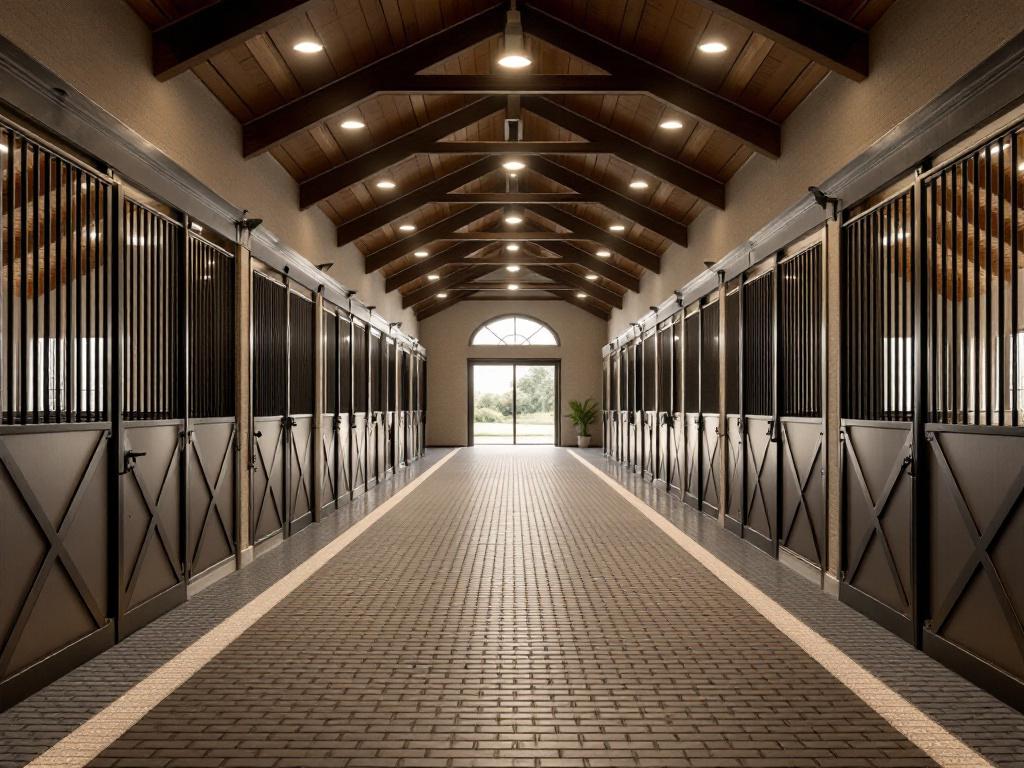
Inspect every dimension: stalls (12x12 minimum for full-size horses, 14x14 preferred for warmbloods), aisle width (12 feet minimum for tractor access), ceiling clearance (10+ feet for safety and ventilation), ridge vents or cupolas for air movement, and electrical (GFCI on every outlet, no Romex run loose through stall walls — that's a fire-code red flag and an insurance issue). Wash racks, hot water access, tack room security, and feed room rodent-proofing all add or subtract real value. A barn that looks photogenic but fails on ventilation or wiring is a liability, not an asset.
6. Zoning, Deed Restrictions, and Boarding Rights
Marion County zoning classes (A-1, A-3, and others) permit varying livestock densities. Verify the specific parcel's zoning at the Marion County Property Appraiser portal before assuming boarding income is legal on your candidate property. Some HOA-governed equestrian communities prohibit commercial boarding even on multi-acre lots. A buyer counting on boarding revenue who cannot legally board has misvalued the property entirely — and discovering this after closing is a problem with no clean fix.
Hire an inspector who specializes in agricultural and equestrian properties. Not a residential inspector with "experience around horses." The skill sets do not overlap, and the cost difference at closing is rounding error compared to the cost of a missed problem.
New Construction Versus Established Horse Properties
The choice between new construction and an established farm is not a quality question — both can be excellent. It's a cash-flow and timeline question. New construction front-loads capital efficiency and warranty coverage; established properties front-load price discount and back-load capital improvement obligations.
| Factor | New Construction (≤3 yrs) | Established (10+ yrs) |
|---|---|---|
| Acquisition price vs. comps | 15–25% premium | Market baseline |
| First-5-year maintenance | Minimal; warranty coverage | Variable; deferred items likely |
| Roof remaining life | 25+ years | 5–15 years typical |
| HVAC remaining life | 12+ years | 0–8 years typical |
| Fencing condition | Often new, 5–8 yr life remaining | May need 30–60% replacement |
| Arena footing age | New, factory-spec sand or fiber | 8–15 years; recompaction likely |
| Well/septic age | New, full lifespan | 10–30+ years; assess by report |
| Tax assessment | Higher (new improvements) | Lower (homestead-aged) |
| Ag exemption status | Must be re-established | Often already in place |
Three things drive the actual decision.
Break-even timeline matters more than feature sets. A 20% new-construction premium on a $700,000 property is $140,000. If the established property requires roughly $90,000 in deferred maintenance over five years — roof, HVAC, fencing, arena resurfacing — the new construction is "worth" the premium only if you hold seven or more years and value warranty certainty. Investors with shorter holds usually win on the established property because they can extract value through targeted improvements rather than paying upfront for someone else's brand-new system. The math is property-specific, but the framing should be the same on every comparison: what's the holding period, and does the warranty mature into actual savings before you sell? Owners exiting an established Ocala property after the upgrade cycle should approach the disposition the same way they would sell a Boca Raton home — with a documented improvement record that supports the asking price.
Agricultural exemption continuity is the underweighted factor. A property already classified under Florida's agricultural greenbelt, per Florida Statutes Chapter 193, is generating a known tax basis. A new build, or a property converting from residential to agricultural use, must apply and prove "bona fide commercial agricultural use" — a process that can take a full tax year to establish. Verify current classification with the Marion County Property Appraiser before closing. The exemption can materially reduce the assessed value of qualifying acreage, but exact savings depend on parcel-specific facts your CPA needs to model. Don't assume; verify.
A 20-percent premium on new construction is only worth paying if you plan to hold long enough for that warranty to mature into actual savings.
Appraisal complications can derail financing. Equestrian-grade improvements — USEF-spec arenas, professional barns with rubber-paver aisles, automatic waterers, hot wash bays — are often partially discounted by residential appraisers because they exceed standard-residence comparables. New construction with these features may not appraise at cost, which forces buyers to bring more cash to closing or restructure financing mid-deal. Established properties typically have appraisals already reconciled to local comps, which makes financing more predictable from offer to close.
Investors holding five years or less, and lifestyle buyers prioritizing immediate occupancy over project work, weigh different sides of this table. There is no universal winner — there's only the right answer for your specific holding period and operational plan.
Financing, Agricultural Exemptions, and Tax Strategy
Equestrian properties don't fit conventional residential financing, and they don't fit conventional residential tax treatment. The buyer who treats this property like a 30-year fixed conventional purchase will overpay on financing and underclaim on tax basis. Five strategy points to understand at the practitioner level before you submit your first offer.
The Florida Agricultural Greenbelt Classification
Under Florida Statutes Chapter 193, qualifying agricultural land is assessed at use value rather than market value — a meaningful distinction when market value reflects equestrian-buyer demand and use value reflects the income from agricultural activity. Eligibility requires "bona fide commercial agricultural use," meaning the property generates documented income from horse boarding, breeding, lessons, hay production, or similar operations. Apply through the Marion County Property Appraiser by March 1 of the tax year. Classification is not automatic with acreage — you have to show the operation. Lapses in commercial activity can trigger reclassification and back-tax recapture, so the documentation is an annual obligation, not a one-time filing.
An agricultural exemption is not a discount the county hands you for owning land. It is a legal classification that requires you to actively run an agricultural operation — and to document it every year.
Conventional Mortgage Limitations on Acreage
Most Fannie Mae and Freddie Mac conventional mortgages cap the financeable acreage that contributes to appraised value, and they typically exclude income-producing improvements — commercial barns, boarding facilities, training arenas — from the loan-to-value calculation. A $1.2M property where $400K of value sits in a boarding barn may appraise at only $800K for conventional financing. The gap shows up as required cash to close. Disclose your intended use early to your lender and shop at least three quotes from lenders who actually finance equestrian properties, not just any local bank with a mortgage desk.
Portfolio Lenders and Farm Credit Sources
Regional portfolio lenders, the Farm Credit System (Farm Credit of Florida is the regional cooperative serving Marion County), and USDA Rural Development programs handle equestrian properties more flexibly than conventional banks. Portfolio lenders keep the loan on their own books, which means they underwrite to their own standards rather than to secondary-market guidelines. USDA Rural Development single-family loan programs apply in qualifying rural Ocala census tracts and carry household income limits — verify current limits and property eligibility at the USDA Rural Development portal before assuming you qualify. The eligibility map shifts year to year.
1031 Like-Kind Exchanges for Investor Buyers
An investor selling investment property elsewhere can roll proceeds into an Ocala equestrian investment property under IRS Section 1031, deferring capital gains. The timeline is unforgiving: 45 days to identify replacement property, 180 days to close. Personal residences do not qualify; the property must be held for investment or business use. Engage a qualified intermediary before listing the relinquished property — touching the proceeds yourself disqualifies the exchange entirely, and there's no fix after the fact. If you're funding an Ocala purchase by selling a coastal investment property, the 1031 mechanics apply just as much there as anywhere else; investors managing properties across regions often pair this with Boca Raton property management to keep the relinquished asset cash-flowing through the identification window.
Entity Structure and Liability
Multi-property investors and operators of boarding or training businesses commonly hold equestrian property in an LLC for liability separation — horse operations carry above-average injury liability, and a personal-name title puts every other personal asset in the line of fire if a guest, boarder, or working student is injured on the property. Single-property lifestyle owners may not need entity structure, but should carry equine liability insurance regardless. Consult a Florida-licensed CPA and real estate attorney before finalizing entity structure. This is jurisdiction-specific; generic LLC advice from another state can leave you with the wrong tax treatment or the wrong liability shield.
This section names the strategies and the verification destinations. It does not substitute for tax or legal counsel. Your final tax position depends on facts only your CPA can assess against your full financial picture.
The Ocala Buyer Action Track
The right next move depends on which of three buyers you are. The lifestyle buyer optimizes for fit and commute. The investor optimizes for cash-flow and exit. The developer optimizes for entitlement and infrastructure. Pick the track that matches your primary goal — running both tracks simultaneously dilutes negotiating focus and usually produces a worse deal on whichever path you eventually commit to.
Track A: The Lifestyle Buyer
Horse owner relocating to Ocala for the equestrian community and climate.
- Define your equestrian use case in writing: discipline (dressage, jumping, trail, breeding), number of horses, boarding-out versus on-property training
- Set a maximum acceptable commute to Ocala's primary equestrian venues (World Equestrian Center, HITS Post Time Farm)
- Pull 10-year price history (via your agent's MLS access) for three candidate submarkets identified earlier
- Pre-qualify with a lender experienced in equestrian properties — ask specifically about acreage caps and income-producing improvement treatment
- Hire an equestrian-specialty inspector, not a residential inspector
- Verify agricultural exemption status of any short-listed property before offer
Track B: The Investor Buyer
Boarding income, appreciation, or 1031 exchange destination.
- Define exit timeline: 5-year flip, 10-year cash-flow hold, or generational asset
- Build the income model: stall capacity × local board rate × occupancy assumption, minus carrying costs (mortgage, insurance, feed, labor, maintenance)
- Verify zoning permits commercial boarding or training at the parcel level via Marion County
- Confirm or budget for agricultural exemption qualification — investor properties without it carry materially higher tax burden
- Pull comparable sales for income-producing equestrian properties, not residential acreage
- Engage a 1031 qualified intermediary BEFORE listing the relinquished property if you're executing an exchange
Track C: The Developer or Subdivider
Land acquisition for lot splits, equestrian community development, or mixed-use.
- Verify current Marion County zoning permits intended use (lot splits, commercial equestrian, mixed-use)
- Commission preliminary engineering: well capacity, septic percolation, road access, utility extension cost
- Analyze absorption: how many comparable lots sold in the target submarket in the past 24 months, at what price per acre
- Confirm equestrian-preserve overlay status — Marion County maintains protected zones that restrict subdivision
- Engage a real estate attorney experienced in Florida agricultural-to-residential conversion entitlement
Resource Grid: Verification Destinations
| Resource | Use For |
|---|---|
| Marion County Property Appraiser | Parcel zoning, ag classification, ownership history |
| Marion County Tax Collector | Ag exemption application, current tax bill |
| Florida Department of Health, Marion County | Septic permit records, well water testing |
| USDA Rural Development | Rural loan eligibility, income limits |
| Farm Credit of Florida | Portfolio lender for agricultural property |
| Florida Statutes Chapter 193 | Agricultural classification statutory basis |
Buyers comparing Ocala against other Florida secondary markets should also review the Stuart, Florida real estate market and the St. Augustine historic property market. Each represents a distinct Florida value proposition relative to coastal pricing — and each one is worth a side-by-side review before committing capital to a single market.