
Sebring, Florida Homes for Sale: Affordable Lakeside Living Explained
Sebring Florida Homes for Sale: A Buyer's Decision Framework
You've seen the Sarasota price tags — Zillow's home value index sits near $530,000 there. Lakeland runs around $320,000. Sebring, an inland Highlands County town built around three lakes and a golf circuit, sits at roughly $225,000. The question isn't whether sebring florida homes for sale are cheaper than coastal alternatives — that's settled. The question is what you give up at that price, and whether the trade-offs map to how you actually want to live.
This guide breaks down median pricing across neighborhoods, what $250K to $550K buys today, the hidden carrying costs (property tax, insurance, HOA), and a pre-offer checklist. It's part of a broader Florida market series alongside coverage of Ocala and Delray Beach.
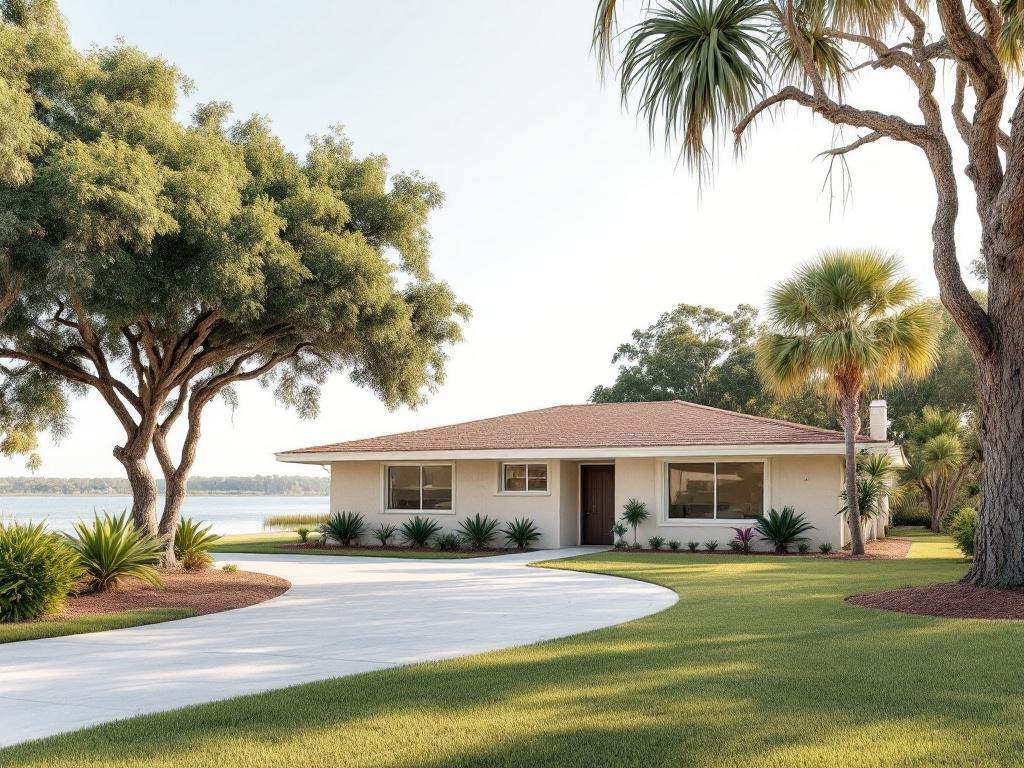
Table of Contents
- Why Sebring Prices Are Half of Coastal Florida — And What Stays the Same
- Sebring Neighborhood Map — Where Your Budget Actually Goes
- What $250K to $550K Actually Buys in Sebring
- The Carrying Cost Math — Property Tax, Insurance, HOA, and Seasonal Bills
- Owner-Occupant vs. Investor — Which Sebring Buyer You Actually Are
- Pre-Offer Due Diligence Checklist for a Sebring Home
- FAQ — Sebring Real Estate Questions Buyers Ask Before Writing an Offer
Why Sebring Prices Are Half of Coastal Florida — And What Stays the Same
The price gap between Sebring and coastal Florida isn't marketing copy — it's measurable to the dollar. According to Realtor.com Market Trends, Sebring's median listing home price sits at $259,900 with a median price of $163 per square foot. Compare that to Florida's statewide median listing of $475,000 and the U.S. median of $424,900 (Realtor.com). Zillow Research puts Sebring's home value index at roughly $220K–$230K, against Lakeland at $315K–$325K (about 40% higher), Ocala at $280K–$295K, and Sarasota at $520K–$540K (about 130% higher).
Three structural forces drive that discount, and none of them are temporary.
No tourism premium. Sebring is not a beach town. Dr. William Yu, economist with UCLA Anderson Forecast, frames the dynamic plainly in a CNBC interview: "Inland areas of high-cost states often offer significantly lower housing costs because they're not priced for tourism or global capital. But that discount comes with trade-offs: fewer high-wage jobs, less liquidity in the housing market, and slower appreciation." Coastal Florida pricing absorbs vacation demand, second-home demand from out-of-state buyers, and a premium for ocean access. Sebring absorbs none of that.
Lower local incomes. Sebring's median household income is $40,407, compared to Florida's $70,625 and the U.S. figure of $75,149 (U.S. Census Bureau QuickFacts). The owner-occupied median home value in Highlands County is $141,600 versus Florida's $292,200. Real estate pricing in a non-tourist market tracks local wage capacity, not coastal demand curves. Sebring sellers can't price beyond what local buyers can finance.
Retiree-driven, not job-driven demand. Highlands County's 65+ population share is 34.4%, against the U.S. average of 17.3%, with a median age of 54.4 (Census QuickFacts). Demand is steady but never speculative. There's no tech employer relocation, no university expansion, no port logistics buildout to pull working-age buyers in at scale.
What doesn't get cheaper in Sebring is the geography itself. The town wraps around three large lakes — Jackson, Istokpoga, and Sebring — plus the Sebring International Raceway and multiple golf communities. You're paying inland prices for waterfront access that coastal Florida would charge double for. A direct-lakefront home on Lake Jackson at $475K would price comparably to a lot-only listing on the Gulf coast.
The trade-off honesty matters. Dr. Brad O'Connor, Chief Economist at Florida Realtors, describes it this way: "Smaller interior markets are less volatile than the big coastal metros. You won't see the same spikes in prices, but you also don't see the same crashes." Slower price discovery cuts both ways. If you're rolling equity out of a hot market into Sebring, you're effectively converting volatility into stability — but at the cost of upside.
There's a liquidity cost to that stability. Days on market in Sebring run 70–90 days versus 50–60 statewide (Realtor.com Market Trends, both URLs above). Selma Hepp, Chief Economist at CoreLogic, has noted that small low-turnover markets have slower price discovery and longer exit timelines. If your investment thesis depends on selling within three years, Sebring isn't the right vehicle. If your horizon is 7–15 years and you actually intend to live in the house, the math changes entirely.
This is also why Sebring rarely competes head-to-head with Boca Raton real estate or other South Florida coastal options — they serve different buyers. The Sebring buyer is either trading down from a higher-cost market to extract equity, buying a second home positioned for lake access, or retiring on a fixed income that requires lower carrying costs. The coastal buyer is paying for amenity density, employment access, or a Delray Beach condo lifestyle that Sebring structurally cannot replicate.
Sebring's discount isn't a secret — it's structural. You're not paying for beach culture or metro job density. You're paying for water, golf, and quiet, and the math only works if those are what you actually want.
Sebring Neighborhood Map — Where Your Budget Actually Goes
Sebring isn't one market — it's at least five sub-markets with very different price floors, lot sizes, and lifestyle profiles. A $325K budget in Highlands Ridge buys a different life than the same money on Lake Istokpoga, and confusing the two costs buyers months of mismatched showings.
| Neighborhood | Typical Price Range | Lot Size | Water/Golf Access | Buyer Fit |
|---|---|---|---|---|
| Sun 'N Lake | $250K–$425K | 0.25–0.5 acre | 2 golf courses; some lake-view | Active retirees, golfers |
| Highlands Ridge | $230K–$380K | 0.15–0.3 acre | Golf course community | 55+ buyers seeking HOA structure |
| Downtown / Lake Jackson | $275K–$650K | Variable | Direct lakefront on Lake Jackson | Lakefront buyers, character homes |
| Sebring Hills / Country Estates | $200K–$340K | 0.25–0.5 acre | Limited; some canal access | Value buyers, first-time owners |
| Lake Istokpoga area | $225K–$550K | 0.5–2+ acres | Direct lakefront (largest county lake) | Fishing/boating buyers, second homes |
Price ranges synthesized from Realtor.com Sebring inventory and Redfin Sebring waterfront listings. Housing stock ages reflect Highlands County median year built: 1984 (U.S. Census ACS DP04).
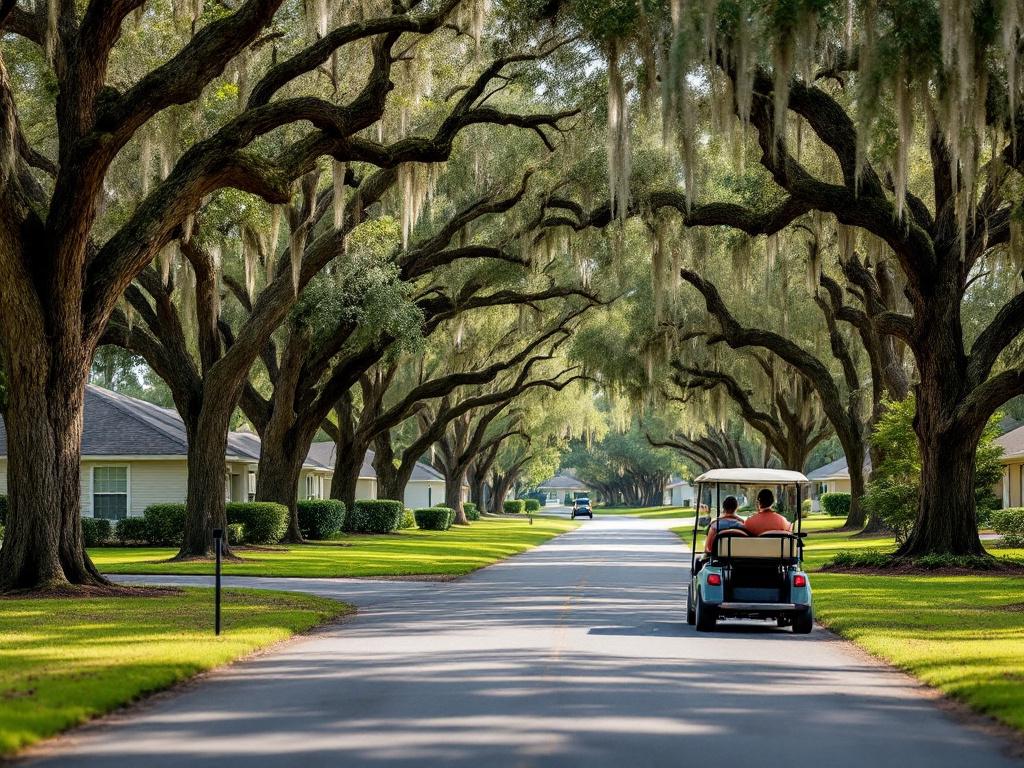
Sun 'N Lake is the largest organized community and behaves differently from a traditional HOA. It's an Improvement District — a special taxing district authorized under Florida statute — which means residents pay a non-discretionary assessment but get golf and amenity access at unusually low cost relative to private golf communities elsewhere in the state. The trade-off: you can't negotiate out of the assessment, and it appears on your tax bill rather than as a separate HOA invoice.
Downtown and Lake Jackson house Sebring's oldest stock. Expect 1920s–1960s homes with character but pre-modern-code construction. Dr. John Rees, structural engineer at UCF, told the Orlando Sentinel: "Homes built before the modern Florida Building Code often need upgrades to roofs, windows, and connections to meet current wind standards." The modern Florida Building Code threshold is 2002. Plan accordingly.
Lake Istokpoga is the rural option — a 27,000-acre lake with larger lots and many unincorporated parcels. Septic systems are prevalent here. The Florida Department of Health estimates roughly 30% of Florida households use septic; Highlands County runs well above that average, particularly outside city limits.
Highlands Ridge is a 55+ deed-restricted community. That structurally eliminates families with school-age children from the comparable buyer pool, which compresses resale demand to a narrower demographic and can extend days on market at exit.
What $250K to $550K Actually Buys in Sebring
Sebring inventory stratifies cleanly by price tier, and the differences between tiers are about condition and water access more than square footage. Here's what each band delivers in practice.
- $200K–$300K — Entry tier (manufactured and dated single-family). Expect 1970s–1990s single-family homes, typically 1,100–1,500 sq ft, 3BR/2BA, concrete block construction. Manufactured homes on owned lots are common in this band — including some on lakefront parcels at Lake Istokpoga and smaller lakes. Redfin shows a waterfront median listing at $225,000 with about 92 properties in inventory. At this price, expect original roofs nearing replacement, HVAC units 10–15 years old, and pre-impact-rated windows. Budget roughly $20K–$40K in deferred maintenance on top of the purchase price.
- $300K–$425K — Mid-tier (renovated single-family, lake-view, newer townhouses). This band buys you mid-century single-family homes with kitchen, roof, and HVAC updates completed in the last 5–10 years. Lake-view (not lakefront) homes in Sun 'N Lake and Highlands Ridge sit comfortably here. Townhouses and condos with pool and clubhouse amenities also fall in range. Square footage typically runs 1,500–2,000 with 3BR/2BA as the standard configuration.
- $425K–$550K — Upper-mid (lakefront single-family, newer construction, larger lots). Direct lakefront on Lake Jackson, smaller Sebring-area lakes, or canal access to Lake Istokpoga starts here. Newer construction from the 2010s onward on golf course lots fits the band. Expect 2,000–2,800 sq ft, often with screened pool enclosures, two-car garages, and modern impact windows. This is the tier where waterfront means genuine water access with a dock, not just a sightline.
- $550K and above — Premium (luxury waterfront, custom builds, golf-course estates). Custom homes on Lake Istokpoga with private docks, boat lifts, and one-acre-plus lots. Newer construction on premium Sun 'N Lake golf course frontage. Square footage moves to 2,800+, often with detached workshops, guest casitas, or extensive outdoor living. This tier still represents what would cost $1.2M+ on the Gulf or Atlantic coast — a useful frame of reference when comparing against Emerald Coast pricing in markets like Destin.
Realtor.com lists approximately 170 waterfront homes for sale in Sebring at any given time. Inventory is deep enough that buyers should resist the first showing — comparable lakefront properties are typically available within a $25K spread, and the 70–90 day DOM gives you time to compare three or four before writing an offer.
The Carrying Cost Math — Property Tax, Insurance, HOA, and Seasonal Bills
The purchase price gets the attention. The carrying costs determine whether you can actually afford the house five years in. Sebring's ongoing cost profile is favorable relative to coastal Florida, but it's not zero, and several line items surprise buyers who haven't underwritten them.
- Property tax: 1.8%–2.1% of taxable value, but the homestead exemption matters. Highlands County aggregate millage for a Sebring homeowner runs 18–21 mills (1.8%–2.1% of taxable value before exemptions), per the Highlands County Property Appraiser. The effective property tax rate on owner-occupied homes — after typical exemptions — is 0.86% (Lincoln Institute of Land Policy, 50-State Property Tax Comparison Study 2022). Florida residents can claim up to $50,000 in homestead exemption (Florida DOR). On a $300K home with full homestead, you're paying about $4,300/year — comparable to Polk County at 0.92% and Sarasota County at 0.82%.
- Homeowners insurance: $3,000–$4,500/year, less than half of coastal premiums. Inland central Florida counties including Highlands typically run $3,000–$4,500/year for standard frame or block construction, against a Florida statewide average of $6,000 and coastal counties exceeding $7,000–$8,000 (Insurance Information Institute). Mark Friedlander of III put it directly to the Tampa Bay Times: "Policyholders in inland counties may pay substantially less for homeowners insurance than those on the coast, primarily due to reduced hurricane wind risk and lower rebuilding costs." Sebring sits in Florida Building Code Wind Zone 3 (120–130 mph design wind speed) versus coastal HVHZ zones at 140–180+ mph (Florida Building Code 8th Edition).
- Flood insurance: required for some lakefront parcels, not all. FEMA designates Special Flood Hazard Areas as Zones A and V; federally backed mortgages in these zones require flood insurance (FEMA). Sebring's lake parcels fall into Zone AE or Zone X (shaded) depending on elevation — always pull the specific parcel from FEMA's NFHL viewer. Standard NFIP policies cap building coverage at $250,000 and contents at $100,000 (FEMA NFIP Summary of Coverage). Gap coverage may be needed on premium lakefront homes.
- HOA and community district fees: $0 to $800/month depending on community. Florida single-family HOAs average $250–$300/month; golf-course or resort-style communities run $400–$800/month when mandatory club dues are included (UF Shimberg Center). Sun 'N Lake is a special district, not a private HOA, with lower-than-typical assessments. Professor Evan McKenzie of the University of Illinois at Chicago, author of Privatopia, warned in a ProPublica interview: "In amenity-rich communities — especially those with golf courses — assessments will reflect not only current maintenance but also long-term capital liabilities. Low fees today can jump sharply when major components — roads, clubhouses, golf greens — come due for replacement." Always pull the five-year reserve study and assessment history before closing. For buyers considering rental scenarios, the Boca Raton property management framework — where reserve adequacy directly affects cash flow — translates directly to Sebring underwriting.
- Utilities and renovation: older homes mean ongoing capital needs. Highlands County's median year built is 1984 (U.S. Census ACS DP04) — half the housing stock predates the 2002 Florida Building Code. Budget for roof replacement ($12K–$25K), HVAC ($6K–$12K), and pre-impact windows ($15K–$30K) on pre-2002 homes. First Street Foundation projects 20–30 additional dangerous-heat days annually by 2050 for inland Florida, which means cooling load and HVAC sizing matter more than they did a decade ago.
A lakefront home in Sebring costs less to insure than a standard suburban single-family in Tampa or Sarasota — because hurricane wind risk, not the lake, drives Florida premiums.
Owner-Occupant vs. Investor — Which Sebring Buyer You Actually Are
Sebring works differently for primary residents, seasonal second-home owners, and rental investors — and the same property can be a great buy for one and a poor buy for another. Before you write an offer, you need to know which financial model you're actually running, because the after-tax, after-insurance math diverges sharply.
| Factor | Primary Residence | Seasonal Second Home | Long-Term Rental |
|---|---|---|---|
| Typical down payment | 20%–100% (cash common) | 20%–30% | 20%–25% |
| Homestead exemption eligible | Yes (up to $50K) | No | No |
| Effective property tax | ~0.86% after exemption | ~2.0% full millage | ~2.0% full millage |
| Insurance band | $3,000–$4,500/yr | $3,500–$5,000/yr | $3,500–$5,500/yr |
| Days on market at exit | 70–90 days | 70–90 days | 70–90 days |
Tax figures from Lincoln Institute and Florida DOR (URLs above); insurance from Insurance Information Institute; DOM from Realtor.com.
Primary residence is the strongest financial case. Homestead exemption knocks the effective property tax rate to 0.86%, insurance runs less than half of coastal Florida, and the buyer isn't dependent on rental yield. For a retiree with home equity from a higher-cost market, Sebring's math is genuinely favorable. The equity rollover pattern — selling at coastal Florida valuations and buying inland at a discount — is the single most common financing structure in this market. If you're considering this trajectory from a high-cost market, the equity extraction step on the front end matters as much as the Sebring purchase on the back end; understanding how to sell a Boca Raton home (or any comparable coastal asset) determines your buying power here.
Seasonal second home works, but mind the vacancy details. Highlands County's 32.6% seasonal/vacant housing share (U.S. Census ACS DP04) confirms a real second-home market — higher than Polk County at 22.0% and even Sarasota County at 27.2%. But insurance carriers typically apply vacancy surcharges on homes unoccupied for extended stretches, and you forfeit homestead exemption, which roughly doubles your effective property tax rate.
Long-term rental investing is the weakest case. Sebring's rental demand is thin — the $40,407 local median household income caps achievable rents, and the retiree-heavy demographic skews toward owner-occupants, not renters. Dr. Brad O'Connor's framing that interior markets are driven by retirees and local incomes rather than transient demand applies directly here. Seasonal vacation rentals on Lake Istokpoga (fishing tourism) can outperform long-term rentals on a cash-flow basis but require active management. For pure appreciation-driven investment, the Ocala market typically delivers stronger price growth.
Exit liquidity is the constraint nobody wants to discuss. With 70–90 day DOM and a thin buyer pool, anyone planning to flip in under three years should look elsewhere. Sebring rewards hold periods of seven-plus years. The market's stability cuts both ways: low downside, capped upside, slow turnover.
Pre-Offer Due Diligence Checklist for a Sebring Home
This is the verification list you take into a showing and use to qualify or disqualify a property before it ever reaches contract. Each item has a specific document or resource attached.
- Pull the FEMA flood zone for the exact parcel. Use FEMA's National Flood Hazard Layer Viewer. Zone AE or V triggers mandatory flood insurance on federally backed loans. If the home sits in AE, request an elevation certificate from the seller — it directly affects premium pricing.
- Verify roof age, HVAC age, and water heater age. Florida insurance carriers frequently decline coverage on roofs over 15 years old or HVAC over 20 years. Request the seller's property disclosure and any permit history from the Highlands County Building Department. A property with documented recent re-roof can save $400–$1,200/year in premiums.
- Confirm the property's building code era. Pre-2002 construction predates modern Florida Building Code wind standards. For waterfront or wind-exposed parcels, budget for impact window upgrades or wind mitigation retrofits — these also unlock insurance discounts through the OIR wind mitigation form (OIR-B1-1802).
- For HOA or special district properties, request five documents: current CC&Rs, last three years of meeting minutes, current operating budget, most recent reserve study, and assessment history. Watch specifically for upcoming special assessments tied to clubhouse, road, or golf course capital projects — these are where McKenzie's warning about long-term capital liabilities materializes as a check you have to write.
- Determine septic vs. sewer. Properties outside Sebring city limits often use septic. Request the most recent septic inspection (within 12 months) and tank pump-out records. Replacement cost for a failed system runs $8K–$15K and may require permit-driven setbacks that complicate placement on smaller lots.
- Verify incorporated vs. unincorporated status. This affects millage rates, code enforcement, and short-term rental rules. The Highlands County Property Appraiser parcel record shows all taxing jurisdictions attached to the property — read the line items rather than the headline rate.
- Pull neighborhood-specific sales history for the past 24 months. Sebring appreciates more slowly than coastal markets — confirm the property's price aligns with comparable closed sales, not aspirational listing prices. With 70–90 day DOM, sellers often hold list prices longer than the market supports, particularly on the higher tiers.
- Confirm closing timeline expectations. Conventional and FHA financing in Florida runs 30–45 days; cash closes in 10–21 days (CFPB Home Loan Toolkit). In Sebring's slower market, you have leverage to negotiate inspection periods of 15+ days without losing the deal — use it.
Sebring buyers often arrive from higher-cost markets — comparing inventory against Boca Raton homes for sale or similar coastal options is how most arrive at the inland decision in the first place. The discipline of the checklist matters more here than in a faster market, because the slower exit timeline means mistakes compound rather than resolve through appreciation. Done right, sebring florida homes for sale offer one of the cleanest carrying-cost profiles in the state.
FAQ — Sebring Real Estate Questions Buyers Ask Before Writing an Offer
Is Sebring a good investment if I'm not retiring?
For buyers under 50, Sebring works best as a long-hold second home or seasonal rental on a lake. As a pure appreciation vehicle, Lakeland (Zillow ZHVI ~$320K and rising faster) or Ocala typically delivers stronger price growth. Sebring's strength is carrying cost, not appreciation velocity — the Federal Reserve Bank of Atlanta documents that interior Florida metros have slower employment growth and weaker price momentum than coastal metros.
How long does a home typically sit on the market in Sebring?
Median days on market in Sebring runs 70–90 days, compared to 50–60 days statewide. For buyers, this means more negotiating leverage and time to do thorough due diligence. For sellers, it means pricing aggressively at listing matters more than chasing the market down later. Price reductions after 60+ days on market signal seller fatigue and create the best negotiation windows.
What's the difference between Sebring proper and the surrounding Highlands County towns?
Sebring is the Highlands County seat and the largest of three connected communities (Sebring, Avon Park, Lake Placid). Avon Park sits 10 miles north with a similar profile and slightly lower prices. Lake Placid, 15 miles south, has the highest concentration of lakes in the county — 27 named lakes within town limits — and a more rural feel. Tax rates and building codes are county-wide; city limits affect millage by roughly 1–2 mills.
Are there new construction homes in Sebring?
Yes, primarily in Sun 'N Lake, Highlands Ridge, and on infill lots in Sebring Hills. New construction typically runs $300K–$550K for 1,800–2,400 sq ft, putting it about 30–40% below new construction in Lakeland or Ocala. Builders are predominantly regional (Adams Homes, Highland Homes) rather than national volume builders, which means slower build times (8–12 months) but more customization flexibility on finishes and floor plans.