
Stuart, Florida: The Sailfish Capital's Hidden Real Estate Treasures
Table of Contents
- How Stuart's Market Diverges From Miami-Dade and Broward Pricing Logic
- Stuart Neighborhoods Ranked by Price, Schools, and Waterfront Access
- The Waterfront Premium — What an Indian River Address Actually Costs
- New Construction in Stuart vs. Resale Homes — Which Closes Better
- True Cost of Ownership — Insurance, Property Tax, and Hidden Fees
- When to Buy in Stuart — Reading the Seasonal Calendar
- Stuart Buyer Profiles — Match Your Search to How You'll Actually Live
- Frequently Asked Questions
- Your 30-Day Buyer's Action Sequence for Stuart
You've scrolled 200 listings in Miami-Dade. The prices made you wince. A friend mentioned Stuart — same Florida coastline, fraction of the competition, sailfish on the wall instead of skyline on the horizon. But "hidden gem" is a phrase that hides as much as it reveals. When you start filtering Stuart Florida homes for sale, the questions multiply: Is Stuart genuinely cheaper than Fort Lauderdale, or are insurance and HOA fees quietly closing the gap? Does waterfront access here appreciate like it does in Palm Beach, or does the appreciation ceiling stop at the Martin County line? This guide answers those questions with current MLS data, Martin County tax records, and FEMA flood designations — not brochure language.
How Stuart's Market Diverges From Miami-Dade and Broward Pricing Logic
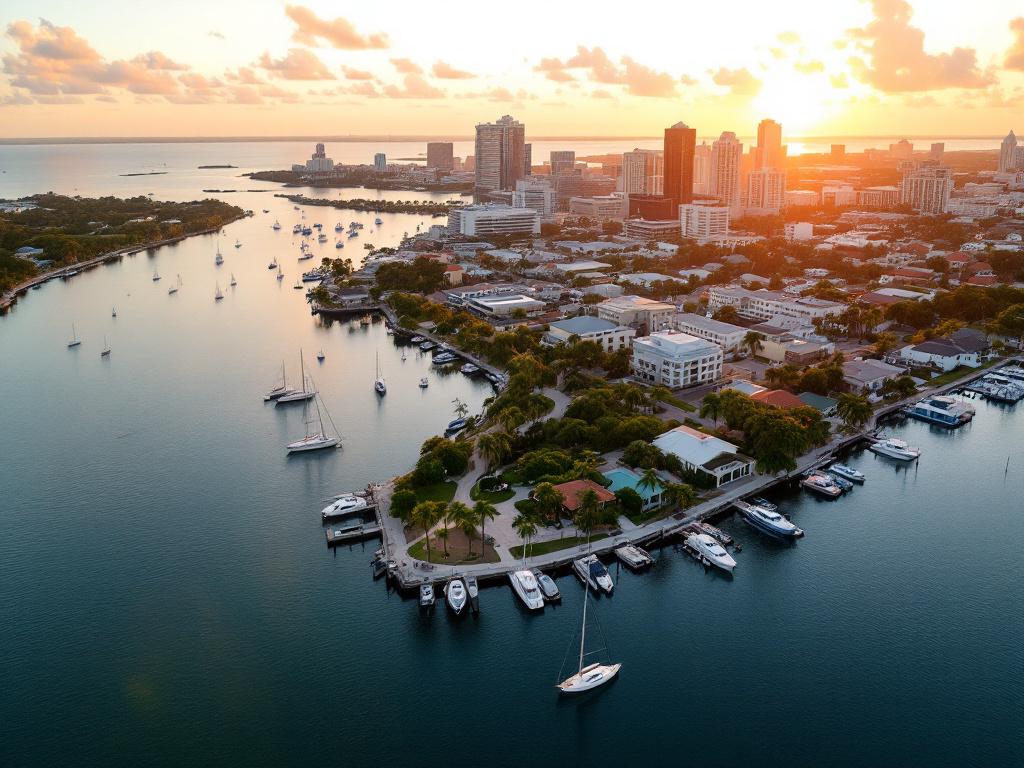
Stuart sits in Martin County, roughly 100 miles north of Miami and 40 miles north of West Palm Beach. The city proper holds about 16,500 residents; Martin County overall is closer to 165,000. That math matters because Stuart is not a suburb of South Florida — it draws a different buyer pool with different motivations and a different relationship to risk and rate environments. The mistake most Stuart Florida homes for sale shoppers make is anchoring their expectations to Broward or Miami-Dade comps. The numbers don't translate.
Pull current data from Redfin's Stuart market page [VENDOR SOURCE] and you'll see a median sale price that sits materially below Fort Lauderdale's median on the same platform. The dollar gap typically runs into the hundreds of thousands; the percentage gap commonly sits in the 30–45% range against Fort Lauderdale and wider against coastal Miami-Dade. Verify these figures at draft time — they move monthly — but the directional spread has held for years.
The Stuart real estate market also runs on different inventory dynamics. A balanced market carries roughly 5–6 months of supply; under three months tilts toward sellers, and above six tilts toward buyers. Stuart routinely operates closer to balanced or moderately seller-favored, while Miami-Dade's condo segment can swing harder in both directions on rate moves. Days-on-market in Stuart historically run longer than the South Florida urban core. That is not weakness — it signals less speculative pressure and more room to negotiate inspection items, closing credits, and rate buydowns.
Stuart attracts buyers who priced themselves out of South Florida — or who never wanted the South Florida lifestyle in the first place.
The migration pattern is observable in the cash-buyer share and median buyer age. Northeast retirees, remote-work professionals priced out of South Florida luxury markets like Jupiter, and second-home buyers cross-shopping with Boca Raton's market dynamics make up most of the inflow. Realtor.com's cross-market demand reports [VENDOR SOURCE] show consistent migration into Martin County from northern coastal metros and from Broward/Palm Beach buyers extending their search radius.
Three structural reasons explain why the Stuart Florida property values gap exists and why it tends to persist:
- No major airport within 30 miles. Palm Beach International is roughly 40 minutes south; Orlando and Fort Lauderdale are over an hour. That friction filters out the international second-home buyer who anchors Miami pricing.
- Lower-density zoning. Martin County's Comprehensive Plan enforces a four-story height cap and aggressive growth management that prevents the high-rise condo product driving Miami's price-per-square-foot ceilings.
- Smaller employer base. No Brickell, no Las Olas corporate corridor. Stuart's economy leans on healthcare, marine services, and retiree spending — stable but not a wage-growth engine.
These are features for the target buyer. They are also why Stuart will likely never trade at Palm Beach multiples. The price gap is not a discount waiting to be arbitraged. It reflects a different product. Buyers chasing nightlife, fine-dining density, or a finance-industry social scene will be disappointed within six months. Buyers chasing inlet access, a working downtown, and lower carrying costs relative to comparable waterfront in Boca or Delray will find the trade attractive.
Stuart Neighborhoods Ranked by Price, Schools, and Waterfront Access
Stuart Florida neighborhoods do not behave as one market. Pricing, school zoning, and water access shift dramatically across a six-mile radius. The table below covers the six neighborhoods most buyers cross-shop. Verify each cell against current listings before relying on it — neighborhood medians shift monthly.
| Neighborhood | Median List Price Tier | Walk Score Tier | Top Public School Rating | Waterfront Access |
|---|---|---|---|---|
| Downtown Stuart (34994) | Mid | High | Mid (5–7) | Limited direct |
| Sailfish Point (34996) | Highest | Low | High (8–9) | Direct ocean/inlet |
| Sewall's Point (34996) | High | Low | High (8–9) | Direct river |
| North River Shores (34994) | Mid-High | Low-Mid | Mid (6–7) | Direct/community |
| Jensen Beach (34957) | Mid | Mid | Mid (6–8) | Bridge to barrier |
| Palm City (34990) | Mid | Low | High (8–9) | Limited direct |
Pull the precise medians from the Zillow Stuart home values page [VENDOR SOURCE] and verify school ratings against GreatSchools. Walk Score tiers come from Walk Score's Stuart breakdown. Cross-reference parcel-level data through the Martin County Property Appraiser before writing any offer.
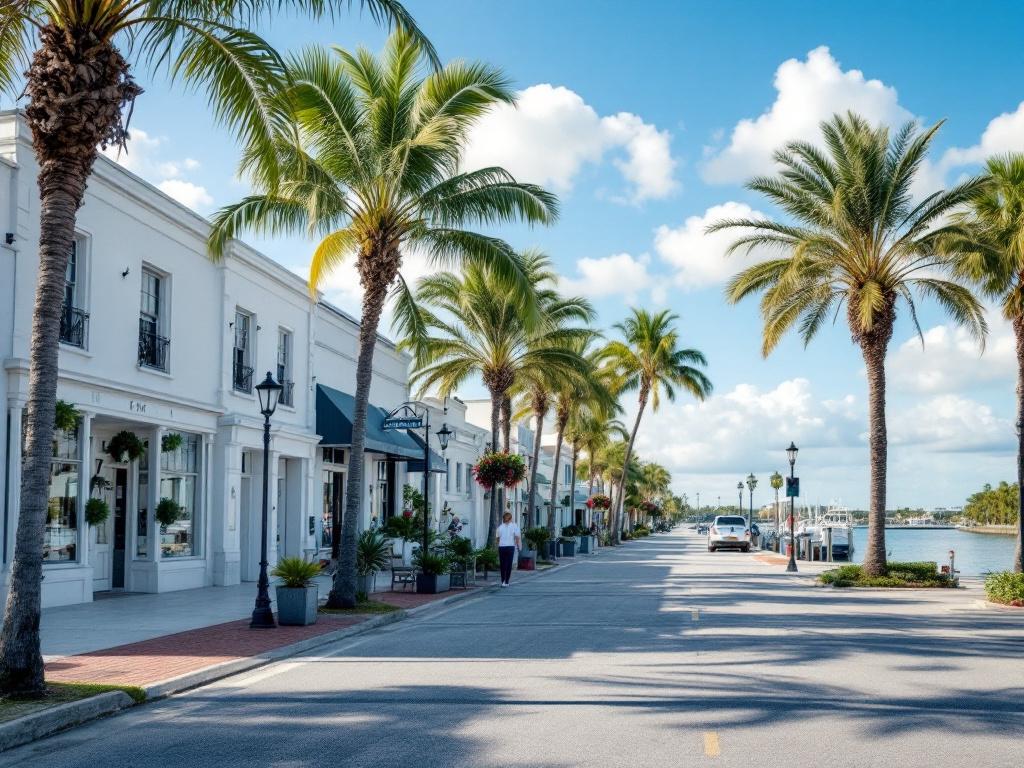
Sewall's Point and Sailfish Point are the price ceilings of the area. Sewall's Point is its own incorporated municipality, which means separate police, separate building codes, and a tax differential most buyers don't catch until the closing disclosure. Sailfish Point is a private gated community on Hutchinson Island with mandatory club membership — the dues are not optional and add materially to monthly carry. Both deliver the highest school zoning and the deepest water access; both are slowest to resell in a downturn because the comparable substitute pool is small.
Downtown Stuart trades walkability for direct waterfront. It carries the highest Walk Score in the county, a working historic district with restaurants and a riverwalk, and a condo-heavy inventory mix. Most homes here sit off-water but within a five-minute walk of it. Jensen Beach and Palm City are the volume markets — broadest price range, most inventory turnover, where most buyers actually transact. Palm City buyers frequently cross-shop with comparable Palm Beach County coastal communities at similar price points but better school ratings.
North River Shores deserves attention as the underdiscussed value tier — older mid-century inventory, generous lot sizes, deep-water canals on the south side, and prices below Sewall's Point for a similar boating proposition. The trade-off is older infrastructure (1950s–70s housing stock means roof, plumbing, and electrical due-diligence is non-negotiable).
The neighborhood that "looks affordable" on a listing portal is not always the one that closes affordable. School zoning can shift between two streets. HOA dues at one Palm City community can be triple another's. Flood designation across a single road can move you from Zone X to Zone AE and add four figures annually to insurance. The table is a starting filter — never a closing argument.
The Waterfront Premium — What an Indian River Address Actually Costs
Waterfront homes Stuart Florida buyers chase are not one product. The premium structure runs in tiers, and the difference between tier 1 and tier 2 is the most underdiscussed value gap in the market.
| Property Tier | Price Range Tier | Median $/Sq Ft Tier | Insurance Tier | Likely Flood Zone |
|---|---|---|---|---|
| Direct waterfront w/ dock | Highest | Highest | High | AE or VE |
| Water view / community access | High-Mid | High-Mid | Moderate-High | AE or X |
| Inland under 1 mi | Mid | Mid | Moderate | X (mostly) |
| Inland over 1 mi | Lower | Lower | Standard | X |
Pull current per-square-foot data by filtering Zillow and Redfin Stuart [VENDOR SOURCE] by waterfront flag and proximity. Verify flood zones for any specific address through the FEMA Flood Map Service Center. Insurance tiers reflect rate filings published by the Florida Office of Insurance Regulation.
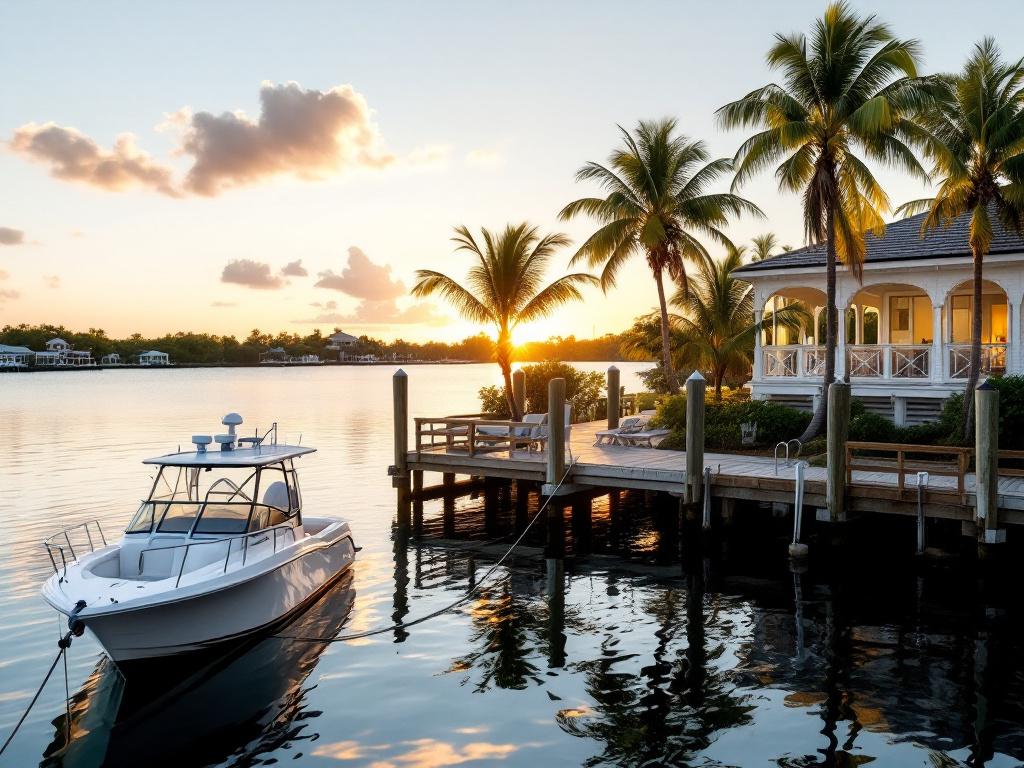
The dock multiplier drives most of the premium. A private dock with deep-water access — typically 5+ feet at low tide for sailboat owners — adds substantial value beyond the lot itself. Brokers in Stuart routinely cite deep-water dockage as the single largest non-square-footage premium factor. Boat lifts add another layer; covered dockage adds another. A property that looks "comparable" on Zillow can carry a $200K+ delta based on dock specs alone.
The insurance reality is where the spreadsheet often breaks. Direct waterfront homes in VE flood zones face the highest NFIP base premiums and almost always require windstorm coverage as a separate policy. The FEMA flood zone glossary defines VE as a coastal high-hazard zone subject to wave action — the most expensive designation. Properties west of US-1 typically sit in Zone X with materially lower exposure.
A direct waterfront address in Stuart commands a premium, but the appreciation ceiling stops well below what the same dock would cost in Palm Beach.
Resale liquidity moves in opposite directions for the two tiers. Direct waterfront takes longer to sell in absolute days because the buyer pool is narrower, but it holds value better in downturns because there are fewer comparable substitutes. Inland Stuart is more liquid in a normal market but more rate-sensitive — when 30-year rates move 100 basis points, inland inventory adjusts faster than waterfront.
Here is the verdict the data supports for most buyers. If you genuinely own a boat and use it weekly, direct waterfront with dockage is structural to the lifestyle and the premium is functional, not vanity. If you want a view and the sound of water and occasional kayak access, water-view properties at the second tier deliver roughly 80% of the lifestyle at about 50–60% of the carrying cost. That gap is the most underdiscussed value position in Stuart. The buyer who thinks they want waterfront but hasn't owned a boat in five years almost always overpays at tier 1.
New Construction in Stuart vs. Resale Homes — Which Closes Better
New homes Stuart Florida buyers consider tend to cluster in specific corridors. Understanding where new construction is concentrated — and what it actually costs to carry — separates buyers who close well from buyers who get surprised at month four.
Where new construction concentrates.
New construction in the Stuart area concentrates west of I-95, particularly in Palm City and the Tradition border, with select infill projects near Jensen Beach. The U.S. Census Building Permits Survey tracks Martin County permit volume month-over-month. Stuart proper, east of I-95, has limited new construction because of land scarcity and the four-story height cap. If you want truly new product close to downtown, you'll be looking at townhomes or condo conversions, not single-family.
The price-per-square-foot premium.
New construction in Stuart-area master-planned communities typically lists at a premium over comparable resale homes 5–15 years old in the same submarket. The premium reflects builder margin, current code compliance (impact glass, updated wind ratings), and the absence of deferred maintenance. Pull two side-by-side comps at draft time — one new-build, one resale within five miles — and the gap is usually visible in the listing remarks alone. Evaluating these comps is one place where the role of digital tools in evaluating new construction actually moves the negotiation needle.
Days-on-market for new construction.
Builder inventory often moves faster than resale because builders price to current market rather than emotional comp anchoring. They also have a quarter-end calendar. Unsold builder inventory at the end of Q1, Q2, and especially Q4 frequently triggers incentive packages — rate buydowns to the high 4s or low 5s, full closing-cost credits, design-center allowances. The National Association of Home Builders tracks builder sentiment and incentive prevalence at the national level; the Stuart-specific tactical play is to walk into the model home in late March, late June, or late December and ask what's standing inventory.
HOA and CDD fees on new construction.
Master-planned new construction in Martin County frequently carries both HOA dues and a Community Development District (CDD) bond assessment. CDDs amortize over 20–30 years and can add hundreds to monthly carrying costs. The Florida Department of Commerce maintains a special districts registry where you can verify any CDD before offer. Always request the CDD disclosure document in writing — Florida law requires sellers and builders to provide it, but plenty of buyers skim past it and discover the bond on the closing disclosure.
Resale value pattern.
Florida new construction historically drops in the first 12–24 months as the "new premium" wears off, then tracks the broader market. Resale homes in the 8–15 year range typically show the most predictable appreciation curves — past the new-build depreciation, before the major systems (roof, HVAC, water heater) reach end-of-life. For most Stuart Florida homes for sale shoppers, this is the sweet spot, particularly in Jensen Beach and Palm City inventory.
True Cost of Ownership — Insurance, Property Tax, and the Fees Buyers Don't Budget For
This is the section that disqualifies fantasy budgets. The list price is the headline. The real number is what hits your account every month for the next decade. Stuart Florida property costs break into five categories, and the waterfront category catches almost everyone the first time.
Property tax.
Pull the current Martin County millage rate from the Martin County Property Appraiser. Florida's homestead exemption reduces assessed value by up to $50,000 for primary residences. The Save Our Homes assessment cap limits annual increases in assessed value to 3% for homesteaded properties. Snowbirds and second-home buyers do not get this cap. If you are buying a Stuart property as a second home and your name is on a homestead in another state, your Martin County assessed value can rise faster than your homesteaded neighbor's — and over a decade, the gap compounds into real money.
Homeowners insurance.
Florida carries the highest average homeowners insurance premiums in the United States, according to the Insurance Information Institute. Coastal Stuart sits well above the state average. Many private carriers have non-renewed policies in coastal Florida zip codes over the past several years, pushing more homes onto Citizens Property Insurance Corporation, the state-backed insurer of last resort. Citizens is not cheap — it is the floor of last resort — and many buyers discover at closing that the seller's "old premium" is no longer obtainable for a new policy.
Flood insurance.
Required by federal law for any mortgaged property in FEMA Zone AE, A, VE, or V. The NFIP standard policy caps building coverage at $250,000; private excess flood policies fill the gap above that. Direct waterfront in Stuart is overwhelmingly AE or VE — flood insurance is functionally non-optional for those properties. About a quarter of NFIP claims nationally come from properties outside high-risk zones, which is the argument for carrying flood insurance even in Zone X.
HOA and CDD.
HOA dues in Stuart communities typically pay for gated entry, common-area landscaping, and sometimes amenities (pool, fitness center, dock master). CDD bonds pay for infrastructure already built — roads, utilities, drainage — that you also paid for inside the home's price. Read both disclosure documents. An HOA estoppel certificate will tell you arrears, special assessments pending, and reserve fund health. A CDD disclosure will tell you the bond's remaining term and annual assessment.
The hidden waterfront costs.
Seawalls have 30–50 year service lives. Replacement runs into six figures depending on linear footage and access. Dock permitting goes through the Florida Department of Environmental Protection, and major dock work requires permits that take months. Dock insurance is typically separate from your homeowners policy. If you are a second-home owner managing a Stuart waterfront property from out of state, professional property management to handle these recurring costs is not a luxury — it is structural to keeping the asset in serviceable condition between visits.
The purchase price is roughly 60% of what owning in Stuart actually costs. Insurance, taxes, and waterfront upkeep are the other 40%, and they compound annually.
Plug These Five Numbers In Before You Sign
- Annual property tax. Pull current Martin County millage from pa.martin.fl.us. Multiply by (assessed value − exemptions). If the home is not your homestead, do not subtract the $50K.
- Annual homeowners insurance quote. Get a real quote from at least two carriers on the actual property. Do not use the seller's old premium. Many carriers will not insure homes over a certain age or with a roof past 15 years.
- Annual flood insurance. If FEMA zone is AE or VE, pull a quote at floodsmart.gov using the property address before you write the offer.
- Monthly HOA + any CDD assessment. Request the HOA estoppel and CDD disclosure documents in writing. Read the reserve study.
- Waterfront-specific reserve. If applicable, budget an annual reserve for seawall, dock, lift, and dock insurance. A reasonable working number is 1–2% of the dock/seawall replacement cost per year.
Add these to your mortgage P&I. The number you get is your real monthly cost. If it breaks your budget, the listing price was never the right number to anchor on.
When to Buy in Stuart — Reading the Seasonal Calendar
Stuart's market runs on a measurable snowbird-driven seasonality. The pattern is directional, sourced from monthly trend data published by Realtor.com Research [VENDOR SOURCE]. It does not override mortgage rate environment, but in a stable rate window it shapes the best time to buy Stuart Florida homes by 30–60 days.

Winter Peak (December–February).
Snowbird inflow drives showing volume to its annual high. List-to-sale ratios tighten, the best inventory turns over in days, and multiple-offer scenarios concentrate here. This is the wrong time to find a deal but the right time to gauge the market's actual ceiling — what the top 20% of inventory commands. If you are competing with cash from Northeast retirees, expect 95–100% list-to-sale ratios on desirable inventory, and budget for an escalation clause on anything truly competitive.
Spring Shoulder (March–May).
Snowbirds depart in March and April. Inventory remains elevated. Sellers who didn't close in season start cutting prices in measurable ways — typically 3–7% off February asks by mid-April. This is the best negotiating window for buyers who can move quickly. New construction builders frequently run end-of-quarter incentives in March and June, which compounds the buyer advantage if you're cross-shopping new and resale.
Summer Lull (June–August).
Lowest showing volume of the year. Hurricane season anxiety, heat, and school-year disruption suppress activity. Inventory thins as some sellers withdraw to relist in fall with fresh days-on-market counters. The sellers who stay listed in August are often genuinely motivated — relocation, estate, divorce, rate-driven exits. This is the contrarian buyer's window and historically delivers the lowest list-to-sale ratios of the year on properties that have aged 60+ days.
Fall Reset (September–November).
Inventory rebuilds ahead of snowbird season. Sellers who didn't move in summer reposition with fresh listings and refreshed pricing. Pre-snowbird November is historically the strongest 30-day buying window for non-rushed buyers — full inventory, less competition than December. The rate environment matters here too; many fall buyers are timing rate locks against expected Fed activity.
A mortgage rate move of 100 basis points in either direction will swamp the snowbird pattern. Buyers should weight rate window timing equally with seasonal timing. A great rate in February beats a soft seller in June for most 30-year financed buyers.
Stuart Buyer Profiles — Match Your Search to How You'll Actually Live
Most buyers misclassify themselves at the start of the search and discover the mismatch six months after closing. The four profiles below cover the bulk of buying in Stuart inventory. Pick the one that fits how you will actually live, not how you imagine you will live.
The Boat-First Retiree.
You want deep-water dockage, sailfish-grade access to the St. Lucie inlet, and a covered slip for a 32-foot center console or larger. You're willing to pay the waterfront premium and the insurance burden because the boat is the point. Best fit: Sewall's Point, Sailfish Point, North River Shores, select Hutchinson Island canal communities. Trade-off: highest carrying costs, most flood exposure, slowest resale, mandatory club dues at gated communities. Verify dock dimensions and dredged depth at low tide before offer — listing remarks routinely overstate both.
The Remote-Work Relocator.
Family of three to four leaving the Northeast or priced out of Palm Beach County. School ratings matter, fiber internet matters, and a yard that fits a swing set matters more than a dock. Best fit: Palm City, Jensen Beach inland sections, west Stuart. Trade-off: longer drive to the water (10–20 minutes typical), but materially lower insurance and tax exposure than Hutchinson Island. Many relocators in this profile also consider similar coastal Florida markets like St. Augustine before committing — the school and lifestyle calculus differs by 200 miles. If you're contingent on selling your current home efficiently before buying, line that up first. Stuart sellers don't love sale-of-home contingencies in winter.
The Seasonal Snowbird.
You own a primary residence elsewhere and use Stuart four to six months a year. Lock-and-leave logistics matter — HOA-managed exteriors, hurricane shutters or impact glass already installed, a property manager you trust. Best fit: Downtown Stuart condos, gated communities in Palm City, low-maintenance villas in Jensen Beach. Trade-off: no Save Our Homes cap because you can't homestead, so assessed value can rise faster than 3% annually. Budget for that compound over the holding period.
The Investor / Second-Home Renter.
Buying for rental income offset or long-term hold. Verify Martin County and City of Stuart short-term rental ordinances before buying — Martin County restricts STRs in many residential zones, per the Martin County Code. Best fit: properties already permitted for rental use, long-term-rental-friendly condos near downtown, properties zoned commercial-mixed. Trade-off: STR economics in Stuart are weaker than in Destin or the Keys. Buy on appreciation thesis and personal-use logic, not pro-forma cash flow that depends on 70% occupancy at peak ADRs.
Most buyers misclassify. The boat-first retiree who hasn't owned a boat in five years probably wants water-view, not waterfront. The relocator who romanticizes downtown will resent the Friday-night noise within a year. The snowbird who picks a high-HOA gated community for "convenience" will resent the dues when they're only there four months. Spend a long weekend in each candidate neighborhood before committing. The insurance bill is final. The lifestyle assumption is reversible only by moving again.
Frequently Asked Questions on Stuart, Florida Homes for Sale
What's the practical difference between Jensen Beach and Hutchinson Island for buyers?
Jensen Beach is mainland — west of the Indian River Lagoon, lower flood exposure, broader inventory range from entry-level single-family to multimillion-dollar estates. Hutchinson Island is barrier island — east of the lagoon, predominantly Zone VE/AE flood designation per the FEMA Flood Map Service Center, insurance premiums materially higher, almost entirely condo and oceanfront single-family. Jensen Beach buyers commute over a bridge for beach access; Hutchinson Island buyers walk to it. The bridges close during hurricane evacuations — a logistical reality that disqualifies Hutchinson Island for buyers with mobility considerations or chronic medical needs that require frequent mainland appointments.
Do I need flood insurance in Stuart, and what does it cost?
Required by federal law for any mortgaged property in FEMA Zone AE, A, VE, or V, per FloodSmart.gov. Optional but advisable in Zone X — about 25% of NFIP claims nationally come from properties outside designated high-risk zones. NFIP base policy caps building coverage at $250,000; private excess flood policies fill the gap above that for higher-value homes. For exact cost on your candidate property, pull a quote at floodsmart.gov using the property address before you write an offer. Premiums vary widely by elevation certificate, year built, and foundation type — a 1965 ground-floor home in VE can cost multiples of a 2015 elevated home next door.
How do I win a multiple-offer situation in Stuart's winter peak?
Three levers. Shorten the inspection period to 5–7 days rather than the default 15. Shorten the financing contingency or waive it if you're cash. Write an escalation clause with a documented cap so the listing agent can verify the higher comp without back-and-forth. Avoid waiving inspection entirely — Florida's older coastal inventory has hidden seawall, roof, and CDX sheathing issues that can run into six figures. A clean, fast, properly contingent offer beats a sloppy higher offer in most Stuart seller decisions, particularly with estate sellers or relocating snowbirds who prioritize close certainty over the last 1–2% of price. Loop your lender in before you write — a same-day verification call from a local lender carries more weight than a generic pre-approval letter from an out-of-state online shop.
Your 30-Day Buyer's Action Sequence for Stuart
If you're serious about buying in Stuart in the next 30 days, run this sequence in order. Each step gates the next. Skip one and you'll discover the gap when it's expensive to fix.

Days 1–3: Lock pre-approval, not pre-qualification.
Pre-qualification is a phone conversation. Pre-approval is underwritten — credit pulled, income documented, assets verified. In a multiple-offer market, listing agents discount pre-qualification letters and prioritize underwritten ones. Ask your lender for a full underwriting credit-and-asset review with a desktop underwriter approval.
Days 4–5: Filter the neighborhood matrix against your buyer persona.
Eliminate at least three of the six neighborhoods from the table earlier. If you can't, your criteria are too vague. Decide whether boat access, school rating, or downtown walkability is the non-negotiable, and let the other two flex.
Days 6–8: Tour one waterfront and one inland property in your top neighborhood.
The point is calibration, not purchase. The waterfront walkthrough will recalibrate your sense of what the premium actually buys. The inland walkthrough will recalibrate your sense of what you can afford to insure. Most buyers change their target tier after this 48-hour window.
Day 9: Pull FEMA flood designations for every address you're considering.
Use msc.fema.gov. Disqualify any AE or VE property where you cannot afford the flood insurance quote — not the property value, the insurance carry. Insurance is final; the property is replaceable.
Day 10: Get a real insurance quote on your top two candidates.
Two carriers minimum. Citizens Property Insurance is the floor of last resort; private quotes can come in lower or substantially higher depending on roof age, year built, and elevation. Ask the carrier for the four-point inspection requirements before you tour again — a 1972 home with original electrical may be uninsurable until rewired.
Days 11–20: Tour open houses on weekdays.
Weekend open houses are crowded and theatrical. Weekday afternoons let you talk to listing agents without an audience. Listing agents reveal seller motivation in casual conversation that they would never write into the property remarks. You can also browse current waterfront and inland inventory at adjacent Palm Beach County price points to confirm Stuart is still the right market for your money.
Day 21+: Submit an offer when the math holds — not when it feels perfect.
The math holds when mortgage P&I plus tax plus insurance plus HOA/CDD plus waterfront reserve fits your budget with margin. Margin matters because Florida insurance renewals can move 15–30% in a single year. Feeling perfect is what overpays. The buyers who close well in Stuart are the ones who walked away from two properties first and waited for the third where the spreadsheet didn't require optimism.