
Condos for Sale in Orlando, Florida: Investment & Lifestyle Guide
Table of Contents
- Orlando Condo Neighborhoods Ranked by Appreciation, Price, and Rental Demand
- The 8 Fee Traps Hiding in Orlando Condo Disclosure Documents
- New Construction vs. Resale Orlando Condos: The Real Cost Difference Beyond Asking Price
- Modeling Real Returns: Three Orlando Condo Buyer Scenarios
- From Accepted Offer to Closing: The Orlando Condo Timeline With Decision Gates
- Why Your Orlando Condo Loan Gets Denied Even With Perfect Credit
- Nine Conditions That Should End Your Orlando Condo Purchase On the Spot
It's 11:47 PM. You've been toggling between three browser tabs for an hour — a Downtown high-rise at $285K, a Lake Nona new-build at $340K, and a UCF-adjacent unit at $189K that looks too cheap to be real. The HOA on the first is $612. The second is $498. The third lists $245 but the photos look like the building hasn't been painted since 2009. Somewhere in those three numbers is either a smart purchase or a $50,000 mistake, and the listing photos won't tell you which.
The first problem when you start searching condos for sale in Orlando Florida is that no two portals agree on what's available. Redfin currently shows 1,242 condos at a median listing price of $197,000. Realtor.com lists 1,489. Zillow shows 1,155. Trulia shows 1,147. That's a 342-unit spread depending on which feed you trust — meaning whatever search you've been doing, you're seeing somewhere between 77% and 100% of the actual market.
This guide skips the boilerplate. Four things actually decide whether an Orlando condo purchase makes or loses money: neighborhood selection, fee structure, financing eligibility, and post-Surfside reserve risk. Everything else — granite countertops, building amenities, pool deck photos — is noise. The advice below is written for buyers who've already scrolled 30+ listings and for buyers searching beyond a single market and want to know what the inspection period is actually for.
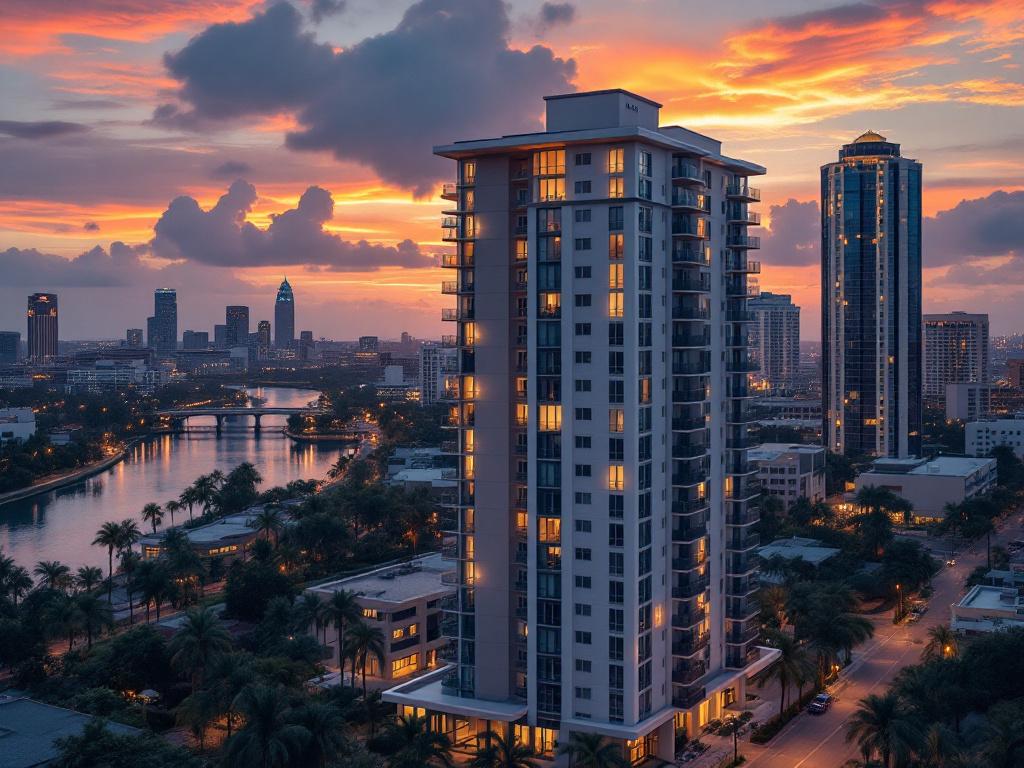
Orlando Condo Neighborhoods Ranked by Appreciation, Price, and Rental Demand
Not every Orlando condo neighborhood is solving the same problem. Some are appreciation plays. Some are cash-flow plays. Some are lifestyle purchases priced as both. Sorting them upfront prevents the most common buyer mistake — paying a downtown price for what is functionally a rental property.
| Neighborhood | Price Tier | Primary Demand Driver | Typical HOA Range | Buyer Profile Fit |
|---|---|---|---|---|
| Downtown Orlando | Mid–High | Walkability, employment hub | $400–$700+ | Urban primary residence |
| Thornton Park | Mid–High | Historic walkable district | $400–$600 | Lifestyle primary |
| Dr. Phillips / Bay Hill | High | School ratings, entertainment corridor | $400–$700+ | Family primary, executive |
| Winter Park | High | Established affluent submarket | $400–$700+ | Move-up, long-hold investor |
| Lake Nona | Mid–High | Medical City, master-planned growth | $400–$700+ | Growth-corridor investor |
| East Orlando / UCF | Low–Mid | Student & staff rental demand | $200–$400 | Long-term rental investor |
| Disney/Universal Corridor | Low–Mid | Short-term rental tourism | $300–$600 | STR investor |
The metro-level backdrop is genuinely strong. The FHFA All-Transactions House Price Index for Orlando–Kissimmee–Sanford rose roughly 103% between Q1 2012 and Q1 2022, outpacing the national index. Population grew 22% from 2010 to 2020 — from roughly 2.13 million to 2.60 million residents per U.S. Census QuickFacts and the Orlando Economic Partnership. Dr. Sean Snaith, who runs the UCF Institute for Economic Forecasting, has characterized Orlando as one of the fastest-growing job markets in the country over the past decade. These are the fundamentals. Everything else is neighborhood-specific.
The split between appreciation plays and cash-flow plays matters. Lake Nona, Downtown, and Dr. Phillips are where appreciation has historically concentrated — they share employment density, amenity gravity, and constrained land supply that resembles other master-planned Florida communities. East Orlando around UCF and the Disney/Universal corridor are cash-flow plays driven by student housing and the 74 million annual visitors Visit Orlando reported in 2022. Buyers chasing both appreciation and cash flow in one property usually get neither — the locations that maximize appreciation rarely produce the rental yields, and vice versa.
One additional nuance: Florida Realtors statewide data shows condos and townhouses typically sit slightly longer on market than detached single-family homes. Translation: neighborhood selection inside the condo segment matters more, not less, because resale velocity is already softer than the broader housing market.
The 8 Fee Traps Hiding in Orlando Condo Disclosure Documents
Under Florida Statute §718.503, a resale buyer receives the declaration, articles of incorporation, bylaws, governance FAQ, and year-end financial statements — and has a 3-business-day rescission window after receipt (15 days for new construction from a developer). That window is when you do the work below. After it closes, your deposit is at risk and your options collapse.

- Reserve funding ratio below 10% of annual budget. FHA Handbook 4000.1 and Fannie Mae Selling Guide B4-2.1-01 both require at least 10% of HOA budget allocated to reserves. The Association of Professional Reserve Analysts recommends 15–25% as a practical baseline. Anything under 10% signals either future special assessments or financing failure — often both.
- Pending or recent special assessments. Request the last 24 months of board minutes and the full assessment history. A pattern of two or more special assessments in three years means another is statistically likely. The Miami Herald/ProPublica investigation into post-Surfside Florida condos documented five- and six-figure surprise assessments at buildings whose boards had minimized problems for years.
- Master insurance gaps or recent premium spikes. The Florida Office of Insurance Regulation has tracked 30–50% annual increases in master policy premiums at many condo associations. Confirm the master policy includes hazard, liability, and (where applicable) flood coverage per Fannie Mae B4-2.1-02. Premium increases pass through to dues — there is no other place for them to go.
- Milestone inspection due or overdue. Under Florida's SB 4-D and SB 154, buildings 30+ years old (or 25+ within three miles of the coast) require milestone structural inspections every 10 years and a Structural Integrity Reserve Study fully funded by 2025–2026. If inspection or SIRS is pending and unfunded when you close, you are buying the bill.
- Owner-occupancy below 50%. Fannie Mae generally caps investor concentration at 50% for standard project review; FHA requires at least 50% owner-occupied units. Below those thresholds, the building converts to "cash or conventional non-warrantable only," which shrinks the future buyer pool dramatically. Investor-heavy buildings also typically require professional Boca Raton property management-style oversight that not every association maintains.
- Delinquency rate above 15% of units 60+ days past due. Both FHA and Fannie Mae disqualify projects exceeding 15% delinquency. This is also a leading indicator of board cash-flow stress — when too many owners stop paying, dues rise on the owners who do.
- Active litigation involving the association. Most lenders decline projects where the association is plaintiff in construction-defect cases or named in significant liability suits. Ken Pozek of The Pozek Group emphasizes in his Orlando market commentary that litigation is binary: it either kills financing or it doesn't, but you must know before writing the offer.
- Reserve study age and waiver history. If reserves have been waived or reduced for multiple years and no current reserve study exists, treat the disclosed monthly dues as fiction. Joseph E. Adams of Becker has written that the new Florida statutes are forcing previously deferred reserves to be funded — which means dues in older buildings are heading up regardless of what the board prefers.
New Construction vs. Resale Orlando Condos: The Real Cost Difference Beyond Asking Price
The asking price comparison between new construction and resale is the worst way to evaluate an Orlando condo. The accurate comparison stacks monthly carrying cost, financing eligibility, and capital expenditure exposure across the building's life cycle.
| Cost / Risk Factor | New Construction | Resale (5–20 yrs) | Resale (20+ yrs) |
|---|---|---|---|
| Typical monthly HOA | $400–$700+ | $300–$500 | $200–$350 |
| Builder/seller incentives | Closing credits, rate buydowns | Minimal | Minimal |
| Statutory rescission period | 15 days | 3 business days | 3 business days |
| Warranty coverage | 1–10 years | None | None |
| Reserve maturity risk | Low | Moderate | High |
| Milestone inspection exposure | None until year 30 | None until year 30 | Imminent or active |
| Special assessment probability (5 yrs) | Low | Moderate | Elevated |
| FHA/Fannie eligibility likelihood | Project must be approved | Usually OK if 50%+ owner-occ. | Often non-warrantable |
| Early appreciation pattern | Premium pricing, slower lift | Steady | Discounted, capex-capped |
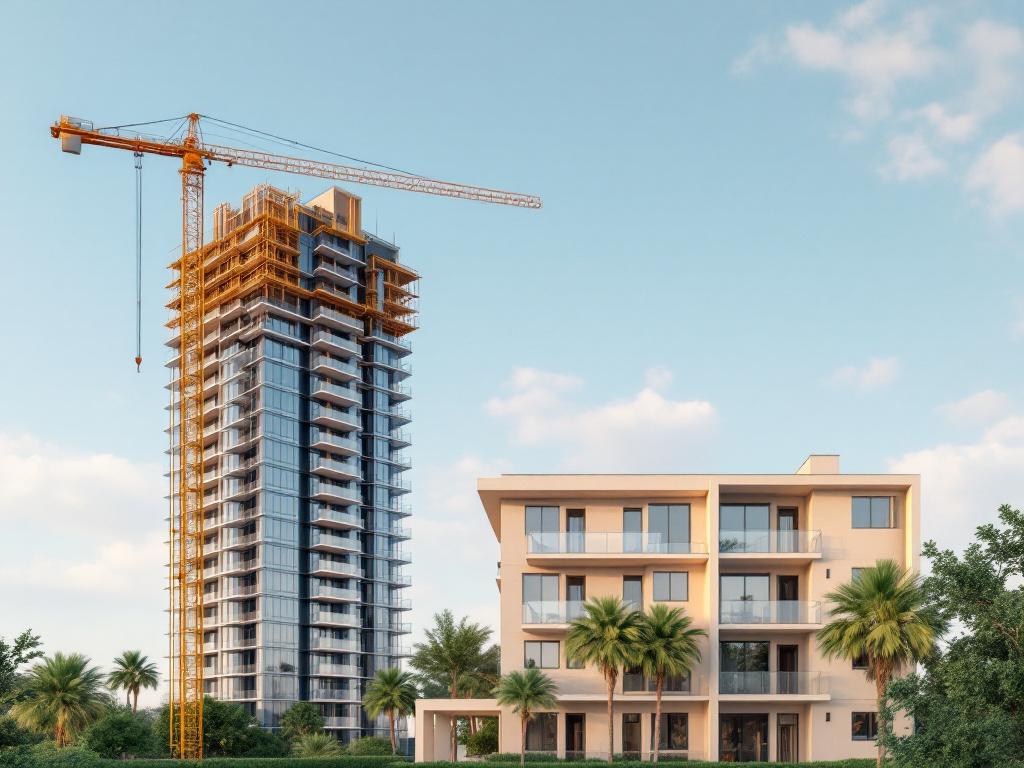
The fee illusion. Resale buildings advertise lower HOA dues, and they're not lying — they're just not telling the whole story. Post-Surfside coverage in the Wall Street Journal real estate section and elsewhere establishes that older Florida buildings now face structural dues increases driven by mandatory reserves and milestone inspections. The "low dues" advantage in a 25-year-old building is often temporary. The special assessment that catches it up arrives as a single line item — sometimes $15,000, sometimes $80,000 — and there is no negotiation on whether you pay it.
The financing trap on older resales. A resale priced 30–40% below comparable single-family inventory (per the Redfin Data Center) loses much of that discount when the buyer is locked out of FHA and conventional financing because of project-level failures under FHA Handbook 4000.1 or Fannie B4-2.1-01. The remaining financing options — portfolio lenders, non-warrantable condo loans — typically require 20–25% down and price 0.5–1.5% above conventional. The discount you thought you were getting moves to the lender's margin instead of your equity.
Where new construction earns its premium. In growth corridors like Lake Nona and Downtown, new construction commands a price premium that critics dismiss as excess. For a 5–7 year hold, that premium is paying for structural and reserve risk transferred to the developer for the warranty window — and for a building that is automatically FHA/Fannie-eligible once the project clears post-completion approval. For a 15+ year hold, the math gets harder, because the building eventually enters its own reserve-funding maturity and starts looking, financially, like the resale building it once competed against. Coastal Florida alternatives — including Destin and other Emerald Coast markets — change this math further because insurance and milestone risk are geography-dependent.
Brad O'Connor, Chief Economist at Florida Realtors, has noted that the condo and townhouse segment has seen some of the largest swings in Florida since the pandemic, driven by investor activity, rate moves, and rising insurance and reserve costs. Buyers should price the segment with that volatility in mind rather than assuming the next five years will look like the last five.
Modeling Real Returns: Three Orlando Condo Buyer Scenarios
The investment case for Orlando condos rests on two demand fundamentals. First, Apartment List documented Orlando metro rents rising about 38% from March 2020 to mid-2022, one of the strongest rent surges among large U.S. metros. Second, Visit Orlando reported 74 million visitors in 2022, up 25% from 2021. Every rental scenario below anchors to those two numbers — but the math diverges sharply depending on what kind of buyer you are.
The Primary Residence Buyer
Model a $300K purchase, $30K down (10%), and a 7% interest rate. Principal and interest alone run roughly $1,795/month. Add taxes (~$300/month), insurance (~$120/month), and an HOA in the $400–$600 range typical of the Coldwell Banker-listed Orlando inventory (Coldwell Banker Orlando condos), and monthly carrying costs land around roughly $2,615–$2,815. The appreciation case depends on the FHFA's 103% metro gain Q1 2012–Q1 2022 continuing — at a slower pace, almost certainly. This scenario works as a long hold (7+ years) with stable employment. Anything shorter exposes you to transaction-cost compression that wipes out modest appreciation.
The Long-Term Rental Investor
Roofstock data puts gross long-term rental yields in Orlando typically in the 6–8% range. Applied to a $250K East Orlando or UCF-adjacent condo, that's $15,000–$20,000 in gross annual rent. Subtract HOA at roughly $300/month ($3,600), property taxes (~$2,500), insurance (~$1,200), and vacancy and maintenance reserves (~$1,500), and net operating income drops to about $6,200–$11,200. That's a cap rate of roughly 2.5–4.5% — well below the 6–8% gross. HOA dues are the silent yield killer, and rental operations require professional management discipline that further compresses returns if you're remote.
The Short-Term Rental Investor
AirDNA Orlando data shows gross yields in the 6–10% range with 60–70% occupancy for well-located 1–2 bedroom units near attractions. The risk vector is regulatory. Orange County maintains active short-term rental rules, and the Orlando Sentinel has documented ongoing zoning debates around vacation rentals in residential areas. Layered on top: many Orlando HOAs explicitly prohibit rentals under 6 or 12 months, which kills the short-term rental thesis regardless of what county zoning permits. Confirm the HOA's rental policy in writing before you write an offer, not after.
| Scenario | Gross Yield Range | Net Yield After HOA/Tax/Ins. | Primary Risk |
|---|---|---|---|
| Long-term rental (UCF/East) | 6–8% | 2.5–4.5% | HOA increases, turnover |
| Short-term rental (Disney corridor) | 6–10% | 3–6% | Regulation, oversupply |
| Primary residence (5+ yr hold) | N/A | Appreciation-dependent | Carrying cost shock |
Most Orlando condo buyers underestimate carrying costs by 30 to 40 percent. A $300K purchase on a $30K down payment requires roughly $1,200-plus monthly just to break even on rent — before capital gains taxes, insurance hikes, or a single special assessment.
The exit-strategy framework matters as much as the entry math. Condos with the strongest resale liquidity share three traits: warrantable status (FHA/Fannie-eligible), location in a growth corridor, and no active litigation. If any of those three break during your hold, the exit market shrinks to cash buyers, and pricing power evaporates. If you eventually need to sell a Florida condo in a non-warrantable building, expect 60–90 extra days on market and a price cut measured in five figures. Plan the exit before you sign.
From Accepted Offer to Closing: The Orlando Condo Timeline With Decision Gates
Financed Orlando condo closings typically run 30–45 days per Florida Realtors and Rocket Mortgage guidance, and they skew toward the longer end because of condo-specific reviews that single-family transactions don't have. The decision gates below are where most deals either tighten or unravel.
- Pre-approval secured (Before offer) — Confirm your lender funds condos generally. Ask explicitly whether they'll require Limited or Full project review for the buildings you're targeting.
- Offer accepted / contract executed (Day 0) — Standard FAR/BAR contract with the Condominium Rider attached. Without the rider, your protections are weaker.
- Earnest money deposited (Days 1–3) — Per contract terms, usually 1–3% of purchase price held in escrow.
- Condo document delivery and §718.503 rescission window opens (Days 1–5) — 3 business days for resale, 15 days for new construction. Decision gate: walk free of penalty if docs reveal red flags. This is the most underused protection in the entire process.
- Physical inspection period (Days 5–15) — Negotiated 7–15 days standard. Decision gate: renegotiate price, request repair credit, or terminate.
- Lender condo project review (Days 7–25) — HOA questionnaire returned to lender; lender confirms warrantability. Decision gate: loan repriced or denied if project is non-warrantable. This is where surprise denials happen — often after appraisal.
- Appraisal ordered and received (Days 10–25) — Appraisal contingency typically tied to the financing contingency. Low appraisals can be renegotiated or used to terminate.
- HOA / condo association approval (Days 15–30) — Typical Orlando-area range runs 7–30 days per Bogin, Munns & Munns commentary; 10–15 days is the standard contingency window. Decision gate: association denial voids the contract.
- Title search and final loan approval (Days 25–40) — Clear-to-close issued by underwriting.
- Final walkthrough and closing (Days 40–45) — Closing Disclosure must be reviewed at least 3 business days prior under CFPB rules. Keys at the closing table.
The condo questionnaire return and the association approval are the two steps most likely to slip the timeline. Pad expectations by 5–7 days if you're buying in an older or self-managed building, where board responsiveness tends to be slower and document production less organized.
Why Your Orlando Condo Loan Gets Denied Even With Perfect Credit
The condo's eligibility is determined by the building, not the borrower. Two visually similar Orlando buildings on the same block can offer two completely different financing menus. The five gates below decide which loans your target building actually qualifies for — and you'll save yourself weeks of wasted effort by checking them before writing offers.
- FHA project approval and the 50% owner-occupancy floor. FHA Handbook 4000.1, Section II.A.8 requires 50% owner-occupancy for standard project approval, no more than 15% of units 60+ days delinquent, and at least 10% of HOA budget in reserves. Single-unit approvals exist in otherwise-non-approved projects following HUD's 2019 reforms (HUD press), but only when the broader project is close to meeting standards. Older urban Orlando buildings frequently fail these tests, which is why a FHA buyer with an 800 credit score gets denied on a $180K resale that looks like a layup.
- VA loans inherit FHA-like scrutiny. VA-eligible condo projects must appear on the VA-approved list. If the building isn't listed, the entire project must clear approval before your loan funds — a process that can add 30–60 days, sometimes longer. VA buyers in Orlando should pre-screen the building against the approved list before writing an offer, not after acceptance.
- Fannie Mae Limited Review vs. Full Review. Per Fannie Selling Guide B4-2.2-02 and B4-2.2-03, Limited Review is available for primary-residence condos at LTV ≤90% in established projects. If the building fails Limited Review criteria — litigation, low reserves, hotel/condotel features, high investor concentration — the lender must complete Full Review or decline the loan. Limited Review denial is where most "surprise non-warrantable" calls happen, often two weeks into a 30-day close.
- Insurance adequacy as a financing gate. Fannie Mae B4-2.1-02 requires the master policy to include hazard, liability, and flood coverage (where applicable) at specified ratios. With Florida master policy premiums up 30–50% annually per OIR data, some buildings drop coverage layers to manage cost — and become unfinanceable as a direct result. This is similar to the dynamics playing out across the broader South Florida condo financing market.
- Non-warrantable: the cash-or-portfolio fallback. When a building fails Fannie, Freddie, and FHA standards, financing routes shrink to non-warrantable portfolio loans (typically 20–25% down, rates roughly 0.5–1.5% above conventional) or all-cash. The Poverty & Race Research Action Council has documented how these rules disproportionately lock first-time buyers out of older, affordable condos — the exact inventory FHA was designed to serve.
A condo's financing restrictions are determined by its building, not your credit. You can be perfect on paper and still be locked out of the property because the HOA reserves sit at 47 percent instead of 50.
Nine Conditions That Should End Your Orlando Condo Purchase On the Spot
Distinguishing "annoying" from "walk-away" is the difference between buying a property you live with and one that owns you. The nine conditions below are walk-aways — not negotiation points, not items to mention to your attorney, but reasons to terminate within the §718.503 rescission window.
- Reserves below 10% of annual budget with no funding plan. Disqualifies FHA and triggers Fannie Mae issues. Future special assessments are mathematically inevitable — the only question is timing and size.
- Pending milestone inspection or unfunded SIRS in a 30+ year building. Under SB 4-D and SB 154, structural deficiencies must be repaired and reserves funded by 2025–2026. Joseph Adams of Becker has warned that the resulting assessments are often substantial — five and six figures per unit in some buildings.
- Active construction-defect or significant liability litigation. Most conventional lenders decline. Your future resale pool collapses to cash buyers, which usually means a discount of 15–25% off comparable warrantable inventory.
- Owner-occupancy below 50%. Locks out FHA buyers and triggers Fannie Mae Full Review. The exit market shrinks the day you close — and shrinks further every quarter if the investor trend continues.
- Special assessment history of 2+ events in the last 3 years. Pattern indicates chronic underfunding rather than one-off problems. The Miami Herald/ProPublica condo investigation identified this as one of the loudest leading indicators of more assessments to come.
- Master insurance premium up 40%+ year-over-year or coverage layers dropped. Florida OIR data shows this is increasingly common. The cost flows directly into dues or a special assessment — there is no third option.
- HOA refuses to provide complete resale package within 10 days. Florida §718.503 establishes the disclosure obligation. Non-compliance signals deeper board dysfunction and document chaos. Walk.
- Rental restrictions inconsistent with your investment thesis. Many Orlando HOAs prohibit rentals under 6 or 12 months, killing the short-term rental play. Some prohibit any rentals for the first 12–24 months of ownership. Confirm the rental policy in writing before offering.
- Board minutes reveal deferred maintenance discussions without funding action. Per Ken Pozek's Orlando commentary, boards that discuss problems without funding solutions tend to produce special assessments within 12–24 months. Read the last 24 months of minutes — not the summaries, the actual minutes.
Any single red flag warrants renegotiation. Two or more warrant termination during the §718.503 rescission window. The cost of walking away is a few days of lost time and possibly a few hundred dollars in inspection fees. The cost of staying in a bad condos for sale in Orlando Florida transaction is typically $20,000–$100,000 in assessments, financing surprises, and resale price compression spread across the next three to five years. The arithmetic on that trade-off isn't close — but it only works if you do the document review before the rescission clock runs out. If the building you've fallen in love with fails multiple gates above, the right move is to widen the search to other Florida markets where the inventory math is friendlier.